


EU–Australia Free Trade Agreement Opens a New Chapter for Australian Industry
What has been agreed
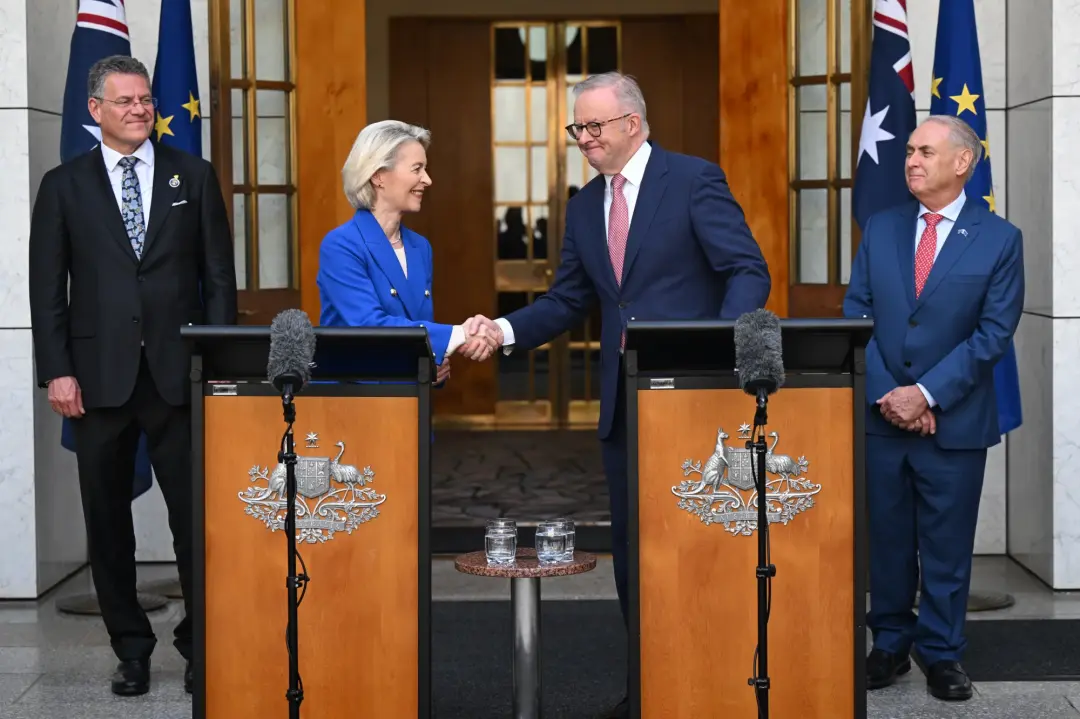
According to the European Commission, the agreement will remove more than 99% of tariffs on EU goods exports to Australia. In the other direction, around 98% of Australian goods exports to the EU will enter duty-free once the agreement is in force. Australia's free trade agreement coverage will rise from 78 to 88 per cent of total trade.
This deal also opens government procurement markets to businesses on both sides, raises Australia's foreign investment screening thresholds for EU investors, and includes provisions on critical raw materials, an area where Australian supply and European demand are closely matched.
The agreement is not yet in force. Legal review of the text is under way, after which the Council of the EU must adopt it and both parties must sign. The European Parliament must then give its consent, while Australia's Joint Standing Committee on Treaties will review the agreement and Parliament will consider implementing legislation. Industry advisers have indicated that entry into force could take up to two years.
Until then, current arrangements continue. Existing orders and product availability through HELU Australia are unchanged.
Benefits for customers in Australia
Once in force, the removal of tariffs on EU-origin industrial goods is expected to make trade between the two markets simpler and more predictable. For projects where cable is a high-volume requirement, a more settled trading environment supports clearer planning and procurement.
Renewables and data centres. Large-scale solar, battery storage and data centre projects depend on dependable, standards-compliant cable supply over long construction timelines. More stable trading conditions support better project planning and procurement.
Mining and agriculture. Operators in these sectors need cable built for demanding environments. A smoother trade relationship supports access to specialised ranges engineered for those conditions.
Wholesalers and distributors. A more open trading relationship can widen the range of products that is practical to hold in local stock, which may benefit electrical wholesalers serving contractors across every state.
Wider industry activity. The agreement is expected to strengthen European demand for Australian resources such as lithium and manganese, and to encourage two-way investment. Higher activity in mining, energy and infrastructure translates into more demand for the cable and connection products those projects require.
When the agreement takes effect, EU-origin goods have the potential to improve continued availability of the HELU range and could make it practical to extend local stock to more specialised product lines.