


Building Wires: 110°C Halogen-Free Flexible Wire for Switchboards and Site Wiring
What are building wires?
| Building wire is a flexible, halogen-free, 110°C-rated conductor used for switchboard wiring, construction sites, and machine wiring. HELU Australia's range uses a cross-linked, halogen-free, flame-retardant insulation (X-HF-110) over a flexible stranded copper conductor, giving it the combination of heat resistance, chemical and oil resistance, and low-smoke fire performance that switchboard and machine-wiring applications demand. |
What we have to offer—At a glance
- 110°C continuous rating: Higher thermal performance than standard 90°C building wire, suited to temperature sensitive environments and demanding switchboard loads.
- Halogen-free, low-smoke construction: Cross-linked X-HF-110 insulation reduces toxic smoke and corrosive gas in a fire, supporting safer evacuation and equipment protection.
- Flexible stranded copper conductor: Fine-stranded flexibility for ease of routing and termination in switchboards, panels, and machinery.
- Chemical and oil-resistant, UV-resistant insulation: Holds up in industrial and construction-site conditions, indoors or out.
- Built for switchboards, construction, and machine wiring: Sized and rated for the panel-building, site-power, and equipment-wiring work it's specified for.
- PVC-free, fire-safety compliant: Flame-retardant and low-smoke performance suited to sustainable building standards and fire-safety-conscious specifications.
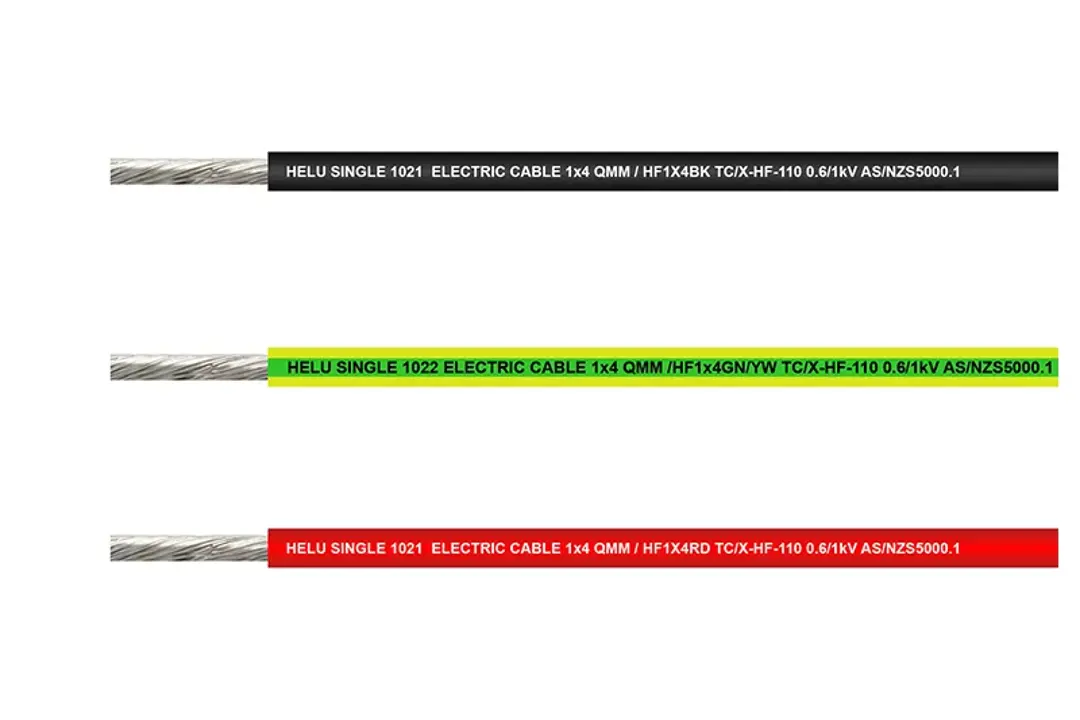
| Product | Temperature | Number of Cores | Cross-Section | Data Sheet |
| HELU SINGLE 1021 Building Wire | -40oC to 110oC | 1 | 0.5-16 | Building Wire |
| HELU SINGLE 1022 Flexible Earth | -40oC to 110oC | 1 | 16-185 | Flexible Earth |
Enquire about our Building Wire range
Design and construction of building wires
Building wire uses a flexible copper conductor insulated with a cross-linked, halogen-free, flame-retardant compound (X-HF-110). Being cross-linked gives the insulation greater thermal stability than a standard thermoplastic, supporting continuous operation at 110°C, while its halogen-free formulation limits toxic smoke and corrosive gas release if the cable is exposed to fire. The insulation is also chemical, oil, and UV-resistant, so the wire holds up whether it's inside an enclosed switchboard or exposed to site conditions during construction.
Applications for building wires
Building wire is specified wherever a flexible, heat-tolerant conductor is needed: switchboard and panel wiring, construction site power, and machine wiring in industrial and commercial settings. Its 110°C rating suits it to enclosed, higher-temperature environments such as switchboards and control panels, while its halogen-free, low-smoke properties make it a preferred choice in fire-safety-conscious builds and sustainable building specifications.
FAQ
- What does halogen-free mean for building wire? Halogen-free insulation releases significantly less toxic smoke and corrosive gas if exposed to fire, compared with standard PVC insulation — supporting safer evacuation and reduced equipment damage in a fire event.
- What's the difference between 90°C and 110°C building wire? Both use a flexible copper conductor, but 110°C-rated wire uses a cross-linked insulation with greater thermal stability, allowing continuous operation in hotter environments such as enclosed switchboards.
- Where can HELU Australia's halogen-free building wire be installed? These cables are designed to be installed in most applications due to the fact that they are halogen-free, flame retardant and low smoke, as opposed to PVC building wires which are limited in their applications.