


Rubber Cables: Flexible Power for Wet, Harsh, and Submersible Environments
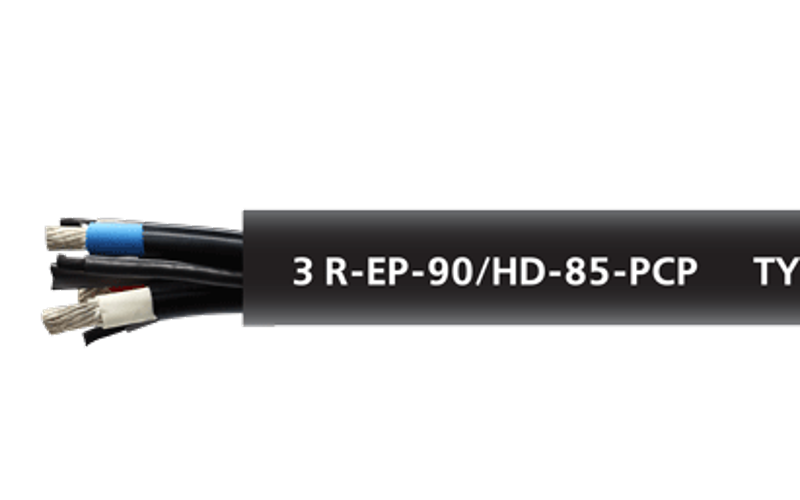
What are rubber cables? Rubber cables use an EPR (ethylene propylene rubber) core insulation and a CPE (chlorinated polyethylene) outer sheath instead of standard PVC. This combination stays flexible in the cold, resists oil, ozone, and UV exposure, and tolerates continuous submersion — making rubber cables the standard choice wherever a cable has to work in water, outdoors, or in physically demanding conditions rather than a fixed indoor installation. HELU Australia's rubber range spans single-core and multi-core flexible cables, braided screened variants, and 3.3 kV traction cable for rail and heavy vehicle applications.
What we have to offer—At a glance
- Submersible by design: Standard flexible rubber cables are rated for continuous submersion to 500 metres; the 3.3 kV traction range to 300 metres.
- Tinned copper conductors: Improved corrosion resistance over bare copper, suited to wet and marine environments.
- Two temperature classes: 110°C-rated flexible rubber 3.3kV and Screened submersible cables and 90°C-rated range for our Enhanced H07 single and multicore rubber cables.
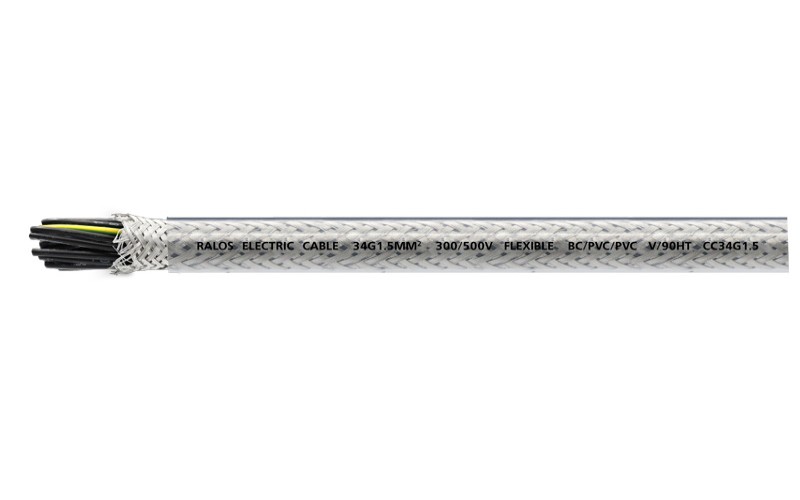
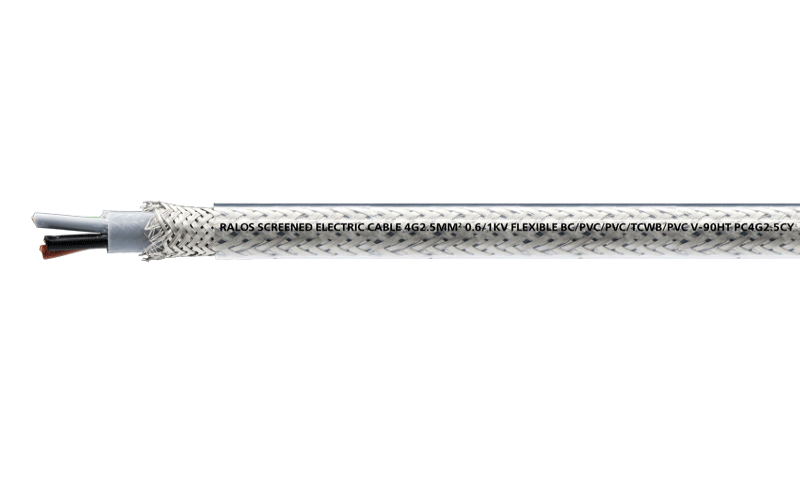
- Screened variants for interference-prone sites: Braided screening improves electromagnetic compatibility for cables run alongside sensitive equipment or other power circuits.
- Cold-tolerant: EPR insulation stays pliable down to around -40°C, so the cable doesn't stiffen or crack in low-temperature or outdoor winter conditions.
- Purpose-built traction cable: 3.3 kV single-core, tinned copper, 110°C-rated cable for wiring traction vehicles and other high-vibration, wet-duty rolling stock.
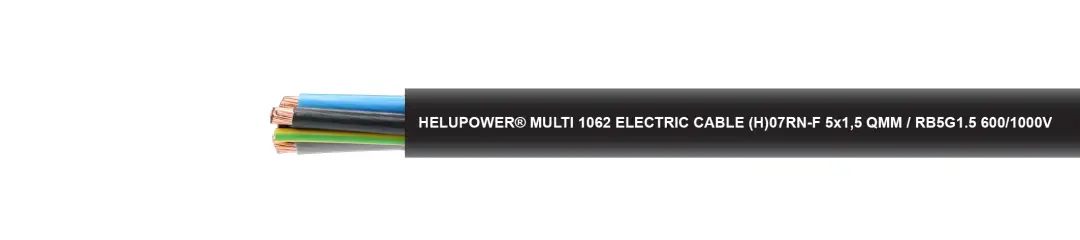
Explore the range
| Product | Temperature | Number of Cores | Cross-Section | Data Sheet |
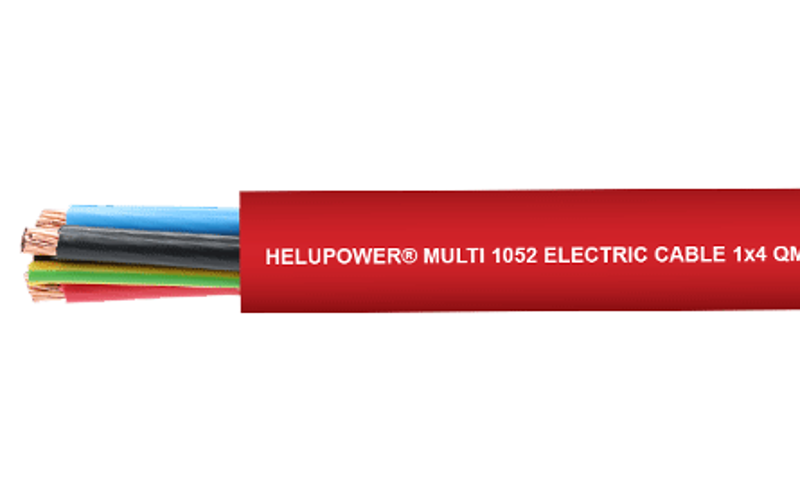
| HELUPOWER® MULTI 1062 | -40oC to 90oC | 2-18 | 1-185 | Multicore |
| HELUPOWER® SINGLE 1061 | -40oC to 90oC | 1 | 16-240 | Single Core |
| HELUPOWER® SCREENED 1081 | -25oC to 110oC | 4 | 16-185 | Screened |
| HELUPOWER® SINGLE 1071 | -35oC to 110oC | 1 | 2.5-630 | 3.3kV |
Enquire about our rubber cables range
Design and construction of rubber cables
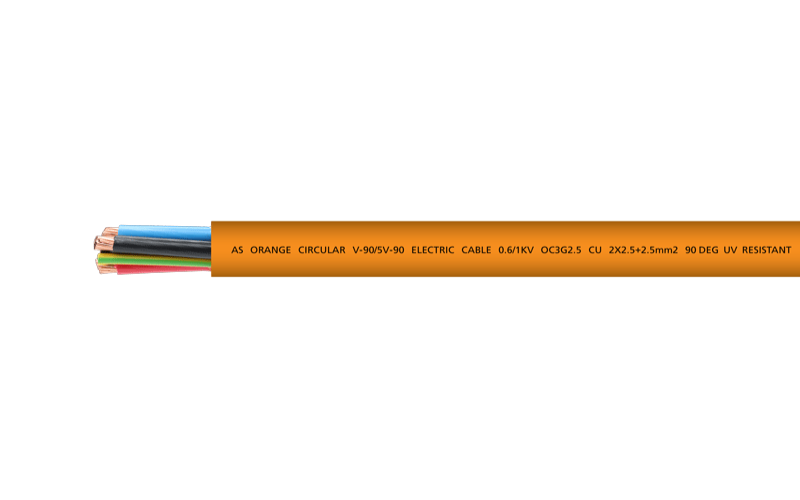
Our rubber cable's conductor is tinned copper, stranded for flexibility. The core insulation is EPR, chosen for its water resistance, abrasion resistance, and cold flexibility. The outer sheath is CPE, which resists ozone, UV, oils, and greases and continues to perform after prolonged water immersion without becoming brittle — down to roughly -40°C. Our screened versions have an RE110 core insulation, a CPE bedding, plus a braided copper screen between the cores and the CPE outer sheath to reduce electromagnetic interference. HELU Australia offers both single-core and multi-core builds, so the construction can be matched to compact multi-circuit runs or larger single-conductor loads.
Applications for rubber cables
Rubber cables are the go-to choice anywhere a PVC-sheathed cable would degrade or crack: wet and underwater installations, outdoor runs exposed to UV and weather, and low-temperature environments where flexibility matters as much as insulation. The screened range is suited to sites with multiple interference sources, such as industrial plant and equipment rooms. The 3.3 kV single-core range is purpose-built for traction vehicle wiring, where cables face constant flexing, vibration, and exposure to the elements. Across the range, tinned copper conductors add a further layer of protection in humid, wet, or marine settings.
FAQ
Can HELU's rubber cables be used underwater? Yes. The standard flexible rubber range is rated for continuous submersion to 500 metres, and the 3.3 kV traction range to 300 metres, in addition to standard outdoor and wet-area installation.
What's the difference between the 90°C and 110°C ranges? Our 90 degree rubber cables are designed for current-carrying capacities as per AS/NZS 3008.1.1. Our 110 degree rubber cables are rated for higher operating temperatures and higher current-carrying capacity under AS/NZS 3008.1.1.
Why choose rubber over PVC for outdoor or wet installations? PVC sheathing can stiffen, crack, or degrade under continuous UV, moisture, or cold. EPR/CPE rubber cable is built specifically to resist all three, staying flexible and intact in conditions standard PVC cable isn't rated for.