


Solar Cables: HELUKABEL® RALOS DC Cable for Photovoltaic Systems
What are solar cables?
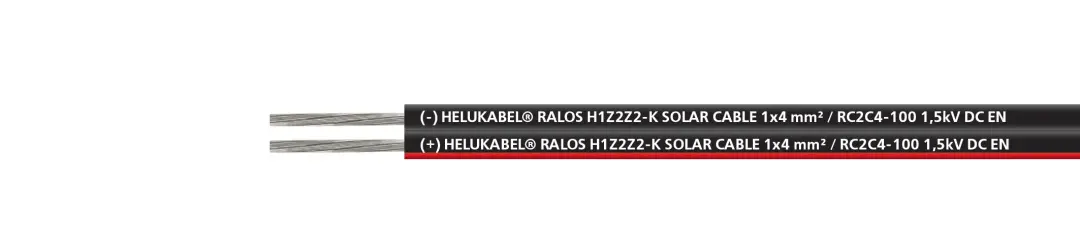
Solar cable is the DC cable that connects solar panels, module strings, and inverters in a photovoltaic system. HELU Australia's HELUKABEL RALOS DC solar range uses a tinned copper conductor with a cross-linked, halogen-free XLPO insulation and sheath, giving it the UV, ozone, and weather resistance needed for a permanent outdoor installation with a multi-decade service life. The range is manufactured to internationally recognised IEC and EN standards and available in single-core and twin configurations.
What we have to offer—At a glance
- Built for outdoor, permanent installation: Cross-linked XLPO insulation and sheath resist UV, ozone, oil, and general weathering across decades of rooftop or ground-mounted exposure. Tested for AD7 water immersion test, and tested for direct burial in accordance to UL854.
- Tinned copper conductor: Reduces corrosion in the humid or coastal conditions common to solar installations.
- Halogen-free, low-smoke construction: Reduces toxic smoke and corrosive gas release in a fire.
- Wide operating temperature range: Rated to perform from well below freezing through to high conductor temperatures, suiting both cold climates and hot rooftop conditions.
- Single-core and twin configurations: Single Core Solar and Twin Solar options to match module wiring and combiner/inverter connections.
Enquire about our Solar cables range
What are flexible single core cables?
HELUKABEL® RALOS DC solar cable uses a finely stranded, tinned copper conductor for flexibility and corrosion resistance. The conductor is insulated with cross-linked XLPO (polyolefin), a thermoset compound chosen for its resistance to UV, ozone, oil, and general weathering, and finished with a matching XLPO outer sheath. Being cross-linked gives the material greater thermal and mechanical stability than a standard thermoplastic, allowing the cable to maintain its properties through decades of outdoor exposure and a wide operating temperature range, from sub-zero cold through to high conductor temperatures under load.
Applications for solar cables
Solar cable is used for the DC wiring between solar panels, between module strings, and from strings through to combiner boxes and inverters, in both rooftop and ground-mounted photovoltaic systems. Its UV and weather-resistant construction suits fixed outdoor installation in direct sun, while its halogen-free, low-smoke properties support fire-safety requirements on rooftops and in solar parks. The range covers both single-core cable for standard module and string wiring and twin cable for applications needing a paired positive and negative conductor.
FAQ
Why does solar cable use tinned copper instead of bare copper? Tinning protects the copper conductor from corrosion, which matters for a cable that will remain outdoors, often in humid or coastal conditions, for the multi-decade life of a solar installation.
What's the difference between Single Core and Twin Solar cable? Single Core Solar cable is a single conductor, used for standard module and string wiring. Twin Solar cable pairs a positive and negative conductor together in one cable for applications that call for a combined configuration.
Can RALOS DC solar cable handle rooftop temperature extremes? Yes. The cross-linked XLPO insulation and sheath are designed to perform across a wide operating temperature range, maintaining flexibility and insulation performance from cold conditions through to the high conductor temperatures a rooftop installation can reach under load.