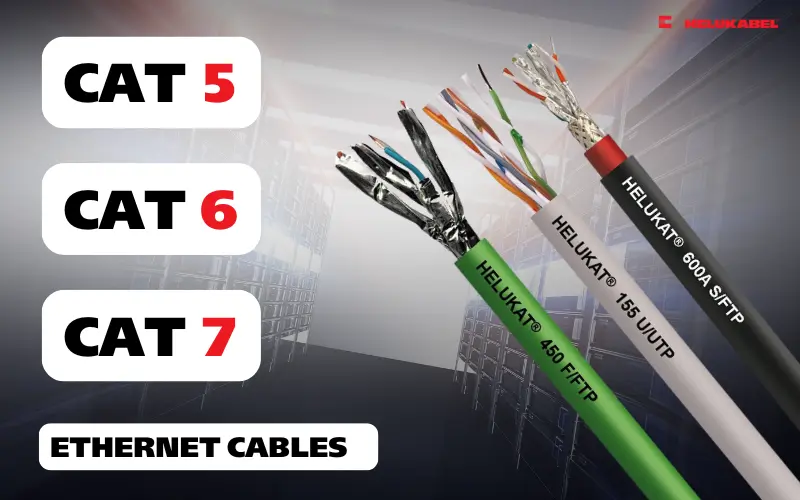
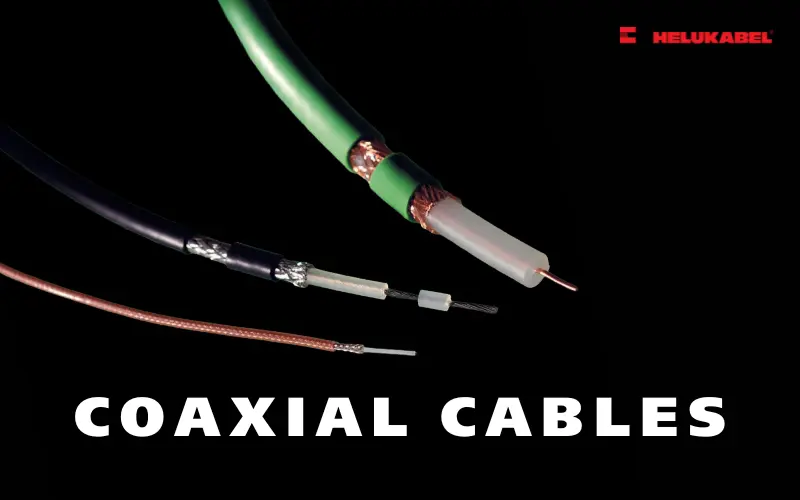
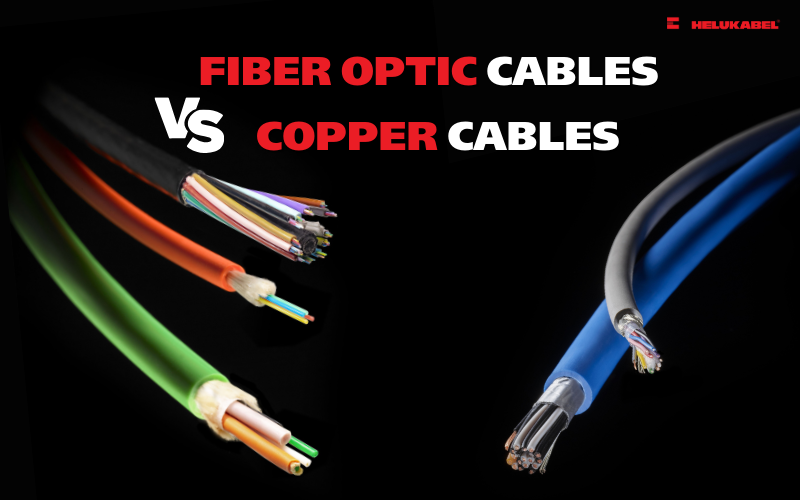
Distinguishing twisted pair, fiber optic, and coaxial cables
Twisted pair cable, fiber optic cable, and coaxial cables are the three main types of network cables used in modern communication systems. Each type has its own unique characteristics and is suited for specific applications. Let’s explore the key features of each type of cable, as well as their differences and real-world use cases.
-
1Features of twisted pair cables
-
2Features of coaxial cables
-
3Features of fiber optic cables
-
4Table of summary: Key parameters of 3 cables
-
5Comparison: Speed, bandwidth, distance
-
6Comparison: Cost considerations
-
7Comparison: Installation considerations
-
8Recommendations from HELU for cable installations
-
9Applications of twisted pair cables and our cable portfolio
-
10RJ45 connectors and HELU connection solutions
-
11Applications of coaxial cables and our cable portfolio
-
12Applications of fiber optic cables and our cable portfolio
Communication systems are evolving rapidly, driven by emerging global trends. To meet increasingly diverse customer demands, today’s market offers a wide variety of communication cable types.
The three most common types are twisted pair cables, coaxial cables, and fiber optic cables. These three cable types form the foundation of most modern communication systems - from office LAN networks and large-scale data centers to FTTH deployments and traditional cable infrastructures. Each type offers distinct advantages in terms of transmission speed, distance, electromagnetic interference (EMI) resistance, power delivery capability, cost, and installation complexity.
1. Overview of twisted pair, coaxial, and fiber optic cables
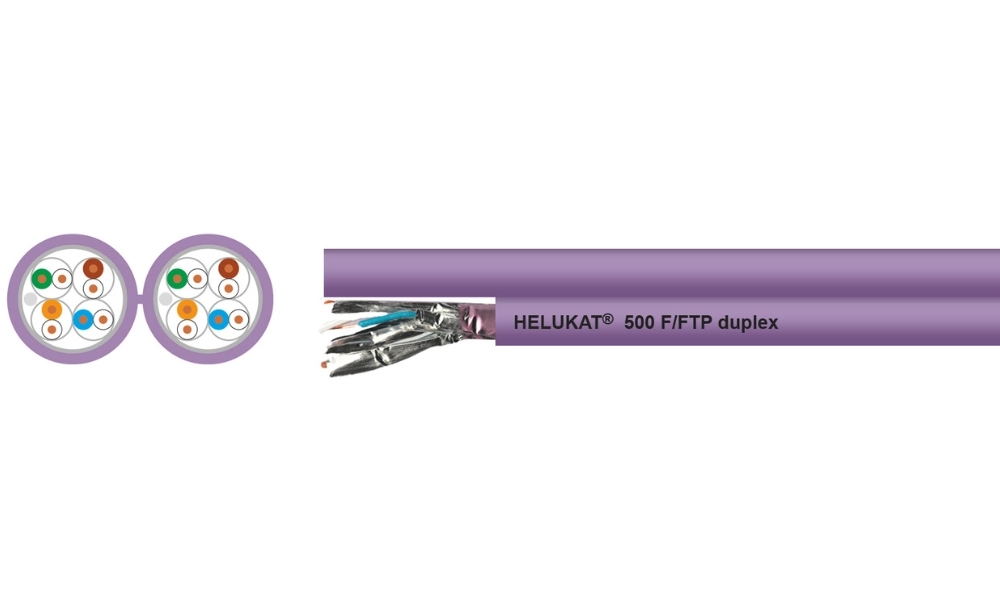
HELUKAT® 500 CAT.6A F/FTP duplex FRNC STATIC violet twisted pair cable
1.1 What are twisted pair cables?
A twisted pair cable is one of the most widely used cable types in telephone systems and most modern Ethernet networks. Each pair consists of two insulated copper wires forming a circuit capable of transmitting data signals. These wires are twisted together to reduce crosstalk, which is interference caused by adjacent wire pairs.
When electric current flows through a conductor, it generates a small circular magnetic field around the wire. When two wires in the same circuit are placed close together, their magnetic fields are opposite in direction, effectively canceling each other out. This also helps minimize the impact of external electromagnetic fields. Twisting the wires further enhances this noise-canceling effect.
There are two primary types of twisted pair cables:
- UTP (Unshielded Twisted Pair) cables: UTP relies solely on the cancellation effect of twisted wire pairs to reduce signal degradation caused by electromagnetic interference (EMI) and radio frequency interference (RFI). To further minimize crosstalk between pairs, each pair is twisted at a different rate. As a result, UTP cables must comply with strict technical standards regarding the number of twists per meter (3.28 feet). UTP cables are typically terminated with RJ-45 connectors, which feature 8 pins and are widely used to connect computers to LANs, especially in Ethernet networks.
- STP (Shielded Twisted Pair) cables: STP combines three noise-reduction mechanisms: shielding, cancellation, and wire twisting. Each pair of wires is individually wrapped in a metallic foil, and all four pairs are further enclosed in an overall braided or foil shield, typically resulting in a cable impedance of around 150 ohms. In Ethernet systems, STP reduces not only internal interference (such as crosstalk between pairs) but also external EMI and RFI. This ensures more stable signal transmission in electrically noisy environments. STP cables are usually installed with specialized connectors designed for shielded cables, although in some cases they can also use standard RJ connectors similar to UTP.
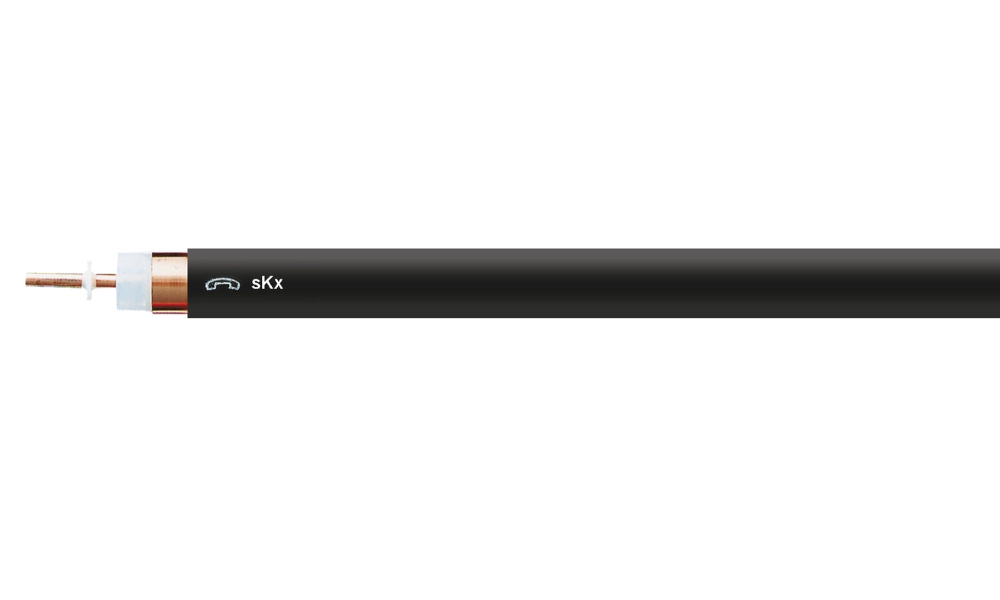
CATV A-2Y0K2Y1 skx coaxial cable
1.2 What are coaxial cables?
A coaxial cable (coax) consists of a central conductor surrounded by an outer metallic shield. This geometric structure helps minimize external interference and limits signal radiation into the surrounding environment. However, the outer metallic layer does not only serve as shielding - it can also function as part of the electrical circuit. Coaxial cables are widely used in computer networks, cable television (CATV), video systems, and wireless applications. Originally, this type of cable was referred to as RG (Radio Grade) cable, based on military standards and using a solid dielectric. Later, newer versions were developed with foamed dielectric, improving performance compared to traditional RG cables.
Some key advantages of coaxial cables include:
- Moderate data transmission speeds: Typically ranging from 10 to 100 Mbps, with relatively low cost - although still higher than UTP cables on a per-meter basis. However, in physical bus network topologies, coaxial cables can be more cost-efficient due to reduced total cable length requirements.
- Longer transmission distance: Compared to twisted pair cables, coaxial cables can transmit signals over greater distances. For example, in Ethernet networks, twisted pair cables usually support up to 100 meters, whereas coaxial cables can reach up to 500 meters.
- Reduced need for repeaters: In LAN environments, coaxial cables allow longer distances between network nodes without requiring as many repeaters as UTP or STP cables. Repeaters regenerate signals to extend transmission range.
- Cost-effective and mature technology: Coaxial cables are generally less expensive than fiber optic cables and have been used for decades, making them a well-established and reliable solution across various data communication systems.
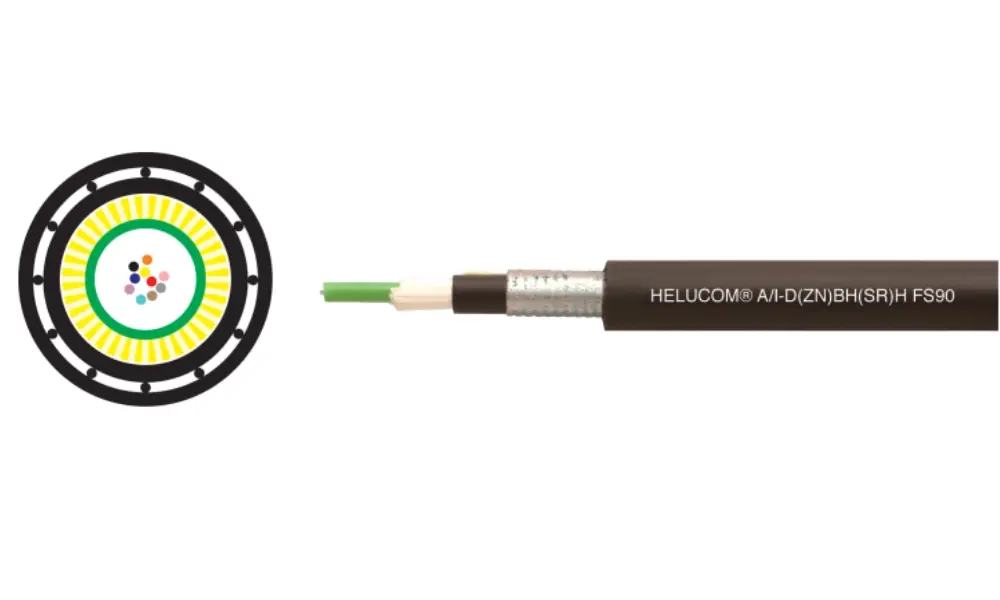
A/I-D(ZN)BH(SR)H fiber optic cable with additional amour layer
1.3 What are fiber optic cables?
A fiber optic cable transmits data using light pulses (photons) instead of electrical signals (electrons) as in twisted pair or coaxial cables. This is the fundamental difference between these transmission technologies. As a result, fiber optic communication is immune to crosstalk, lightning, and most types of electromagnetic interference (EMI). However, like copper cables, fiber optics still experience signal attenuation and must be carefully evaluated based on installation environments.
A typical fiber optic cable structure includes:
- Optical fiber core: Made of very thin glass strands, surrounded by a protective buffer layer, usually plastic.
- Reinforcement layer (e.g., Kevlar): A reinforcing material that enhances mechanical strength and protects the fiber from breakage.
- Outer jacket: The external layer that provides overall protection and complies with fire safety and building regulations.
- In direct-burial applications, fiber optic cables may include stainless steel armour to improve durability and load-bearing capacity.
There are two main types of fiber optic cables:
- Single-mode fiber: Allows only one mode (or wavelength) of light to propagate through the fiber. This enables higher bandwidth and longer transmission distances compared to multimode fiber.
- Multimode fiber: Supports multiple light modes traveling simultaneously within the fiber. It is typically used for shorter-distance applications such as intrabuilding networks or riser systems.
2. Comparison of twisted pair, coaxial, and fiber optic cables
2.1 Table of summary
| Cable type | Maximum distance | Speed | Cost | Advantages | Disadvantages |
| UTP cables | 100 m | 10 Mbps to 1000 Mbps | Lowest | Easy to install Widely available and commonly used | Susceptible to EMI Limited transmission distance |
| STP cables | 100 m | 10 Mbps to 100 Mbps | Higher than UTP | Better crosstalk reduction Improved EMI shielding compared to UTP and Thinnet | More difficult to install Still limited in transmission distance |
| Coaxial cables | 500 m (Thicknet) 185 m (Thinnet) | 10 Mbps to 100 Mbps | Relatively low (but higher than UTP) | Less affected by EMI than other copper cables | Difficult to install (especially Thicknet) Limited bandwidth Declining usage (Thinnet) Cable failure may disrupt the entire network |
| Fiber optic cables | 10 km and farther (single-mode) 2 km and farther (multimode) | 100 Mbps to 100 Gbps (single mode) 100 Mbps to 9.92 Gbps (multimode) | High | High security Long-distance transmission Immune to EMI Extremely high speed | Complex installation and termination |
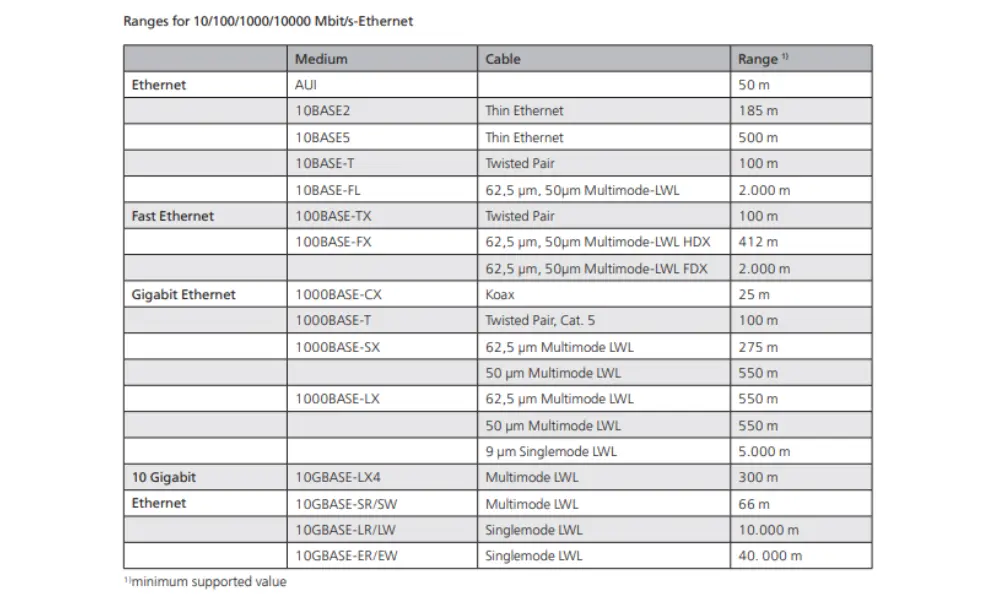
Transmission distance of singlemode and multimode cable: 10/100/1000/10000 Mbit/s-Ethernet
2.2 Comparison of speed, bandwidth, and transmission distance
Fiber optic cables are made of extremely thin and flexible strands of glass or plastic, enabling them to transmit signals with significantly higher bandwidth, faster speeds, and higher frequencies compared to copper-based cables.
In contrast, coaxial cables and twisted pair cables use copper (or similar conductive materials) as their core, surrounded by insulation and protective layers. These cables transmit data in the form of electrical signals.
The speed of coaxial cables depends on the specific cable type and transmission technology used. Additionally, factors such as the Internet Service Provider (ISP) or network infrastructure can influence real-world performance. On average, coaxial cable speeds range from 10 Mbps to over 100 Mbps.
In terms of bandwidth, coaxial cables can offer up to 80 times higher bandwidth than twisted pair cables, making them suitable for high-speed communication systems, including data center environments with 10 Gigabit connections—particularly over short distances (under 10 meters). Coaxial cables are also widely used in residential networks due to their cost-effectiveness and reliable performance.
| Cables | Speed | Bandwidth | Distance |
| Fiber optic cables | 10/100/1000 Mbps, 10/40/100/400/800 Gbps | Hundreds of GHz | Depending on fiber type and module, OS2 supports up to 100km (10GBASE-ZR) |
| Twisted pair cables | Up to 10 Gbps | Cat5: 100 MHz Cat5e: 100 MHz - 250 MHz Cat6: 250 MHz - 500 MHz Cat6a: 500 MHz - 1000 MHz | Up to 100m |
| Coaxial cables | 10Mbps - 100 Mbps | 750 MHz | Up to 500m |
2.3 Cost considerations
In general, fiber optic cables are more expensive than copper cables due to their superior performance and transmission capabilities. However, in real-world markets, the prices of fiber optic, twisted pair, and coaxial cables can vary depending on the manufacturer. Therefore, it is essential to carefully compare different options before making a decision.
When selecting between twisted pair, coaxial, and fiber optic cables, additional cost factors should also be considered:
- Fiber optic systems: Require additional optical components, especially optical transceivers, which increase the overall deployment cost.
- Twisted pair cables: Typically use RJ45 connectors, making them more cost-effective and widely accessible.
- Coaxial cables: Commonly use BNC connectors, resulting in higher costs compared to UTP cables.
2.4 Installation considerations
Although fiber optic cables offer significant advantages in terms of bandwidth and reliability, they are not always as widely used as twisted pair or coaxial cables in certain applications.
This is mainly because:
- Fiber optic cables: Are thinner and more fragile, requiring careful handling, installation, and maintenance, along with specialized technical expertise.
- Twisted pair cables: Are easier to install and handle in standard environments.
- Coaxial cables: Can support longer transmission distances than twisted pair cables. However, the dielectric layer surrounding the copper core makes installation and maintenance more complex.
Recommended practices for cable installation
- PRIMARY area (backbone): Fiber optic cables are recommended. The central distributor (site distributor) is typically connected to individual building distributors using a star topology.
- SECONDARY area (distribution): Both fiber optic and copper cables can be used, although fiber is generally preferred. Network topologies may include star or ring configurations.
- TERTIARY area (access): Commonly deployed using copper cables in a star topology, suitable for end-user connections.
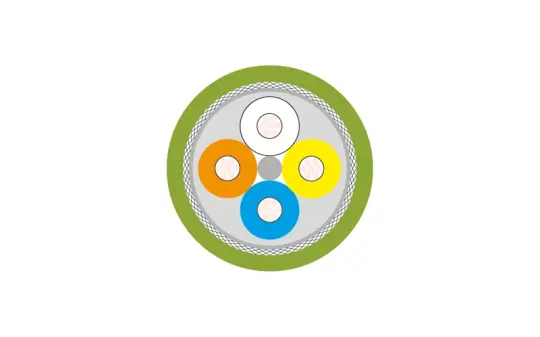
3. Applications of twisted pair cables and HELU twisted pair solutions
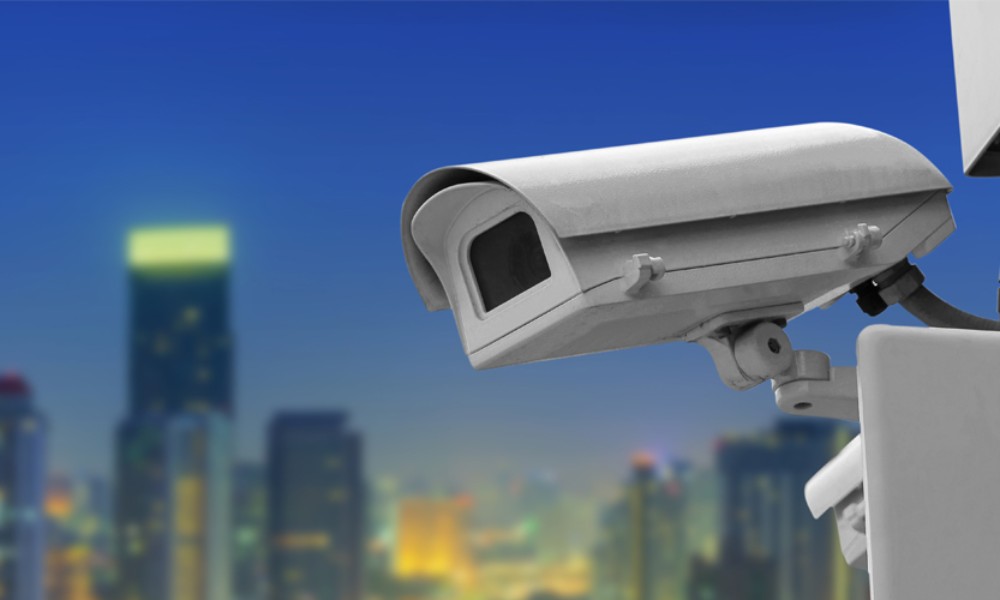
Twisted pair cables are often used for surveillance systems
3.1 Applications of twisted pair cables
Twisted pair cables (UTP/STP) are the most widely used cables in LAN networks due to their low cost, ease of deployment, and Power over Ethernet (PoE) capability. Typical applications include:
- Office LAN: Connecting computers, printers, and servers within office environments
- Wi-Fi 6 / 6E / 7 uplinks: Linking access points with speeds of 2.5G / 5G / 10G
- IP Cameras (PoE++): Surveillance systems that transmit both power and data over a single cable
- IoT sensors: Connecting sensors in industrial environments and smart buildings
- IP phones (VoIP): Supporting internal communication systems
- SMB & Enterprise access layer: Serving as the last-mile access layer in enterprise networks
3.2 HELU twisted pair cable portfolio
HELU’s UTP and STP twisted pair cables range from Cat5 to Cat7A, meeting diverse bandwidth and data transmission requirements across various applications. Key product highlights include:
- UTP cables for marine and offshore: HELUKAT® PROFInet B CAT.5e SF/UTP FRNC SHIPLINE (802185) và HELUKAT® 600IND CAT.7 S/FTP FRNC SHIPLINE (11021853)
- Torsion-rated UTP cables: HELUKAT® 100T CAT.5 SF/UTP PUR TORSION (800067), HELUKAT® SPE Type R 1000BASE-T1 SF/UTP PUR ROBOTIC (11019818)
- UTP cables with rodent protection armour: HELUKAT® PROFInet A CAT.5e SF/UTP PE STATIC ARMOURED (801650)
- Duplex STP cables: HELUKAT® 1500LAN CAT.7A S/FTP DUPLEX FRNC STATIC (11027764), HELUKAT® 600LAN CAT.7e S/FTP DUPLEX FRNC STATIC (81446)
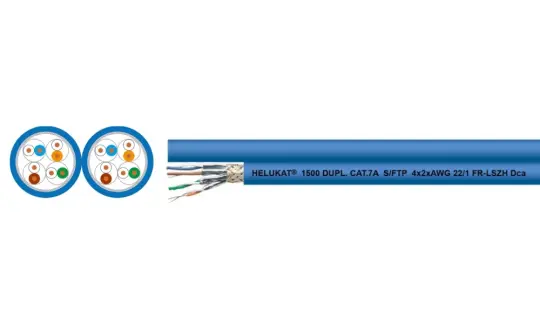
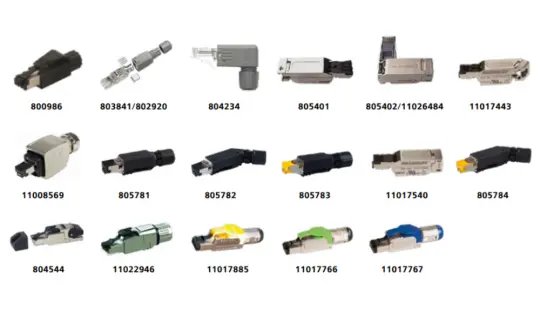
- RJ45 connectors: RJ45 copper connectors (800986), HELUKAT PROFINET® RJ45 connectors with Plug 180° and 90° version (11024689), RJ45 Jack/Keystone (802377)
- Patch cables: HELUKAT® CONNECTING SYSTEMS® Patch Cables CAT.6 S/FTP RJ45 (806253), HELUKAT® CONNECTING SYSTEMS® INDUSTRY HELUKAT500IND S/FTP CAT.6A Extraflex RJ45-IP20 180° (11007747), HELUKAT® CONNECTING SYSTEMS® INDUSTRY HELUKAT100S SF/UTP CAT.5e RJ45 180° (806546)
4. Applications of coaxial cables and HELU connection solutions
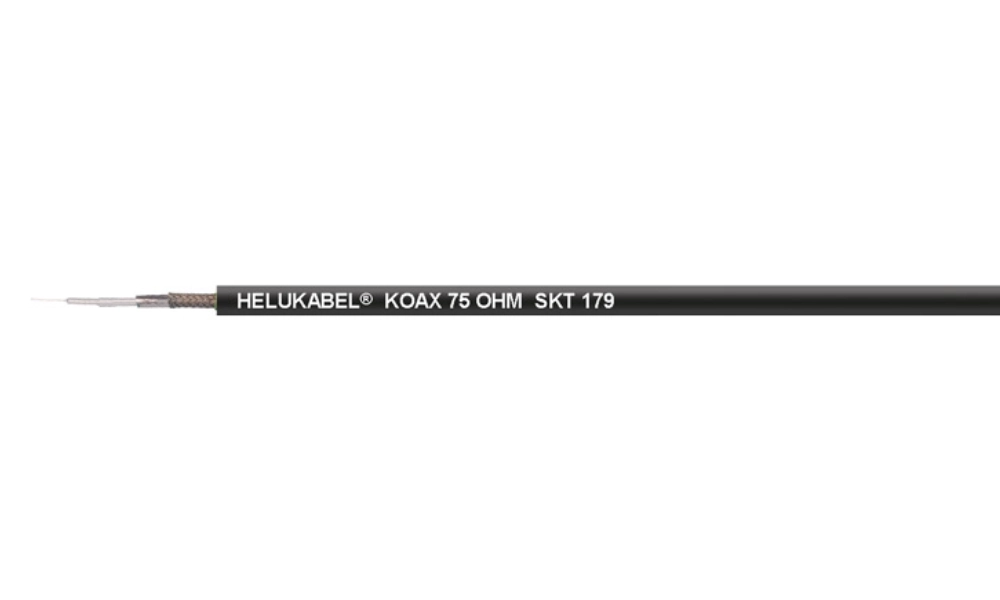
COAXIAL CABLE SKT 179
4.1 Applications of coaxial cables
Coaxial cables are known for their ability to transmit stable RF (radio frequency) signals with better shielding against interference compared to standard copper cables. Although they have been partially replaced by fiber optic cables, they remain widely used in several applications:
- Cable broadband: Internet access via cable television infrastructure
- TV signal distribution (CATV): Transmission and distribution of television signals
- Satellite communications: Connecting satellite dishes and receivers
- RF systems: Radio frequency transmission systems in industrial and telecom environments
- Legacy HFC networks (Hybrid Fiber Coaxial): Hybrid infrastructure combining fiber optics and coaxial cables
4.2 HELU coaxial cable portfolio
- RG coaxial cables
- Halogen-free RG coaxial cables
- CATV coaxial cables
- SAT coaxial cables
- SKT coaxial cables
5. Applications of fiber optic cables and HELU fiber optic solutions
5.1 Applications of fiber optic cables
Fiber optic cables are the preferred choice for systems requiring ultra-high speed, large bandwidth, and long-distance data transmission with minimal signal loss. By transmitting data using light, fiber optics are virtually immune to interference and ensure highly stable performance.
Typical applications include:
- Data centers (100G / 400G / 800G): High-speed interconnections within large-scale data centers, supporting massive data throughput
- AI workloads & GPU clusters: Infrastructure for AI and machine learning systems requiring high bandwidth and low latency
- Campus and enterprise backbone: Core network infrastructure for enterprises, industrial zones, and universities
- FTTx & ISP (FTTH, FTTP, etc.): Fiber deployments delivering high-speed internet to end users
- 5G / 6G Fronthaul & Backhaul: Connectivity between base stations and core network systems
- Industrial long-distance control: Reliable communication in industrial environments with long distances and high EMI exposure.
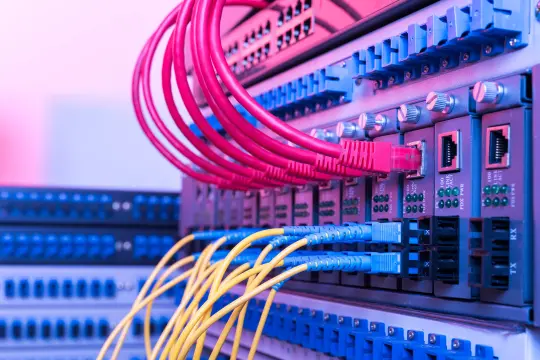
5.2 HELU fiber optic cable portfolio
HELU provides a comprehensive range of fiber optic cables designed to meet diverse application requirements, including:
- Indoor fiber optic cables
- Outdoor and direct-burial fiber optic cables
- Armored fiber optic cables for harsh environments
- Loose tube and tight-buffered designs
- Single-mode (OS1/OS2) and multimode (OM1–OM5) fibers
5.3 Fiber optic connectivity solutions
To ensure optimal performance of fiber optic systems, HELU also offers a full range of connectivity solutions, including:
- Fiber optic connectors
- Fiber patch cords
- Fiber pigtails
- Pre-assembled fiber optic cabling systems
These components enable efficient installation, reliable connections, and scalable network deployment for modern high-speed communication systems.
If you still have any concerns or questions, don't hesitate to reach out to HELU Vietnam's engineering team promptly for detailed assistance.
Contact Information HELU Vietnam
| HELU Vietnam 905 Nguyen Kiem Street , Hanh Thong Ward, Ho Chi Minh City, 700000, Vietnam | Phone:
+84 28 77755578 Email: info@helukabel.com.vn | Connect with us on |
| Order through our online channels Tiki | Shopee | Lazada | Product finder | ||