Industrial Ethernet cable infrastructure: Trends and connectivity solutions
From a basic connectivity solution, Industrial Ethernet is gradually becoming the “backbone” of smart factories, driving increasing demand for stable and reliable Ethernet cable infrastructure.
1. What is Ethernet? The origin of Industrial Ethernet
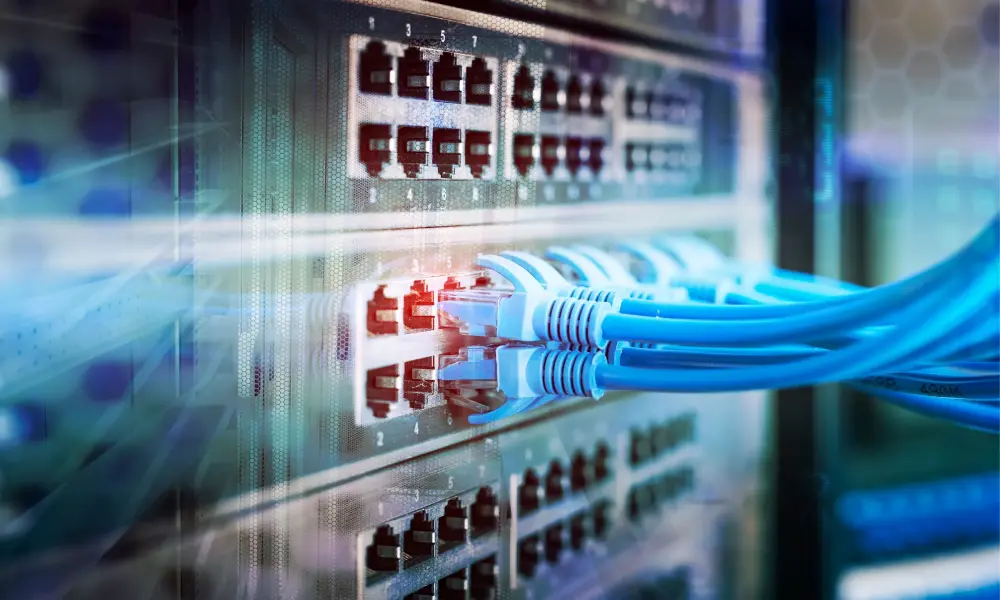
Ethernet is a networking technology standard used to connect and transmit data between devices within a LAN, including computers, printers, storage devices, and many other systems. Thanks to its scalability and flexibility, Ethernet can support a wide range of system sizes, from small local networks to data centers and complex industrial networks.
Industrial Ethernet was not introduced as an overnight breakthrough, but evolved as a strategic response to the shortcomings of conventional industrial communication systems. Its development can be traced back to a time when proprietary fieldbus networks were widely used in factories, with each system tailored to specific vendors, applications, or operational requirements. Although these systems offered reliable and deterministic communication, they struggled to provide interoperability, scalability, and compatibility with the industry’s growing move toward open standards.
Meanwhile, Ethernet had already become a well-established networking technology in enterprise IT thanks to its flexibility and widespread adoption. However, early Ethernet technologies were not originally designed for harsh industrial environments. As technologies and communication protocols advanced, Ethernet gradually addressed these challenges, enabling industrial Ethernet cable systems to support real-time communication while still preserving the openness and flexibility of the original standard.
2. How is Ethernet evolving?
Control Engineering Europe – publication focused on industrial automation, control, and measurement – recently published an article analyzing the evolution of Ethernet over time. Below is a summary of some key insights from the article:
Today, Industrial Ethernet is transforming automation by enabling IT/OT convergence through the connection of sensors, actuators, and controllers with edge devices, enterprise systems, and cloud platforms. Compared to traditional fieldbus systems, Industrial Ethernet supports greater data transmission capacity, real-time control, higher bandwidth, and reduced gateway requirements.
One of the most significant shifts in today’s industrial landscape is being driven by software-defined automation – the separation of software from hardware in automation devices such as controllers. This new model allows previously separate devices to be centralized and consolidated into fewer hardware components.
This approach helps reduce hardware costs while simplifying hardware replacement and upgrades, software patching, testing, and version control. It also improves flexibility in software design and monitoring. Industrial Ethernet networks will continue to serve as the foundation for communication and control in software-defined automation architectures.
At the same time, digital transformation is enabling smarter, more flexible, and more sustainable manufacturing facilities by making operational data at the device level more accessible through edge devices and cloud systems.
Experts also emphasize the growing importance of Single Pair Ethernet (SPE), which is increasingly being used to connect devices that previously relied on analog networks. SPE Ethernet cables enable seamless, secure, and real-time communication between field devices and enterprise systems. This technology further supports Industrial Ethernet networks, allowing manufacturers to leverage AI, cloud computing, and advanced analytics to improve production performance.
According to industry experts, Industrial Ethernet is no longer just a communication technology but it has become the foundation for standardized, secure, and meaningful information exchange across industrial systems. This is particularly important in the era of advanced analytics and artificial intelligence (AI), where systems rely heavily on high-quality, contextualized, and consistent data.
3. Understanding common Ethernet cable types
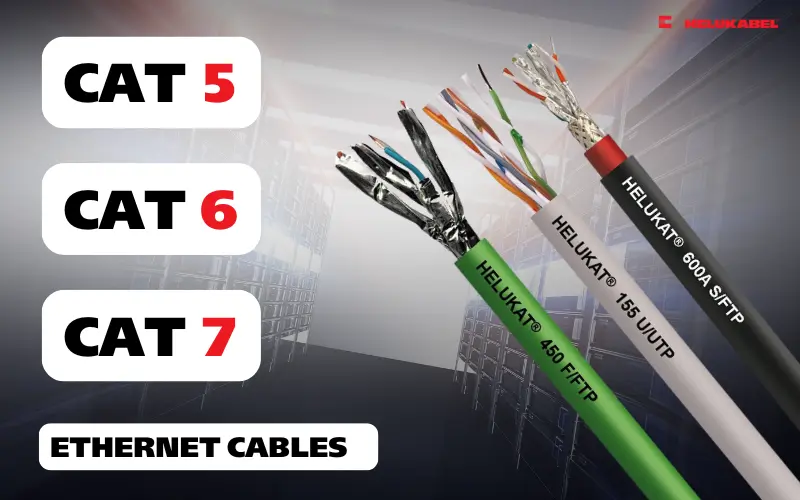
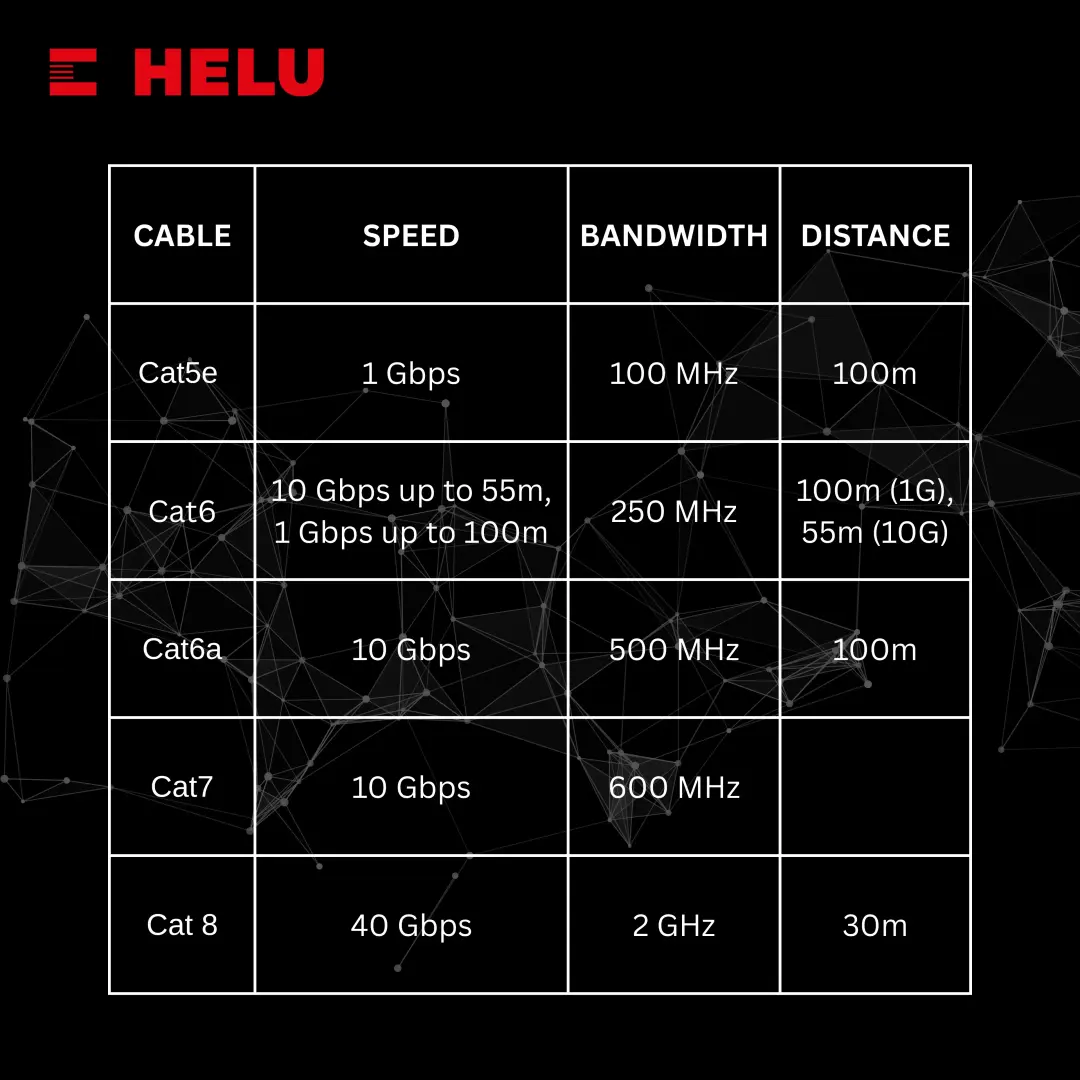
Today, twisted-pair Ethernet cables are widely used in both enterprise and industrial networks. Each cable category offers different capabilities in terms of speed, bandwidth, and application suitability.
3.1. Cat5e Ethernet Cable (Category 5 Enhanced)
- Speed: 1 Gbps
- Bandwidth: 100 MHz
- Distance: 100m
Cat5e Ethernet cables have been around since the late 1990s, but they still handle most office networking tasks efficiently today. For applications that do not require multi-gigabit performance, Cat5e remains a cost-effective solution compared to newer cable categories.
3.2. Cat6 Ethernet Cable (Category 6)
- Speed: 10 Gbps up to 55m, 1 Gbps up to 100m
- Bandwidth: 250 MHz
- Distance: 100m (1G), 55m (10G)
Cat6 Ethernet cables include an additional separator between wire pairs to minimize crosstalk, making them ideal for WiFi 6 access points and multi-gigabit uplinks. However, it is important to note that 10G performance decreases beyond 55 meters, which is critical for longer cable runs.
3.3. Cat6a Ethernet Cable (Augmented Category 6)
- Speed: 10 Gbps
- Bandwidth: 500 MHz
- Distance: 100m
Cat6a is often considered the optimal choice for enterprise environments. It delivers full 10 Gbps performance across the entire 100-meter distance. Although thicker and more expensive than Cat6, this Ethernet cable provides highly stable high-speed performance over longer distances.
3.4. Cat7 Ethernet Cable (Category 7)
- Speed: 10 Gbps
- Bandwidth: 600 MHz
- Available only in shielded versions
Cat7 Ethernet cables remain somewhat controversial in terms of standardization. While ISO approved the category, TIA/EIA standards organizations in North America did not officially adopt it. Some manufacturers also introduced proprietary connectors incompatible with standard RJ45 jacks. Unless there are highly specific requirements, Cat6a is generally the more practical option.
3.5. Cat8 Ethernet Cable (Category 8)
- Speed: 40 Gbps
- Bandwidth: 2 GHz
- Distance: 30m
Cat8 Ethernet cables are considered the “speed monsters” of data centers, specifically designed for 25G and 40G switch connections where ultra-low latency matters. However, these cables are thick, expensive, and often unnecessary for typical enterprise deployments.
4. Key requirements for Ethernet cable infrastructure
As Industrial Ethernet continues to evolve, the demands placed on cable infrastructure are becoming increasingly stringent. Beyond transmission speed, modern Ethernet cables must also deliver strong EMI protection, operational stability in industrial environments, installation flexibility, and support for real-time data communication.
4.1. Environmental requirements
Industrial Ethernet cables are heavily affected by environmental conditions, which can impact both performance and service life. Identifying the specific environmental requirements of an industrial application before selecting the appropriate cable is therefore essential.
Temperature range
Industrial environments may experience both extremely high and low temperatures. Some applications require Ethernet cables capable of operating reliably within ranges from -40°C to 85°C or even higher. Selected cables should have suitable temperature ratings for the intended environment.
Moisture and chemical resistance
Moisture and chemicals can damage Ethernet cables, leading to signal loss and reduced performance. Ethernet cables with moisture-resistant jackets and durable insulation materials are recommended for environments exposed to corrosive industrial chemicals.
Mechanical stress
Industrial environments can subject cables to vibration, bending, compression, and other mechanical stresses. Ethernet cables with high tensile strength and flexibility are recommended to withstand such conditions. Armored cables may also provide additional protection against physical damage.

4.2. Data transmission speed and bandwidth requirements
The Ethernet cable type required depends on the transmission speed and bandwidth needs of the industrial application. Different cable categories support different levels of data throughput and bandwidth capacity.
Cat5e and Cat6 Ethernet cables
Cat5e and Cat6 Ethernet cables are suitable for most industrial applications requiring reliable high-speed connectivity. Cat5e supports data transmission speeds up to 1 Gbps, while Cat6 supports speeds up to 10 Gbps. Cat6 is recommended for applications requiring higher data performance.
Fiber optic cables
Fiber optic cables provide significantly higher bandwidth capabilities and are ideal for long-distance data transmission. These cables can support data rates up to 100 Gbps, making them suitable for high-bandwidth industrial applications.
*Important note: When evaluating Ethernet cable speed and bandwidth requirements, future scalability should also be considered. Selecting Ethernet cables with higher data capacity than current needs can better accommodate future expansion and technological advancements.
4.3. Shielding requirements
Industrial environments often contain sources of electromagnetic interference (EMI) and radio frequency interference (RFI). Choosing Ethernet cables with appropriate shielding is essential for maintaining reliable data transmission.
Unshielded Twisted Pair (UTP)
UTP Ethernet cables are among the most commonly used Ethernet cable types in industrial applications. These cables are cost-effective and suitable for environments with relatively low EMI and RFI levels, relying on twisted wire pairs to minimize interference.
Foiled Twisted Pair (F/UTP)
F/UTP Ethernet cables include an additional foil shield surrounding the twisted pairs, providing improved protection against EMI and RFI. These Ethernet cables are suitable for environments with moderate interference levels.
Shielded/Foiled Twisted Pair (S/FTP)
S/FTP Ethernet cables feature individual foil shielding for each twisted pair along with an overall braided shield. This design provides superior protection against EMI and RFI, making it ideal for highly demanding industrial environments.
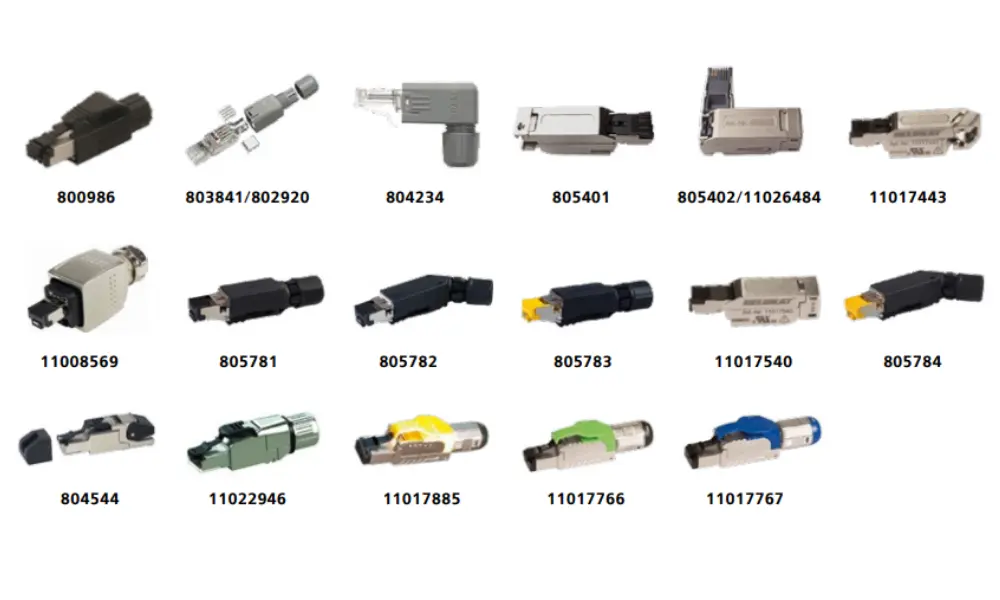
HELU's RJ45 connectors.
4.4. Connector requirements
Selecting the correct connector type for Industrial Ethernet cables is essential for ensuring reliable connectivity and compatibility with network infrastructure. Different of cable connectors offer different advantages depending on the application.
RJ45 connectors
RJ45 connectors are the most widely used connectors in Ethernet networks. They offer broad compatibility and can be used with Cat5e and Cat6 Ethernet cables. These connectors are relatively easy to install and provide secure connections.
M12 connectors
M12 connectors are commonly used in industrial applications because of their durability and resistance to moisture and vibration. Different coding types are available to ensure proper device connections.
LC and SC connectors
LC and SC connectors are used with fiber optic cables, providing reliable low-loss connections for high-speed data transmission over long distances. LC connectors are smaller in size, making them suitable for space-constrained applications.
4.5. Installation and maintenance requirements
When selecting Industrial Ethernet cables, installation and maintenance considerations are essential to ensure smooth deployment and minimize downtime.
Ease of installation
The ease of cable installation and termination should be carefully considered. Some Ethernet cable types require specialized tools and technical expertise, while others offer plug-and-play simplicity. The selected cable should align with installation capabilities and project requirements.
Cable length
Proper Ethernet cable length plays a critical role in ensuring stable transmission performance within industrial networks. The distance between devices and the network infrastructure layout should be carefully planned to determine the appropriate cable length. Additional spare cable length is also recommended to provide flexibility for installation and future expansion.
Maintenance and serviceability
Maintenance and serviceability requirements should also be considered when selecting Industrial Ethernet cables. Certain cable types may require periodic inspection or cleaning to maintain optimal performance. Keeping spare cables and connectors readily available can help reduce downtime and enable faster replacement during unexpected failures.
5. Industrial Ethernet cable solutions from HELU
As Industrial Ethernet plays an increasingly important role in automation and digital transformation, selecting the right Ethernet cable solution is essential for ensuring stable and long-term system performance. Below are some outstanding Industrial Ethernet cable solutions from HELU.
Cat5 Ethernet cables
- HELUKAT® 100IND CAT.5 SF/UTP FRNC STATIC
- HELUKAT® 100IND CAT.5e SF/UTP FRNC FLEX
- HELUKAT® 200IND CAT.5e SF/UTP PUR ROBUSTFLEX
- HELUKAT® 100IND CAT.5 WK SF/UTP X-FRNC FLEX
- HELUKAT® 100S CAT.5e 1000 V SF/UTP PUR CHAIN
- HELUKAT® 200S CAT.5 4C SF/UTP PUR CHAIN
- HELUKAT® 100T CAT.5 SF/UTP PUR TORSION
Cat6 Ethernet cables
- HELUKAT® 500IND CAT.6A S/FTP FRNC STATIC
- HELUKAT® 500IND CAT.6A SK S/FTP PVC STATIC
- HELUKAT® 500IND CAT.6A S/FTP PVC FLEX
- HELUKAT® 500S CAT.6A SF/FTP PUR CHAIN
- HELUKAT® 500S CAT.6A SF/FTP Slim PUR Chain
- HELUKAT® 500IND CAT.6A S/FTP LS0H EXTRAFLEX
- HELUKAT® 250IND CAT.6 CMG SF/UTP PVC STATIC
- HELUKAT® 250IND CAT.6 AWM SF/UTP PVC STATIC
- HELUKAT® 250S CAT.6 CMG SF/UTP PVC CHAIN
- HELUKAT® 250S CAT.6 CMX SF/UTP PUR CHAIN
Cat 7 Ethernet cables
- HELUKAT® 600 CAT.7e S/FTP FRNC STATIC
- HELUKAT® 600IND CAT.7e S/FTP PUR STATIC
- HELUKAT® 600IND CAT.7e S/FTP FRNC STATIC
- HELUKAT® 1200IND CAT.7A S/FTP PUR STATIC
- HELUKAT® 1000IND CAT.7A S/FTP PUR ROBUSTFLEX
- HELUKAT® 600S CAT.7 SF/FTP PUR CHAIN
- HELUKAT® 600T CAT.7 SF/FTP PUR TORSION
- HELUKAT® 600IND CAT.7 S/FTP FRNC SHIPLINE
- HELUKAT® 600IND CAT.7 S/FTP PUR ROBUSTFLEX
EtherCAT cables
- HELUKABEL® EtherCAT-P100S-L CAT.5e Shielded/Unshielded PUR Chain
- HELUKABEL® EtherCAT-P100S-M CAT.5e Shielded/Unshielded Twisted-Pair PUR Cable
Profinet cables (Types A, B, C, R)
- HELUKAT® PROFInet A CAT.5e SF/UTP PVC STATIC
- HELUKAT® PROFInet A CAT.5e SF/UTP PVC STATIC PLTC-ER
- HELUKAT® PROFInet A CAT.5e SF/UTP FRNC STATIC
- HELUKAT® PROFInet A CAT.5e SF/UTP PE STATIC ARMORED
- HELUKAT® PROFInet B CAT.5e SF/UTP FRNC FLEX
- HELUKAT® PROFInet B CAT.5e SF/UTP FRNC FLEX Cca
- HELUKAT® PROFInet B CAT.5e Hybrid SF/UTP FRNC FLEX
- HELUKAT® PROFInet B CAT.5e SF/UTP FRNC SHIPLINE
- HELUKAT® PROFInet B CAT.5e SF/UTP PVC Festoon
- HELUKAT® PROFInet C CAT.5e SF/UTP PVC CHAIN
- HELUKAT® PROFInet C CAT.5e SF/UTP PUR CHAIN
- HELUKAT® PROFInet R+ CAT.5e SF/UTP PUR ROBOTIC
SPE cables
- HELUKAT® SPE Type C 1000BASE-T1 Thick SF/UTP PUR Chain
- HELUKAT® SPE Type C 1000BASE-T1 Thin SF/UTP PUR Chain
- HELUKAT® SPE Type R 1000BASE-T1 SF/UTP PUR ROBOTIC
- HELUKAT® SPE Type B 1000BASE-T1 Hybrid SF/UTP PUR Flex
- HELUKAT® SPE Type A 10BASE-T1L PVC STATIC
HELUCHAIN Ethernet cables
- HELUCHAIN® HELUKAT® 100S CAT.5e 4C SF/UTP TPE
- HELUCHAIN® HELUKAT® 250S CAT.6 SF/UTP TPE
- HELUCHAIN® HELUKAT® 100S CAT.5e 4-pin SF/UTP TPE
- HELUCHAIN® HELUKAT® PROFInet C CAT.5e SF/UTP TPE
- HELUCHAIN® HELUKAT® 500S CAT.6A S/SFTP TPE
- HELUCHAIN® HELUKAT® 600S CAT.7 S/SFTP TPE
- HELUCHAIN® HELUKAT® 500S CAT.6A S/SFTP TPE