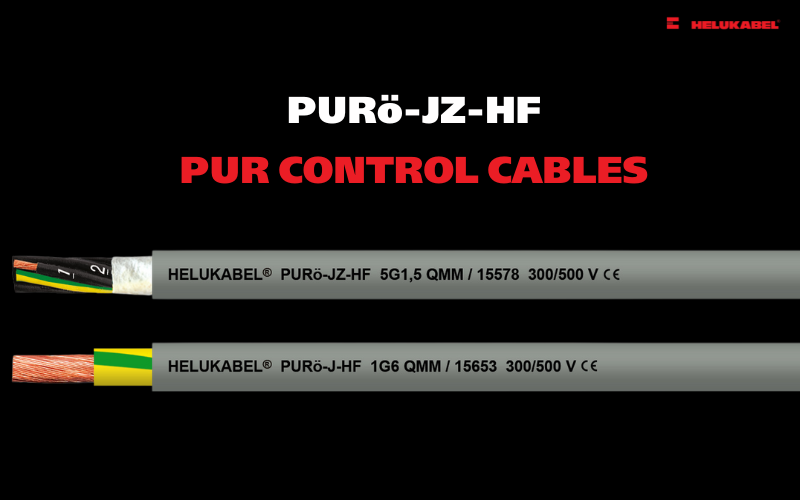
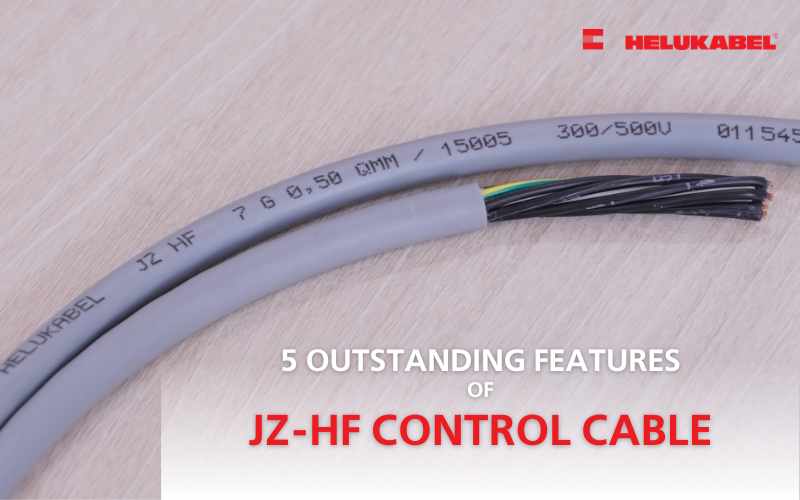
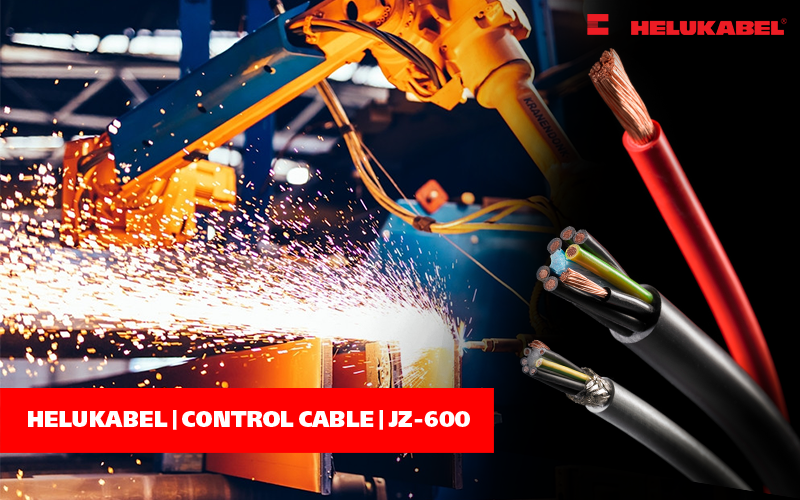
Differences between YY, CY, SY, LiYCY, and LiYY control cables: Construction, characteristics, and applications
YY, CY, SY, together with their smaller-gauge LiYCY and LiYY variants, are all flexible control cables widely used in industry. Yet a single letter in the name (Y, S, or C) decides how well a cable resists electromagnetic interference, how much mechanical stress it can take, and how safely it can be wired. CY resists interference with a copper braid, SY withstands mechanical stress with a steel braid, YY is light and economical, and LiYCY/LiYY are the small-gauge signal versions built for sensors and PLCs.
Article content:
-
1General characteristics of YY, SY, and CY cables
-
2Distinguishing between VDE codes vs. trade names for cables
-
3Meaning of the suffixes: -JZ, -JB, -OZ, -OB
-
4YY cable construction and specifications
-
5Applications of YY cables
-
6HELU's range of YY cables
-
7CY cable construction and specifications
-
8Applications of CY cables
-
9HELU's range of CY cables
-
10SY cable construction and specifications
-
11Applications of SY cables
-
12HELU's range of SY cables
-
13Comparison of the YY, CY, and SY cables
-
14Guide to selecting YY, CY, and SY cables
-
15LiYCY & LiYY Cables vs. YY, CY, SY cables
-
16FAQs about YY, CY, and SY control cables
1. Common features of YY, SY, and CY control cables
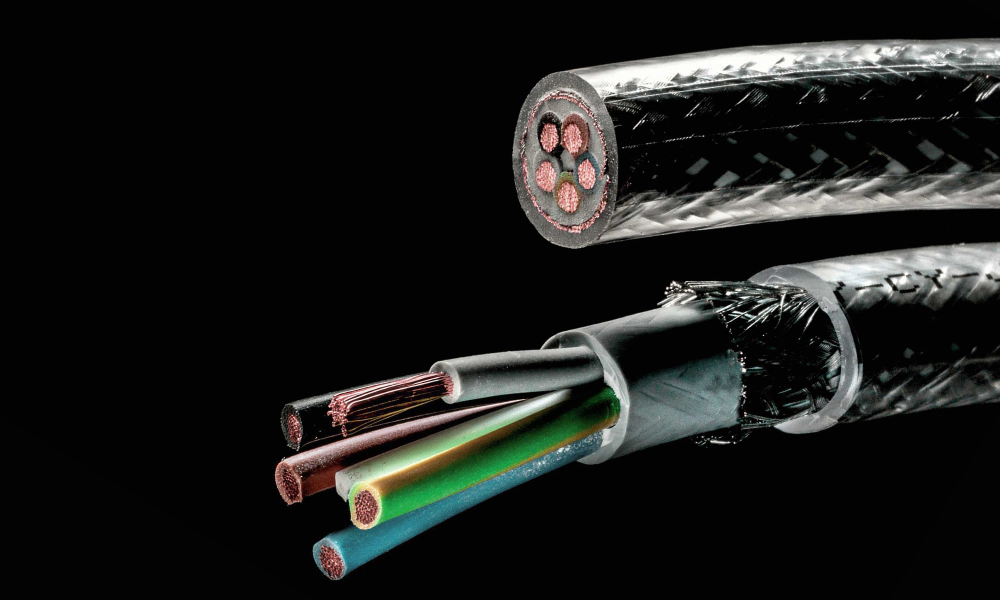
Y-CY-JB shielded control cable (CY-type cable)
1.1 What are YY, CY, and SY control cables?
"Control cable" is a broad term for a large family of cables used for measurement and control signalling , manufactured to various international standards such as European, British, American, Canadian, and others.
YY, SY, and CY are three of the most common control cable types. What they share:
- Flexible construction, mostly with class 5 flexible conductors
- Easy to route and install
- The most widely used cable family in industry: manufacturing plants, assembly lines, control and calibration systems, conveyors, industrial control cabinets, and more
Given how broadly they are used, telling the types apart correctly is crucial. Choosing the wrong type can create hidden risks around signal interference or mechanical durability during operation.
1.2 Two naming systems: VDE codes and trade names
Two naming systems exist side by side in the market:
- Full technical codes under the German VDE standard (YSLY, YSLCY, YSLYSY)
- Two-letter trade abbreviations common in commercial use, especially in the UK and Commonwealth markets (YY, CY, SY)
Both systems essentially describe the same cable. However, ordering simply as "YY" cable without specifying the core configuration can lead to a mismatch. For example, you might receive a cable without an earth core when you actually need the YSLY-JZ version (which includes a green/yellow earth core).
Reference table:
| Full VDE code | Trade name | Construction meaning | Reference standard |
| YSLY | YY | PVC insulation, PVC sheath, unscreened. This is the standard type for dry/damp indoor environments | VDE 0250-405 |
| YSLCY | CY | As above, plus a tinned copper wire braid (TCWB) to block RFI/EMI | VDE 0250 (screened version) |
| YSLYSY | SY | As YSLY, plus a galvanised steel wire braid (GSWB) for crush and abrasion resistance | No separate VDE code; follows general industry convention |
Knowing how to read these codes lets you communicate precisely with suppliers regardless of which naming system they use. This is especially important when working with international partners who default to VDE codes rather than the common trade abbreviations.
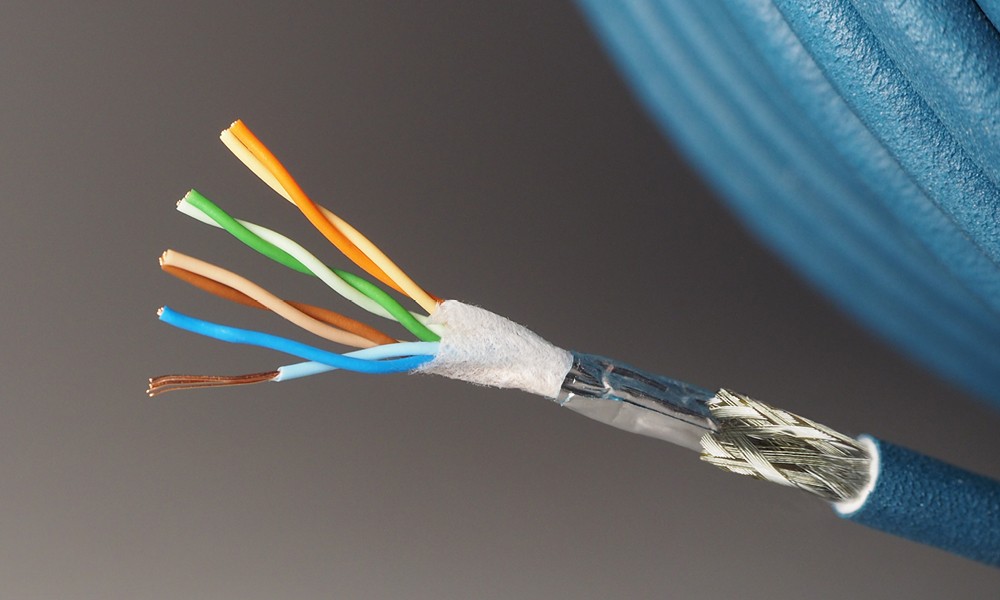
The suffixes -JZ, -JB, -OZ, and -OB indicate whether the control wire cores are color-coded or numbered, and whether they include a green-yellow ground wire.
1.3 Core configuration suffixes: -JZ, -JB, -OZ, -OB
These suffixes describe the core configuration of control cables under the DIN VDE 0293-308 convention:
- -JZ: numbered black cores, plus a green/yellow (GN-YE) earth core
- -JB: color-coded cores, plus a green/yellow (GN-YE) earth core
- -OZ: numbered black cores, no earth core
- -OB: color-coded cores, no earth core
2. Features of YY (YSLY) control cable - The standard, unscreened type
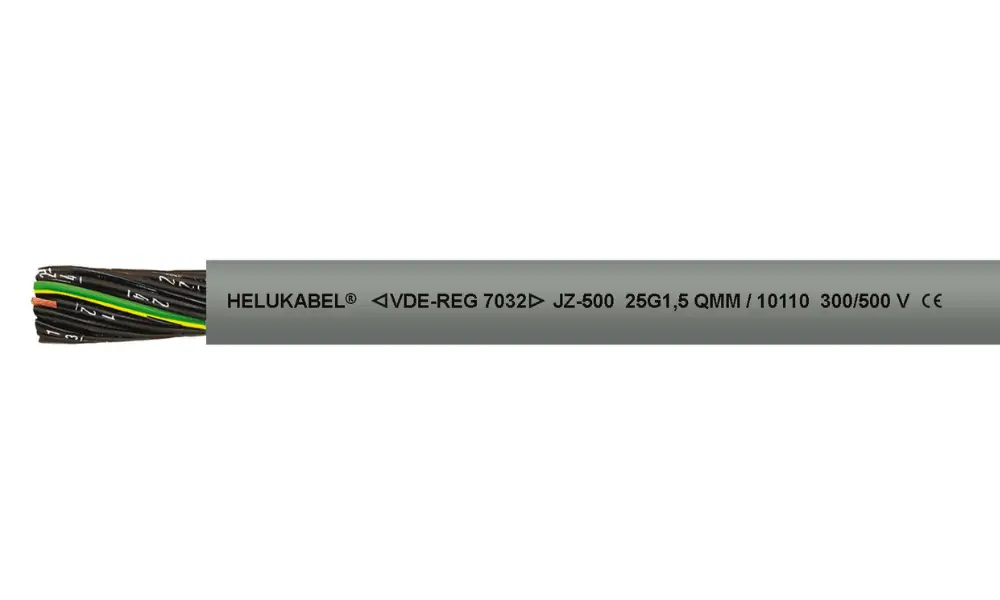
The JZ-500 is HELU's flagship YY cable series
YY is a flexible, multi-core control cable with no interference shielding. Its design prioritises low cost and high flexibility, making it suited to low-interference environments.
2.1 Construction and technical specifications
YY takes its name from the German designation system (YSLY): the first Y denotes PVC insulation around the conductor, and the second Y denotes a PVC outer sheath. Construction highlights:
- Fine-stranded copper conductors (Class 5) for flexibility and easy bending
- No metallic screen layer. This is the core distinction from CY (copper braid) and SY (steel braid)
- Double insulation: separate core insulation plus an outer sheath, in PVC or LSZH
- An LSZH (Low Smoke Zero Halogen) version, coded HSLH, for projects requiring higher fire safety, limiting toxic smoke in a fire
- Rated voltage: 300/500V; a 0.6/1kV version is available for higher power/control applications
- Range: 2 to over 60 cores, cross-sections from 0.5mm² to 70mm² — the widest range among the five control cable types
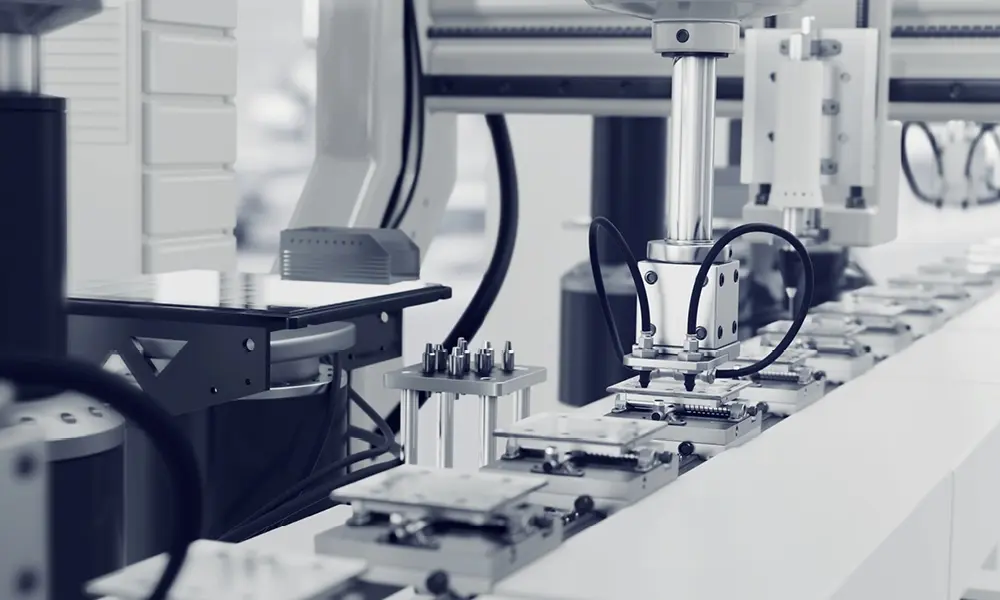
YY cables are suitable for indoor applications and installation environments with low levels of interference
2.2 Applications of the YY cables
Multi-core YY control cable is widely used across industrial applications, including:
- Wiring within manufacturing plants, assembly lines, conveyors, and industrial control cabinets — anywhere measurement, control, or calibration signals need to be carried
- Outdoor use is possible if shielded from direct sunlight; suited to dry or damp indoor environments
- Because it has no shielding, YY suits installations with low interference, light mechanical stress, where flexibility is the priority
- Building automation: lighting systems, HVAC systems, elevator door controls
2.3 HELU's YY cable range
Some of HELU's representative YY control cable lines include:
- JZ-500 / OZ-500
- JB-500 / OB-500
- Other cables: JZ-500 HMH (halogen-free), JZ-500 BLACK (suitable for outdoor use)
Explore the different variants in the JZ-500 cable series and the selection guide
Grey PVC sheath, PUR, HMH, COLD, BLACK, or ORANGE
3. Features of CY (YSLCY) screened control cable — Copper-braided, EMC protection
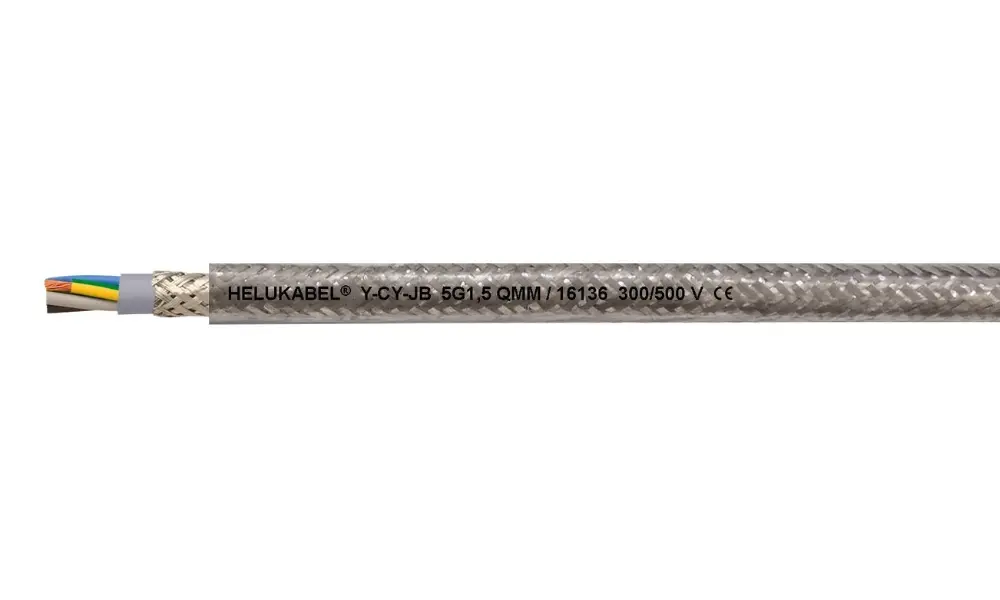
Y-CY-JB shielded control cable
CY is a flexible, multi-core control cable with a shielding layer. Its purpose is to keep signal transmission stable in environments with electromagnetic interference (EMC).
3.1 Construction and technical Specifications
CY control cable (full designation YSLCY) shares CY's basic construction with YY but adds a tinned copper wire braid (TCWB) around the cores, along with a polyester (PET) tape laid down before braiding to protect the insulation. Key features:
- Flexible Class 5 copper conductors
- PVC or LSZH insulation; grey or transparent PVC/LSZH outer sheath
- Default core configuration on order: YSLCY-OZ (numbered black cores) for 2-core cables, YSLCY-JZ (with green/yellow earth core) for 3-core cables and above
- An upgraded YSLYCY version with an additional inner sheath layer, rated at 0.6/1kV, for applications combining power supply and control
- Rated voltage 300/500V (unless otherwise noted); the YSLYCY version is rated at 0.6/1kV
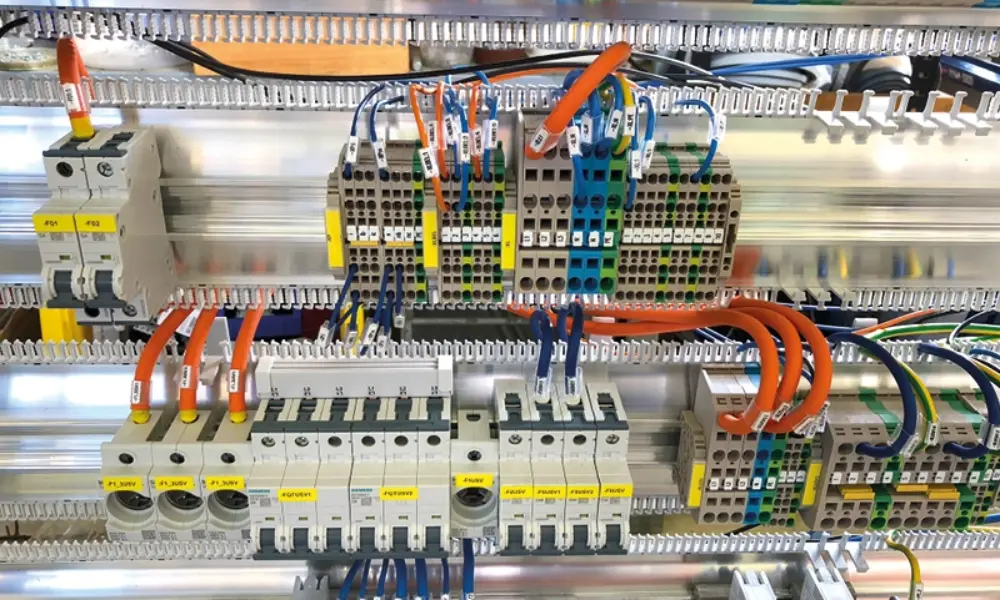
CY screened control cables are commonly used in applications that require EMC protection
3.2 Applications of CY screened control cables
Screened CY control cable is typically used where signal quality matters and protection from external electric fields is required, including:
- Wiring for measurement, control, and calibration equipment in assembly lines, conveyors, and industrial control cabinets — anywhere accurate, interference-free signal transmission is needed
- Suited to flexible, temporary installations, not subject to continuous tensile pulling
- Suitable outdoors if shielded from direct sunlight; indoors it withstands dry, damp, or oily/wet conditions
- Not suited to continuous twisting or exposure to strong corrosive chemicals. In those cases, a PUR-sheathed version should be used
3.3 HELU’s CY cable range
The cable types in this category include:
Discover the features of HELU’s flagship CY cable series
This cable is used to transmit signals and control machinery in factories, where there is a high level of electromagnetic interference, with an operating temperature range of -15°C to +80°C.
4. Features of SY (YSLYSY) control cable - Steel-braided, for mechanical protection
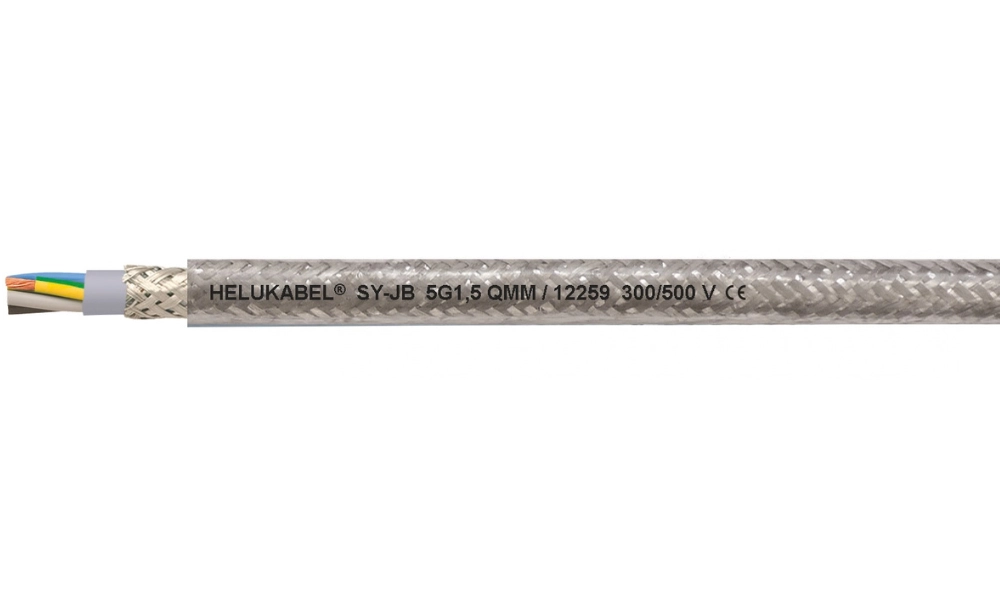
SY-JB/SY-OB galvanised steel wire braid, with inner sheath
SY is a multi-core control cable with a galvanised steel braid layer. It's designed to provide mechanical protection and suit high-stress environments.
4.1 Construction and specifications
SY (full designation YSLYSY) is built from:
- Class 5 copper conductors
- PVC insulation, a thick PVC bedding layer, a galvanised steel wire braid (GSWB) above it, and a usually transparent PVC outer sheath. The transparent sheath is a deliberate design choice, allowing direct visual inspection of the steel braid's condition (rust, damage, broken strands) without cutting the sheath.
- The galvanised steel braid provides good mechanical strength but no EMC shielding. If an application requires interference protection, CY (copper braid) should be chosen instead of SY.
- Rated voltage 300/500V unless otherwise noted; a 0.6/1kV version is available for applications combining power supply and control
4.2 Applications of SY cables
SY control cable is used in environments facing mechanical stress challenges, such as:
- Wiring for control equipment and machinery in environments prone to impact, cutting, or abrasion such as control circuits, assembly lines, conveyors, machine tools
- Common in factories and production lines where equipment is frequently moved, maintained, or repaired
- Used for low-to-medium voltage control signals, not as a main power supply cable
- Withstands dry, damp, or wet indoor environments, including exposure to oil and water
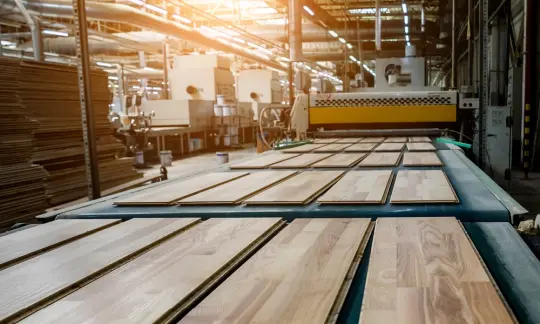
4.3 HELU’s SY cable range
Some examples of cable lines include:
5. Comparing YY, CY, and SY control cables
YY, CY, and SY differ mainly along two axes: whether they shield against electromagnetic interference, and how much mechanical stress they can withstand.
5.1 Feature comparison table
| Criteria | YY | CY | SY |
| Braid | None | Tinned copper | Galvanised steel |
| EMI shield | No | Yes | No |
| Mechanical strength | Low | Medium | High |
| Flexibility | High | High | Medium |
| Typical application | Indoor control cabinets, light machinery | Measurement, signal cabling | Machinery, harsh environments |
Each type of cable has its own advantages and disadvantages:
- YY: no braid, so it's the lightest and most flexible, but offers no EMI shielding and no outstanding mechanical strength
- Screened CY: shields against interference, but only moderate mechanical strength
- SY: the highest mechanical strength, but no EMI shielding and somewhat less flexible
5.2 How to choose the right control cable
When choosing between YY, CY, or SY, consider:
- Interference requirements: In high-interference environments (near a variable frequency drive), it is recommended to choose screened CY cable (its copper braid blocks electromagnetic interference effectively). In lower-interference environments, such as building automation systems, YY is a more economical and flexible choice.
- Mechanical stress requirements: In high-stress environments (mining, ports), SY with its galvanised steel armour offers reliable protection. In low-mechanical-stress environments, such as indoor control cabinets, YY or CY are lighter and easier to install.
- Environment and fire safety requirements: In public buildings with high footfall (hospitals, shopping centres), choose the LSZH-sheathed version of CY or YY, which emits no toxic gas when burned. For ordinary industrial environments, a standard PVC sheath is sufficient and more cost-effective.
Cables can also be manufactured with additional custom features to fit specific functions such as different core counts and colour coding, flame-retardant or chemical-resistant sheathing, or certifications required by a particular industry. Contact HELU Vietnam's Technical Department directly for detailed advice and guidance.
6. Features of LiYCY and LiYY cables
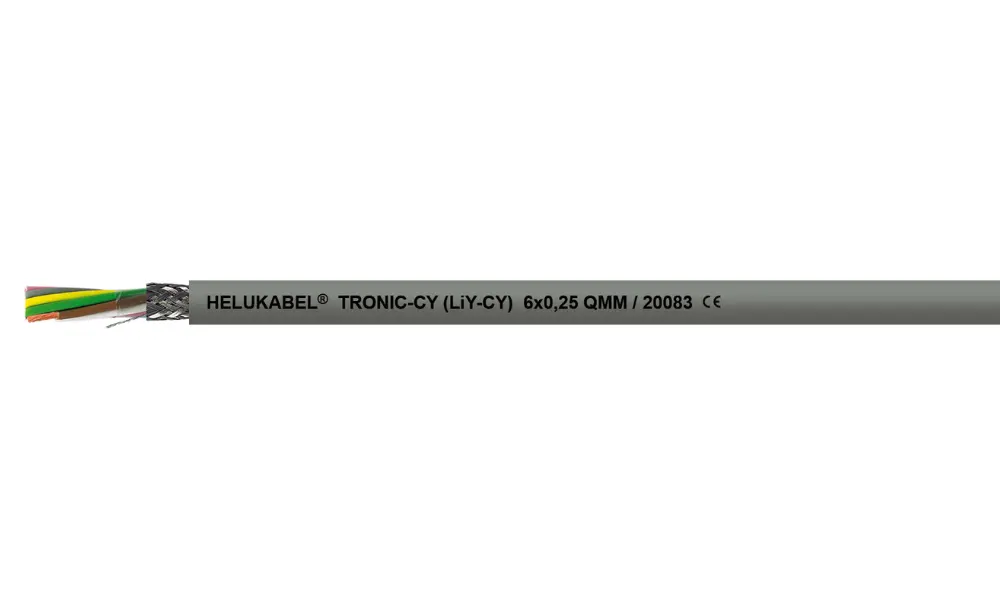
TRONIC-CY (LiY-CY) / TRONIC-DY (LiY-DY) cables
Beyond the three main types (YY, CY, and SY), two more variants deserve mention when discussing flexible control cables: LiYCY and LiYY.
Technically, these belong to a separate branch of the VDE cable ecosystem known as the LiY flexible signal cable family. This family has a smaller cross-section and is purpose-built for continuous-flex applications and high-reliability signal transmission — connecting sensors, PLCs, actuators, and communication networks in automation systems.
6.1 LiYCY — The small-gauge, screened cable
The name LiYCY reflects its construction in order: Li (fine-stranded, flexible conductor that resists metal fatigue under repeated bending), Y (PVC insulation), C (foil or copper braid screen), Y (PVC outer sheath).
LiYCY uses a much smaller cross-section: from 0.14mm² to 1.5mm² (the twisted-pair version also comes in 0.5mm² and 0.75mm²), with 2 to over 30 cores. Rated at 350V for cross-sections ≤0.14mm² and 500V for larger sizes.
Where CY control cable is typically used for medium-power control circuits, LiYCY is the choice when preserving a low-level signal or data is the priority such as process control systems, industrial computers, measurement instruments, anywhere very low-level signals need shielding from interference.
Discover the key features of our LiYCY cable
EMC protection- With drain wire
6.2 LiYY — The small-gauge, unscreened cable
LiYY is the unscreened version of LiYCY — the same small cross-section range (0.14mm² to 1mm², up to 36 cores), with PVC insulation and sheath, built to the DIN VDE 0812 standard.
This cable suits indoor signal/data transmission in environments without significant electromagnetic interference. Typical applications include wiring inside control cabinets, or connecting measurement instruments located well away from interference sources, low mechanical stress and tension.
Discover HELU's LiYY cable: TRONIC (LiYY)
6.3 Quick comparison of all five cable types
| Cable type | Screen | Common cross-sections | Number of cores | Voltage | Main applications |
| YY | None | 0.5 - 70mm² | 2 - 61 | 300/500V (0.6/1kV) | Production lines, standard control cabinets |
| SY | Galvanised steel braid | 0.75 - 95mm² | 2 - 25 | 300/500V | Impact, abrasion, robotics, machine tools |
| CY | Tinned copper braid | 0.5 - 35mm² | 2 - 25 | 300/500V (0.6/1kV) | Control circuits near interference sources, VFDs |
| LiYCY | Tinned copper braid | 0.14 - 1.5mm² | 2 - 30+ | 350/500V | Interference-sensitive signal/data, measurement |
| LiYY | None | 0.14 - 1mm² | 2 - 36 | 250/250V | Light signal/data, low interference |
7. FAQs
Screened CY cable uses a copper braid to shield against electromagnetic interference, while SY uses a steel braid for mechanical strength. If an application requires EMC shielding, SY cannot substitute for it, because a steel braid is not effective against radio-frequency interference.
LiYCY uses a much smaller cross-section (0.14–1.5mm² versus CY's 0.5–35mm²) and is built for low-level signal/data transmission, while CY is typically used for medium-power control circuits. Both feature a copper-braid interference shield.
It allows direct visual inspection of the steel braid's condition underneath (corrosion, damage) without cutting the sheath. This is a deliberate design feature, not a technical limitation.
None of the three should be used long-term outdoors in direct sunlight or buried underground. Standard PVC sheathing has poor UV resistance. If outdoor installation is unavoidable, route the cable through protective trunking or conduit shielded from direct sunlight, or switch to a cable with a dedicated UV-resistant/direct-burial sheath.
It's not recommended for long signal runs near a variable frequency drive or heavy-duty switching equipment. The reason is that neither CY nor YY has a twisted-pair core structure, so induced interference can still occur even with CY's copper shield. For low-level, high-accuracy measurement signals, switch to LiYCY-TP (twisted pair with an overall screen) or a dedicated instrumentation cable.
LiYY is the unscreened version, suited to signal/data transmission in low-interference environments such as inside control cabinets or instruments located away from interference sources. LiYCY adds a tinned copper braid for interference protection, used when signals must run near VFDs, motors, or switching equipment. Both use fine-stranded conductors with a small cross-section and much better flex life than CY/SY/YY.
For many years, the YY, CY, SY cable group fell outside any mandatory national standard, letting some manufacturers claim "compliance" despite thinner insulation or sheathing than genuine standard flexible cable.
To address this, some markets have introduced dedicated certification schemes for this cable group. For example, the UK's BASEC scheme, covering six technical specifications up to 300/500V and 70°C. This is why it pays to prioritise manufacturers with transparent certification (such as VDE in Germany or BASEC in the UK) rather than relying solely on product descriptions.
Need advice on choosing the right control cable?
If you are unsure whether to choose CY, SY, YY, LiYCY, or LiYY for your project, the HELU Vietnam technical team is always ready to advise you on the right configuration (from the number of cores and cross-sectional area to specific requirements for noise immunity or mechanical strength). Contact HELU Vietnam today to choose the right cable type from your very first order.