500°C–800°C heat-resistant cables: Applications in furnaces, steel plants, and heavy-duty industries
In certain extremely high-temperature environments, standard PVC cables — rated for only 70°C — will melt and lose their insulating properties within seconds. The consequences go beyond equipment damage: they include fire and explosion hazards, production shutdowns, and serious safety risks for operators.
1. Classification of heat-resistant cables by temperature rating and material
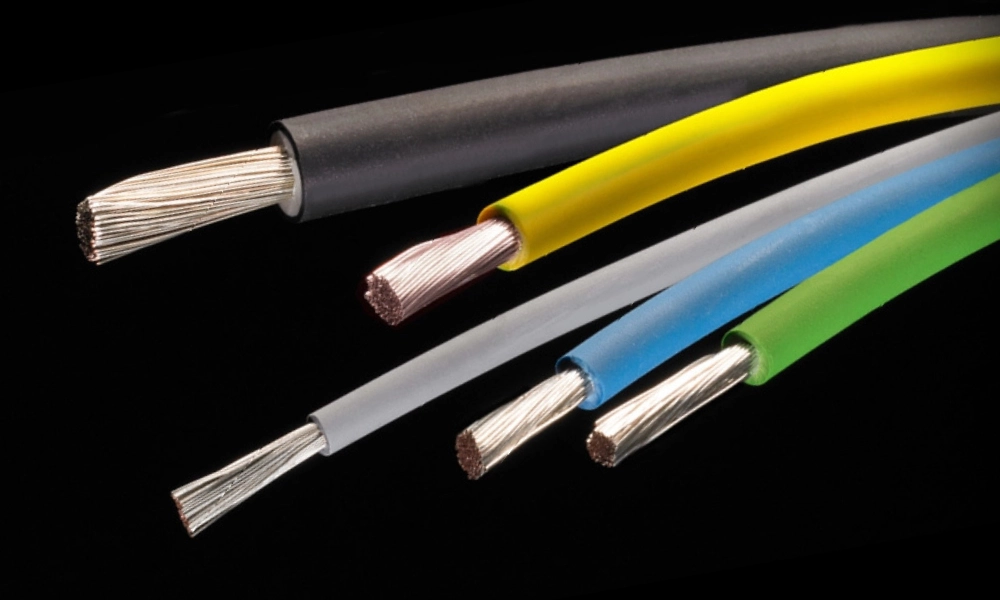
Heat-resistant wire with a tinned copper conductor
Heat-resistant cables cables are defined as cables capable of continuous operation in harsh thermal environments. Each insulation material has a different temperature threshold, which determines the applicable range of each cable type.
1.1. 180–250°C rating: Silicone rubber insulated cables
Insulation material: Silicone rubber is the most widely used material for heat-resistant cables. It maintains elasticity and stable insulating performance across a broad temperature range, from −60°C to +180°C (for fixed installations) and up to +200°C for short periods. Additionally, silicone offers UV resistance, moisture protection, and excellent ozone resistance — making it suitable for both indoor and outdoor applications.
Conductor: Tinned copper is the standard choice for this temperature class. The tin coating protects the copper surface from oxidation at elevated temperatures while maintaining good electrical conductivity. However, tin withstands temperatures only up to approximately 200°C — beyond this threshold, the tin layer begins to flake off and loses its protective function.
Key features: Flexible, easy to bend, and suitable for installation in confined spaces. This is why silicone cables are widely used in applications requiring flexibility, such as motor connections, packaging machines, heat-drying equipment, and industrial ovens.
Typical applications: Industrial drying ovens (150–200°C), boiler combustion chambers (areas away from the heat source), motor leads with high surface temperatures, and industrial lighting equipment.
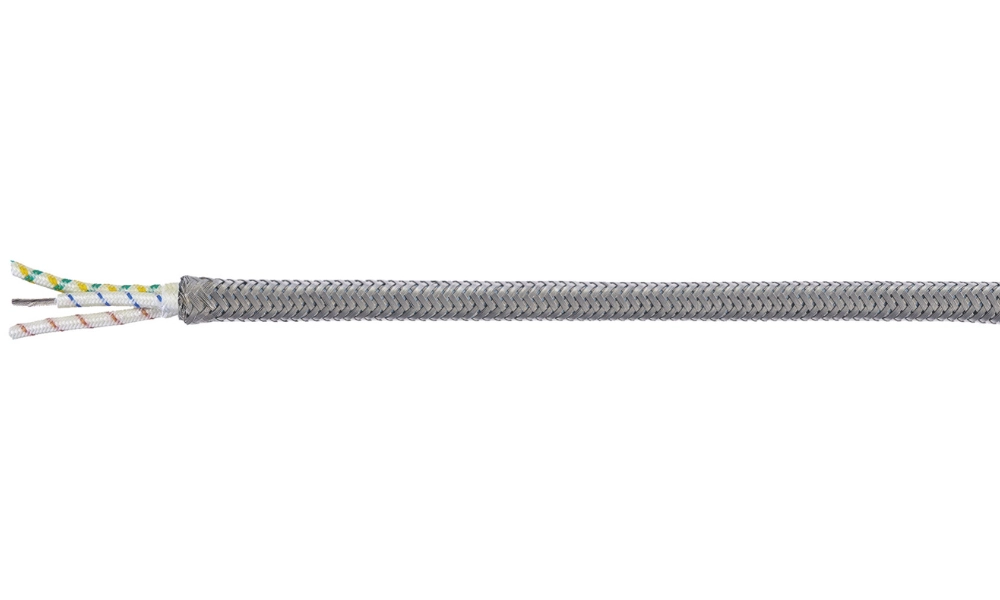
The HELUTHERM® 400-MULTI-ES heat-resistant cable features glass fiber insulation
1.2. 300–500°C rating: Mica and fiberglass composite cables (Mica + Fiberglass)
Insulation material: At temperatures of 300–500°C, silicone rubber can no longer perform adequately. Instead, these cables use multilayer construction: the innermost layer consists of double-wrapped mica tape around the conductor, forming the primary temperature-resistant insulation; the outer layer is tightly braided fiberglass, serving as mechanical protection and supplementary thermal insulation.
Conductor: Nickel-plated copper replaces tinned copper at this level. Nickel withstands significantly higher temperatures than tin (up to 450°C) and offers superior oxidation and corrosion resistance in chemically aggressive environments.
Key features: Stiffer than silicone cables with a larger minimum bend radius, but with far superior heat resistance. Mica/fiberglass cables are commonly designated as GN500 in the Vietnamese market (GN = temperature-resistant, 500 = temperature rating in °C).
Typical applications: Ceramic kilns (400–500°C), areas around rotary kilns in cement plants, metal heat-treatment furnaces, thermocouple connections in industrial furnaces, and heating element lead wires.
1.3. 600–800°C rating: Ceramic fiber insulation
Insulation material: This is the highest temperature-resistance class for electrical applications in extreme industrial environments. The insulation uses ceramic fiber — a material capable of continuous operation above 800°C. Ceramic fiber is typically combined with an inner mica layer to ensure electrical insulation across all temperature ranges.
Conductor: Pure nickel is the only viable choice at this temperature class. Copper — even nickel-plated copper — oxidizes rapidly and progressively loses conductivity under continuous operation above 500°C. Pure nickel has a melting point of 1455°C and outstanding oxidation resistance, ensuring stable electrical conductivity at 800°C and above.
However, nickel has a higher resistivity than copper (approximately 4 times greater), meaning line losses will be higher. This is a necessary trade-off when operating in ultra-high-temperature environments.
Key characteristics: The stiffest and least flexible of the three groups, with the highest cost. In return, this is the only cable type capable of stable operation in environments where most conventional insulation materials have completely decomposed.
Typical applications: Areas around electric arc furnaces (EAF) in steel plants, glass melting furnaces (600–700°C), clinker kilns in cement plants, combustion chamber zones in thermal power plants, and instrumentation connections in brick and refractory firing kilns.
💡 Note: In the Vietnamese market, the term "asbestos heat-resistant wire" is commonly used as a general reference for the mica/fiberglass and ceramic cable category. However, asbestos is a material that has been restricted or banned in many countries due to health risks. HELU's modern heat-resistant cable lines use mica and fiberglass — they contain no asbestos.
2. Which environments require temperature-resistant cables rated for 500°C or even 800°C?
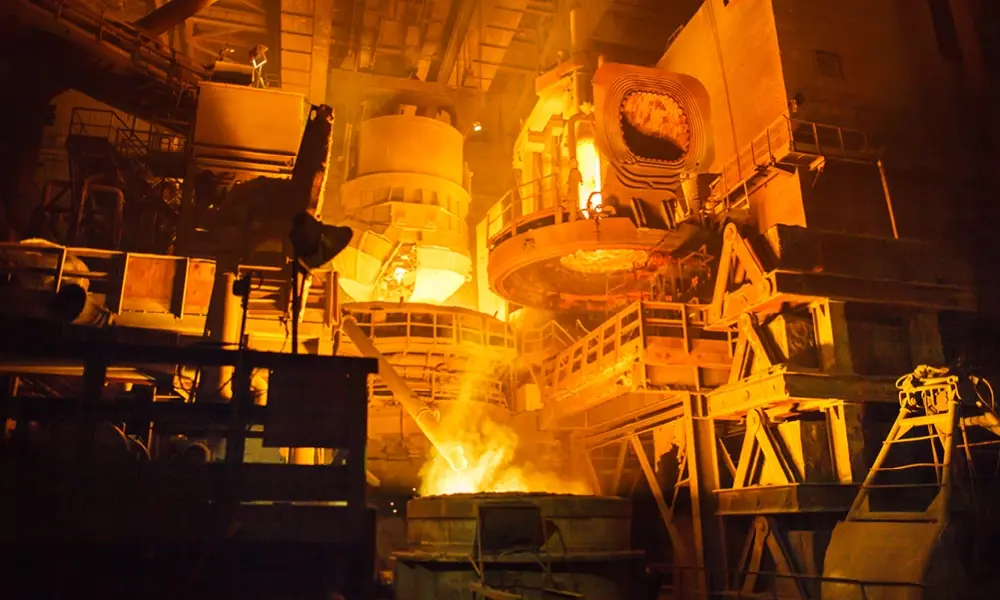
High-temperature zones are concentrated around the furnace, the ladle, the billet heating system, and the exhaust duct
Understanding the insulation materials and conductors is only half the story. The practical question that design engineers need to answer is: at the specific installation location within the plant, what is the actual temperature, and what other factors besides heat must the cable withstand?
2.1. Steel and metallurgical plants
Steel mills present the most demanding environment for electrical cables across all heavy industries. High-temperature zones are concentrated around smelting furnaces, ladles, billet reheating systems, and exhaust gas ducts — where cables simultaneously face intense radiant heat along with numerous other challenges:
- Temperature inside an electric arc furnace (EAF): The cathode zone reaches 3000–4000°C, and the anode zone is even hotter — approximately 4900°C. However, cables are not routed inside the furnace but in surrounding areas. Radiant heat from the furnace maintains temperatures of 600–800°C at positions near the furnace door and along the electrode raising/lowering system.
- Thermal stress and material degradation: Each tapping, charging, or maintenance shutdown causes temperature swings of several hundred degrees within a short period. Repeated thermal stress causes the conductor metal to expand and contract, leading to metal fatigue, warping, and loosening of connections over time. Unsuitable insulation materials decompose and char, accelerating cracking, deformation, and insulation degradation — even when the average temperature remains within the cable's rated tolerance.
- Insulation requirements in conductive environments: Modern steel plants use numerous high-power devices, automated control systems, and sensor networks. Inadequate insulation causes signal interference or safety hazards for operators.
- In addition, the cable must withstand fine metal dust, welding sparks, molten slag, exhaust gases containing metal oxides and sulfur compounds, and continuous mechanical vibration and impact.
💡Recommended heat-resistant cable: heat-resistant cables rated for 800°C with pure nickel conductors and ceramic/mica insulation. At positions with slag splash risk, cables should be fitted with additional mechanical protection conduits (steel conduit or heat-resistant steel-core flexible conduit).
2.2. Glass and ceramics plants
Glass production is a complex process requiring extremely high temperatures throughout multiple stages. Actual temperatures by process stage:
- Melting furnace area: Cables at the furnace shell and forehearth (molten glass channel) must withstand continuous surface temperatures of 500–700°C, along with an atmosphere containing alkaline compounds and fluoride from the melting process.
- Float glass forming zone: To achieve a perfectly flat surface for window glass, molten glass is poured onto a bath of liquid tin. The glass and tin move together as a continuous sheet, with the temperature gradually decreasing from approximately 1000°C to 600°C along the length of the tin bath. Cables controlling the tin bath heating system and thermal sensors in this area must withstand temperatures of 500–700°C.
- Annealing lehr zone: After the tin bath, the glass sheet passes through an annealing lehr to relieve internal stress — temperature decreases in a controlled manner from 500°C to room temperature. Cables in this area experience lower heat (200–500°C) but must operate reliably over extended periods, as the production line runs continuously 24/7.
- Ceramic kilns: Firing temperatures vary by product. The area outside the kiln shell and along the kiln car system maintains temperatures of 400–600°C.
💡Recommended heat-resistant cable: Cables rated for 500°C (mica/fiberglass) for most positions. For areas near the melting furnace or forehearth, cables rated for 800°C (ceramic) are required. Braided fiberglass outer sheath helps resist abrasion from mineral dust.
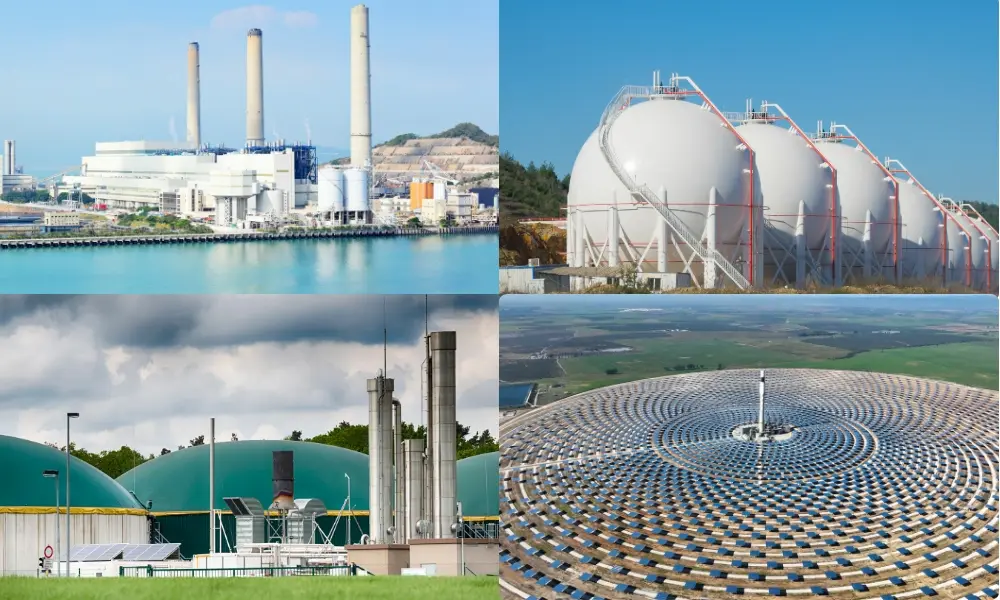
In power plants, in addition to being heat-resistant, cables in many areas must also meet flame-retardant standards
2.3 Energy sector and power plants
Actual temperatures by zone:
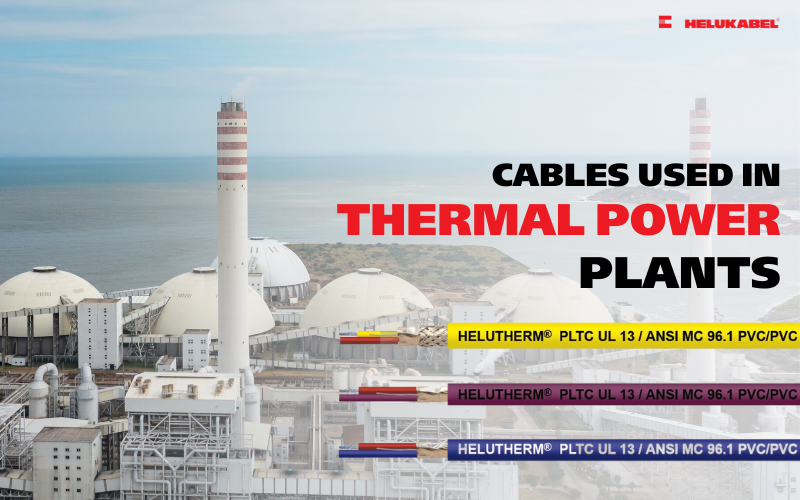
- Thermal power plant: Areas around the boiler have steam pipe surface temperatures of 400–560°C. The steam turbine zone maintains temperatures of 300–500°C. The main steam pipe reaches temperatures up to 540–600°C.
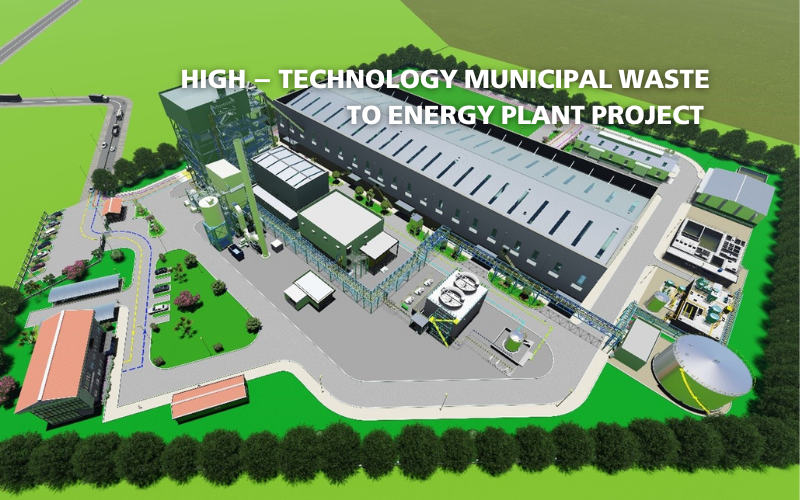
- Waste-to-energy plant: The combustion chamber reaches 850–1100°C. Surrounding areas near the combustion chamber and heat recovery boiler experience 400–600°C, along with highly corrosive flue gases (HCl, SO₂).
- Biomass power plant: Similar to conventional thermal plants, the combustion and boiler zones reach 300–500°C.
Special requirements beyond temperature: In power plants, cables in many areas must also meet flame propagation resistance standards per IEC 60332, in addition to temperature resistance — ensuring that flames do not propagate along the cable in the event of a fire. This is a mandatory requirement under the safety codes of most countries.
Recommended cable type: temperature-resistant cables rated for 500°C (mica/fiberglass) for boiler and turbine areas. At positions requiring both temperature resistance and fire resistance capability, cables with additional IEC 60331 (fire survival) certification or mineral insulated cables (MICC) per IEC 60702 should be selected.
💡Helpful Information: Learn about thermal power and how thermal power plants work
2.4 Cement plants
Cement production is a chemical process requiring enormous amounts of heat, with peak temperatures reaching 1450°C inside the rotary kiln. Actual temperatures by zone:
- Rotary kiln: This is the central piece of equipment in a cement plant, where clinker is fired at 1,450°C inside the kiln. The outer kiln shell maintains temperatures of 300–400°C, but at the kiln hood — where clinker drops out — the surrounding air temperature reaches 500–600°C.
- Preheater tower: The cyclone preheater system, standing 50–100 m tall, has hot gas temperatures increasing from 300°C (upper stages) to 800°C (lower stages, near the kiln). Cables running along the preheater tower must withstand heat according to this gradient.
- Clinker Cooler: Clinker exits the kiln at over 1000°C and is rapidly cooled to below 100°C through the grate cooler. The cooling rate directly affects the crystal structure and grindability of the clinker. The air temperature at the cooler inlet reaches 400–500°C.
Recommended cable type: Cables rated for 500°C (mica/fiberglass) for the kiln hood, lower preheater stages, and clinker cooler zones. Silicone temperature-resistant cables (180°C) for the upper preheater stages and grinding areas. The outer sheath should resist alkaline environments — braided fiberglass is the preferred choice, as it offers better alkali resistance than silicone.
3. Key international standards for temperature-resistant cables
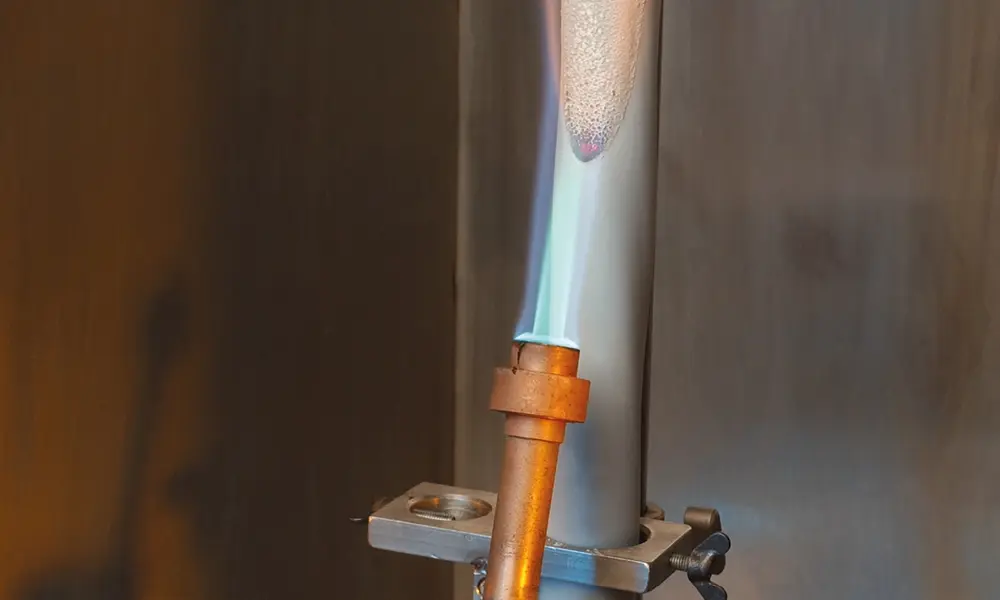
The cables are tested for fire resistance at our Windsbach plant
When selecting temperature-resistant cables for industrial projects, a proper understanding of international standards helps engineers ensure that cables meet technical requirements and comply with safety regulations. Below are the most important standards directly applicable to temperature-resistant cables.
3.1. IEC 60702 — Mineral Insulated Cable (MICC)
IEC 60702 is the standard specifically for mineral insulated cables, commonly referred to as MICC or MI cables. This is the highest temperature-rated cable type within the IEC framework, capable of continuous operation at temperatures up to 1,000°C.
3.2. IEC 60331 — Circuit integrity under fire conditions
IEC 60331 specifies test methods for evaluating a cable's ability to maintain circuit function when directly exposed to flame. Cables meeting IEC 60331 must continue to transmit power for a minimum of 90 minutes at a flame temperature of 750°C (or 830°C, depending on the edition).
3.3. IEC 60332 — Flame retardance
It is essential to distinguish IEC 60332 from IEC 60331. IEC 60332 only requires that a cable not propagate flame when ignited, meaning the flame self-extinguishes once the ignition source is removed. The cable is not required to remain functional during the fire.
IEC 60332 consists of multiple parts: IEC 60332-1 (single cable test) and IEC 60332-3 (bundled cable test — significantly more stringent, as multiple cables create a synergistic burning effect). For power plants and facilities with high fire safety requirements, cables must meet at least IEC 60332-3.
3.4. Distinguishing heat-resistant, fire-resistant, and flame-retardant cables
These are three concepts that are often confused in practice:
| Features | Heat-resistant cable | Fire-resistant cable | Flame-retardant cable |
| Purpose | Continuous operation at high temperatures | Maintain the electrical circuit in the event of a fire | Do not spread the fire |
| Operating temperature | 180–1000°C (continuous) | 750–830°C (90 minutes) | Normal temperature |
| After the fire | Continue operations | Continue operations (for the specified period) | Not required |
| Applications | Furnaces, steel mills | Fire protection and emergency exit systems | Buildings, factories (general requirements) |
💡Distinguishing between fire-resistant and flame-retardant control cables
4. Key factors to consider when selecting heat-resistant cables
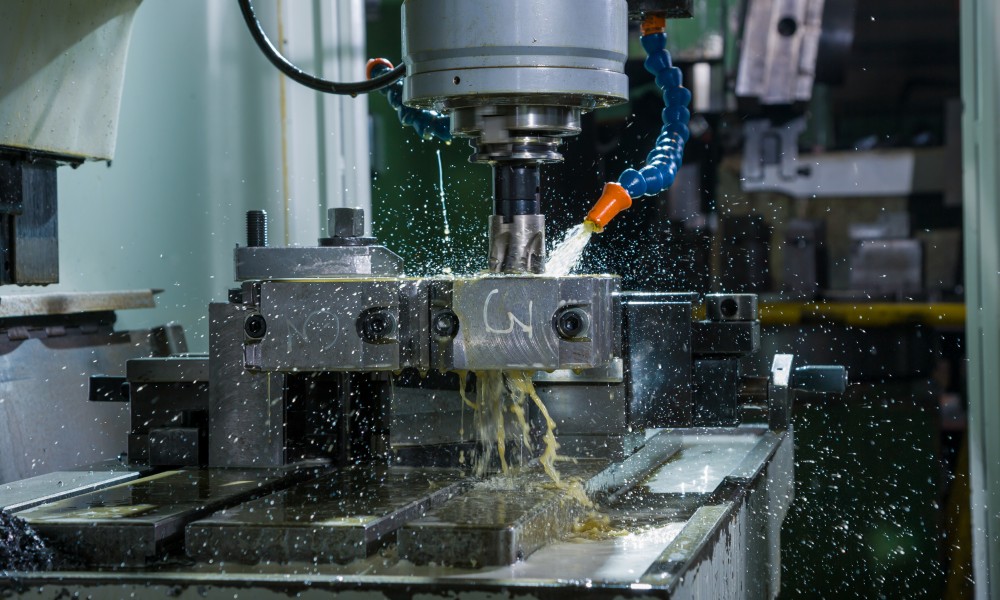
In addition to temperature, the surrounding environment also determines the appropriate type of insulation material for heat-resistant cables
Selecting the right temperature-resistant cable is not as simple as matching the ambient temperature to the cable's temperature rating. Four factors must be evaluated comprehensively.
4.1. Factor 1: Determine the actual operating temperature
The relevant temperature is the temperature at the cable routing location, not the temperature inside the furnace or equipment. For example, a ceramic kiln may have a chamber temperature of 1200°C, but cables routed along the outer kiln shell are exposed to only 400–500°C.
Additionally, two types of temperature must be distinguished:
- Continuous operating temperature: The temperature the cable must withstand 24/7 throughout its service life. This is the parameter that determines the cable rating.
- Peak/short-term temperature: The instantaneous temperature during events such as furnace door opening, steel tapping, or process upsets. This is typically 20–50% higher than the continuous operating temperature.
4.2. Factor 2: Assess the chemical environment
Temperature isn’t the only factor. The surrounding environment determines the appropriate type of insulation material :
- Metal dust, molten slag (steel mills): Requires an outer casing resistant to mechanical abrasion, or an additional protective sleeve.
- Acidic vapors, fluoride (glass factories, chemicals): Chemical-resistant materials such as PTFE or FEP are required.
- Oil and grease vapors (heat treatment furnaces, engines): Silicone has poor oil resistance—consider PTFE or special coatings.
4.3. Factor 3: Mechanical and installation requirements
- Confined spaces with many bends: Silicone cables (flexible, small minimum bend radius) are the optimal choice.
- Long straight runs with few bends: Mica/fiberglass or ceramic cables are acceptable despite their greater rigidity.
- Continuous vibration: Cables should have stranded conductors rather than solid conductors, reducing the risk of fatigue-induced fracture.
- Moving/flexing installations: Only silicone cables can withstand repeated bending. Mica and ceramic cables are not suitable for dynamic applications.
4.4. Factor 4: Verify standards and certifications
Depending on national regulations and project owner requirements, heat-resistant cables may need to meet one or more of the following certifications:
- IEC 60332-3: Flame propagation resistance (mandatory in most industrial facilities)
- IEC 60331: Fire survival (mandatory for cables supplying fire protection and emergency evacuation systems)
- IEC 60702: Mineral insulated cable (for ultra-high-temperature applications)
- UL certification: Required for export projects or projects with U.S. investment
- Halogen-free: Required in buildings and enclosed spaces — cables must not emit toxic gases when burned
5. HELU heat-resistant cable product range
HELU offers a comprehensive range of temperature-resistant cables covering temperatures from +145°C to +600°C, including multicore control cables, single-core cables, and internationally certified UL/CSA cables — serving a wide variety of applications from automation systems to industrial furnaces.
Key product lines include:
| Product line | Insulating materials | Operating temperature | Certification | Main Applications |
| HELUTHERM® 145 | Cross-linked | -55°C to +145°C | EAC, DNV, UKCA, UL/CSA | Automation, Industrial Machinery |
| SiHF / SiHF-C-Si | Silicone | -60°F to +180°F | EAC, UKCA, UL/CSA | Drying ovens, steel mills, shipbuilding |
| HELUFLON® FEP | FEP | -100°C to +205°C | UKCA | Pharmaceuticals, food, chemicals |
| HELUFLON® PTFE | PTFE (Teflon) | -190°F to +260°F | UKCA | Chemicals, medium-temperature drying ovens |
| HELUTHERM® 400 | Fiberglass | -60°C to +400°C | UKCA | Furnaces, heating systems |
| HELUTHERM® 600 | Fiberglass | -60°C to +600°C (up to +700°C) | UKCA | Kilns, cement plants, glass |
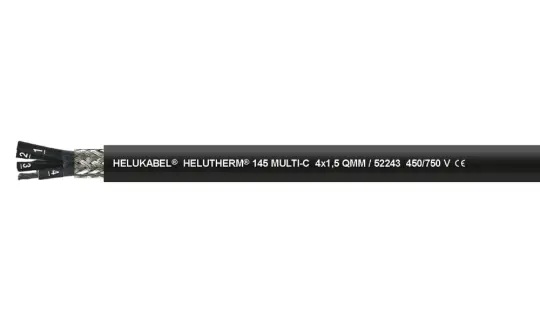
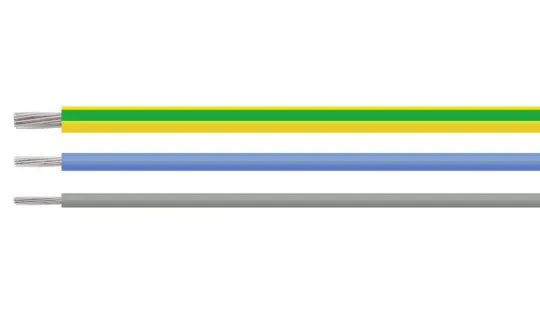
HELU high-temperature cables | 300–500–700°C
Wide range of materials Meets numerous international certifications (UL, CSA, DNV, UKCA, EAC, CPR class)
If you still have questions, don’t hesitate to contact the HELU Vietnam engineering team for detailed answers.
HELU Vietnam Contact Information
| HELU Vietnam 905 Nguyen Kiem Street, Hanh Thong Ward, Ho Chi Minh City, 700000, Vietnam | Phone:
+84 28 77755578 Email: info@helukabel.com.vn | Connect with us on |
| Order through our online channels: Tiki | Shopee | Lazada | Product Finder | ||