The meaning of conductor class – Conductor classification according to IEC 60228
The conductor class determines the internal stranding structure of a cable and directly affects its flexibility and other key performance characteristics. Learn about the different conductor classes under IEC 60228 in the article below.
In cable design and selection , the conductor class is a core technical parameter that is often overlooked. This classification not only defines how copper strands are arranged within the cable core, but also directly determines flexibility, minimum bending radius, mechanical strength, and the overall service life of the system.
Choosing the wrong conductor class can result in cable failure, sheath cracking, reduced transmission performance, or shortened lifespan in environments exposed to vibration and continuous movement. Conversely, selecting the appropriate class 1, 2, 5, or 6 conductor in accordance with IEC 60228 ensures that the cable matches fixed installations, flexible applications, or specialized industrial conditions.
1. What is conductor class?
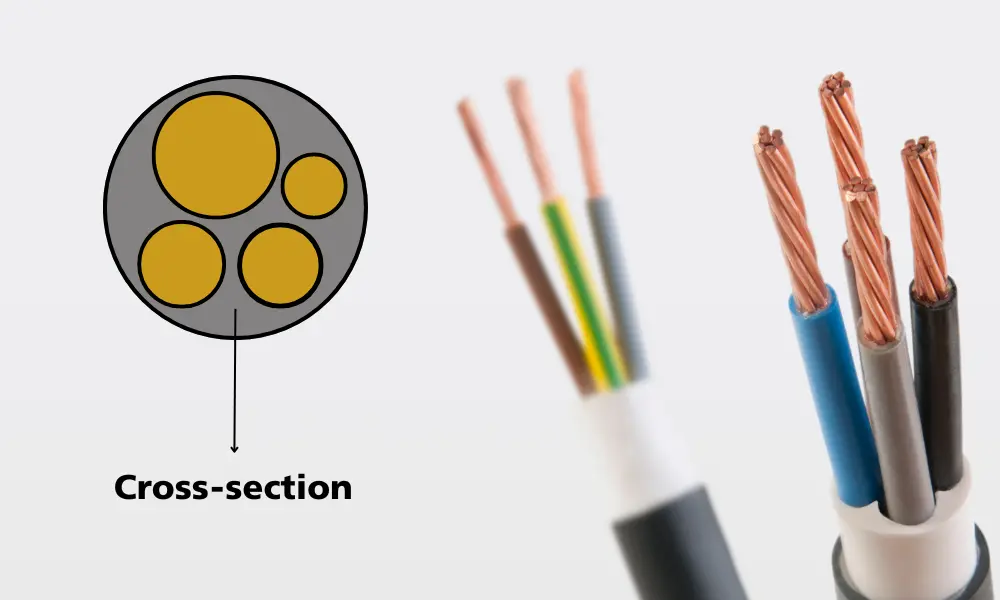
The conductor class determines the internal stranding structure of a cable and directly affects its flexibility and other key performance characteristics
The flexibility of an electrical conductor depends on the movement requirements and operating conditions of each specific application. Some cables are installed in fixed positions with little to no movement and can therefore be relatively rigid. Others must withstand frequent bending or continuous motion, requiring a much higher level of flexibility.
Cable flexibility is primarily determined by the internal conductor structure and is categorized by conductor class according to IEC 60228. The conductor class defines the degree of flexibility (bending capability) of the conductor - and consequently of the entire electrical cable.
Selecting the appropriate conductor class helps to:
- Ensure the cable matches the installation and operating conditions
- Reduce the risk of bending fatigue and strand breakage
- Minimize technical failures within the electrical system
2. Understanding the IEC 60228 standard
2.1 What is IEC 60228 standard?
IEC 60228 is an international standard that specifies the nominal cross-sectional areas of conductors used in insulated cables and flexible cords. The applicable conductor sizes range from 0.5 mm² to 3,500 mm².
The standard covers:
- Solid conductors
- Stranded conductors
- Milliken conductors
- Materials including copper, aluminum, and aluminum alloys
IEC 60228 applies to conductors used in both fixed installations and flexible copper conductors designed for applications requiring movement. However, it does not apply to telecommunication systems, RF applications, or bare overhead conductors.
2.2 The importance of IEC 60228 standard in conductor classification
Inside every power cable, control cable, or signal cable lies a conductor designed in accordance with IEC 60228. The conductor construction directly determines:
- The current-carrying capacity
- Electrical losses and heat generation
- The operational lifespan of the cable
The full title of the standard, “Conductors of insulated cables,” reflects its foundational role in defining:
- Conductor structure (number and diameter of strands)
- Maximum direct current (DC) resistance at 20 °C
- Technical requirements ensuring uniformity and electrical performance
When a conductor complies with IEC 60228, manufacturers and design engineers can confidently supply and use the cable across international markets without the need for requalification under different national conductor standards.
💡 Understanding the role of IEC standard and common IEC standards for cables & wires
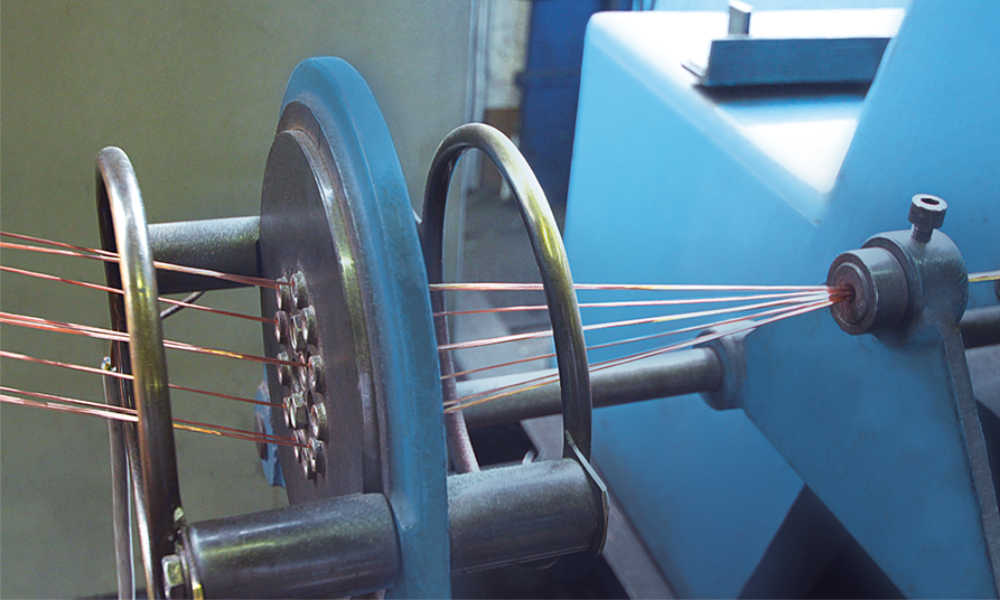
These classes reflect the flexibility of the conductor which increases with the fineness of the individual wires
2.3 How are conductor classes classified?
Conductor classes are defined under the international standard IEC 60228, issued by the International Electrotechnical Commission (IEC). In Germany, these requirements are adopted through VDE 0295, which aligns with IEC conductor classifications.
According to the standard, four conductor classes are currently in use:
- Class 1: Solid conductor
- Class 2: Stranded conductor
- Class 5: Fine-stranded conductor
- Class 6: Extra-fine stranded conductor
3. Characteristics of each conductor class
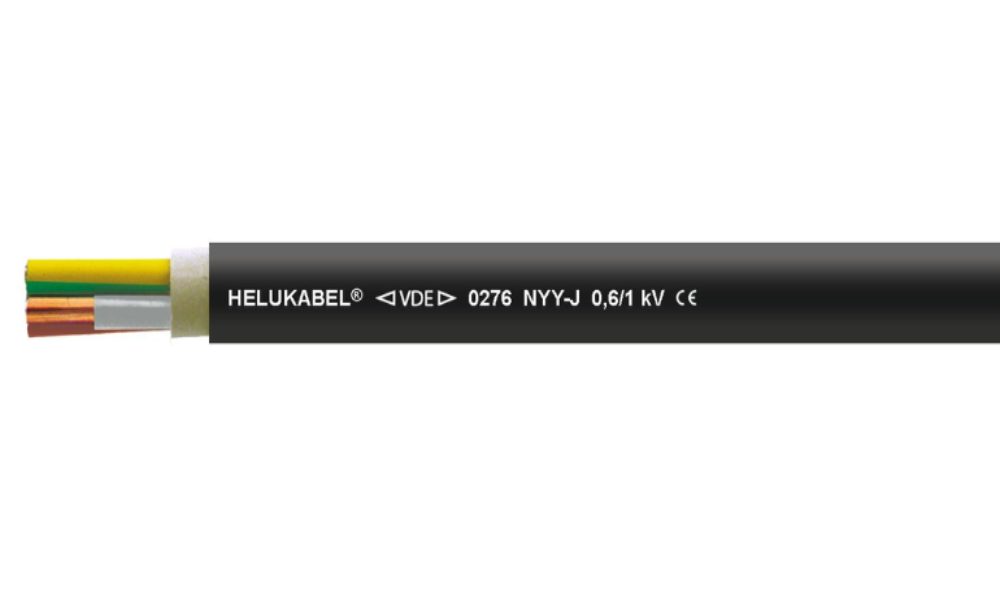
NYY-J/NYY-O cables, class 1 conductor
3.1 Characteristics of class 1 conductors
IEC 60228 defines Class 1 as a solid conductor consisting of a single metallic core, typically made of copper or aluminum. This is the most traditional and structurally simple conductor design, widely used in fixed electrical installations. Some key characteristics of class 1 conductors include:
- Technical advantages: Thanks to their solid structure, class 1 conductors offer stable electrical resistance, good conductivity, and minimal losses caused by contact between strands. In addition, due to their simple construction, cables using Class 1 conductors are generally more cost-effective than flexible conductor cables.
- Limitations: They are not suitable for environments subject to continuous vibration or equipment with frequent movement. Repeated bending may cause cracking or breakage of the conductor core over time.
- Typical applications: Fixed installations in residential and industrial buildings, including in-wall installations, technical conduits, and fixed cable trays.
- Compatible cable types: Primarily used in low-voltage power cables.
Some HELU cable products using class 1 conductors include: NYY-J / NYY-O (32001), J-Y(St)Y Lg (33001), (N)HXH-FE 180/E 30 (52700), (N)YM(St)-J (43050), JE-H(St)H Bd FE 180/E30-E90 (34081).
3.2 Characteristics of class 2 conductors
Class 2 conductors are stranded conductors composed of multiple copper or aluminum wires twisted together. Compared to class 1 conductors, the stranded construction improves mechanical strength and provides a moderate level of flexibility.
- Technical advantages: Thanks to the multi-strand structure, class 2 conductors offer greater flexibility than solid conductors and improved resistance to vibration and mechanical stress. This reduces the risk of breakage during installation and long-term operation.
- Limitations: Although more flexible than solid conductors, class 2 is still not suitable for applications requiring continuous bending or repeated dynamic movement (such as drag chains or industrial robots).
- Typical applications: Power distribution lines, industrial electrical networks, energy infrastructure, and large-scale industrial facilities requiring high mechanical robustness.
- Compatible cable types: Primarily used in medium-voltage and high-voltage power cables.
Some HELU cable products using Class 2 conductors include:
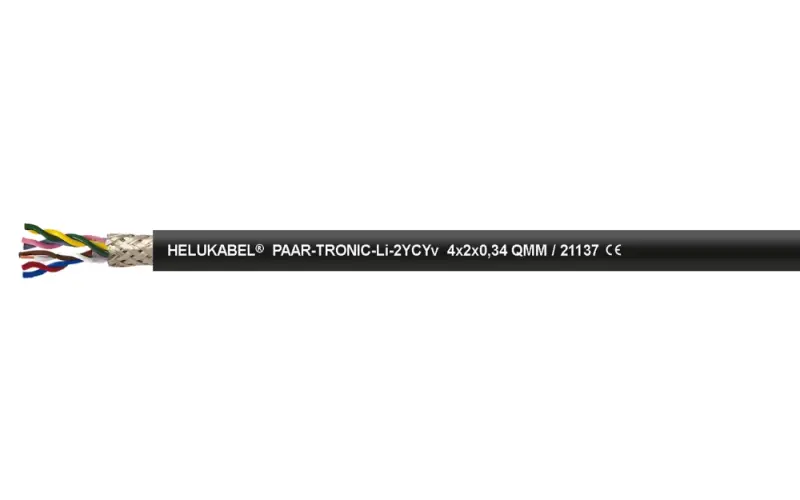
- Data cables: PAAR-TRONIC-Li-2YCYv (21129), RE-2Y(St)Yv PiMF (20115), HELUDATA® EN-50288-7 FIRE RES OSA 500 (11016406), HELUDATA® PLTC UL13 PVC/PVC OSA 300 (11010660).
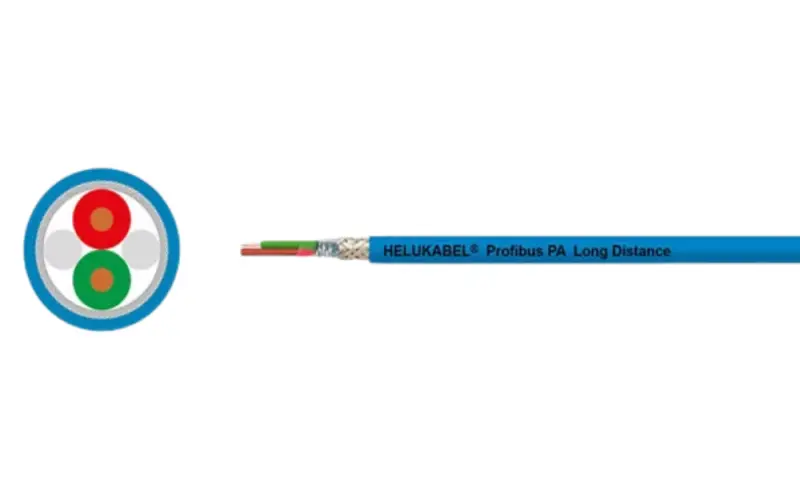
- Ethernet and bus cables: CC-Link BUS PVC STATIC red 3 x 0.5 mm² (800497), HELUKAT® PROFInet B CAT.5e HYBRID SF/UTP FRNC FLEX (801651), Profibus PA LONG DISTANCE PVC STATIC (800650).
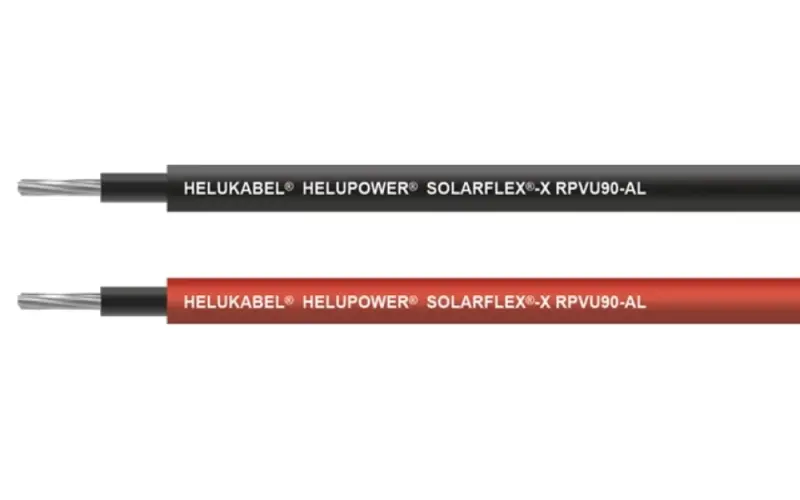
- Cables for infrastructure and energy: HELUPOWER® SOLARFLEX®-X RPVU90-AL (18089432), (N)A2XH-J / (N)A2XH-O (50073), N2XS(FL)2Y (33054).
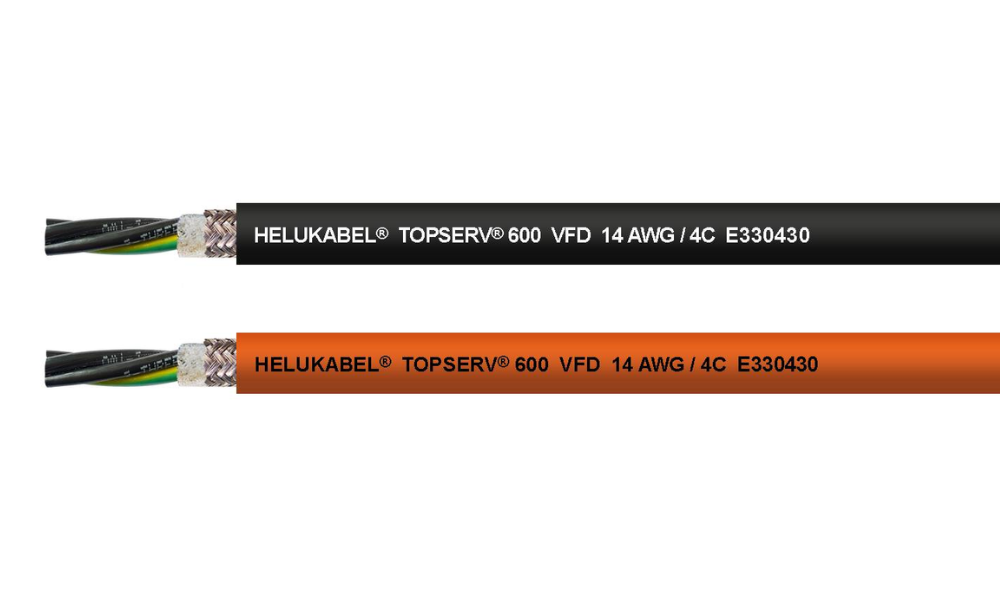
TOPSERV 600 VFD
3.3 Characteristics of class 5 conductors
Class 5 conductors are flexible conductors made of numerous fine copper strands stranded together. This multi-stranded construction significantly increases flexibility compared to class 1 and class 2 conductors.
- Technical advantages: While class 1 and class 2 conductors can be manufactured from either copper or aluminum, class 5 conductors are predominantly made of copper to ensure high flexibility and stable electrical conductivity. In addition, class 5 cables provide good mechanical durability in installations that require frequent bending.
- Limitations: They are more expensive and are not the most economical choice for fully fixed installations where flexibility is unnecessary (in such cases, class 1 or class 2 is generally preferred). For applications involving continuous movement and intensive bending cycles, class 6 conductors are typically more suitable.
- Typical applications: Automation lines, industrial control panels, installations in confined spaces, and systems requiring frequent bending but not continuous high-intensity movement.
- Compatible cable types: Control cables, power supply cables…
Some HELU cable products using class 5 conductors include:
- Control cables: JZ-500 (10001), OZ-BL-CY (14028), MEGAFLEX® 500-C (13500), SiHF-C-Si (23151)
- Cables for constantly moving applications: HELUCONTROL® PVC-FLAT (26980), (N)SHTÖU-V (31040), MULTISPEED® 500-C-PUR UL/CSA (24410)
- Single core cables: H05V-K / 05V-K (29081), HELUTHERM® 145 (50999), SOLARFLEX®-X H1Z2Z2-K NTS (17000101)
- Servo motor cables: TOPFLEX®-EMV-UV-3-PLUS-2YSLCYK-J (22673), TOPSERV® 112 PVC – Lenze (707221), TOPFLEX®-MOTOR-EMV 3/3 (78614)
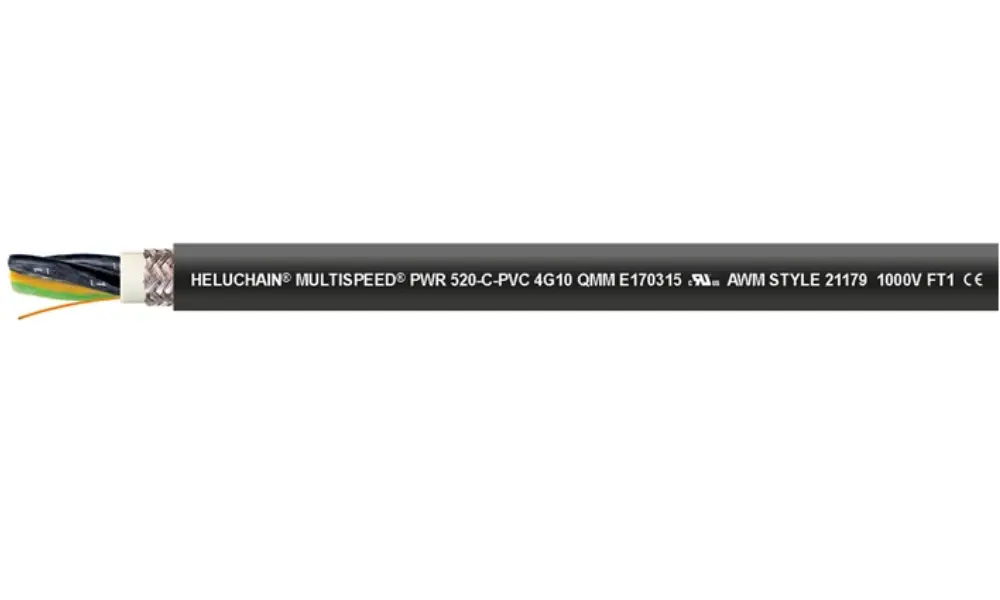
HELUCHAIN® MULTISPEED® PWR 520-C-PVC UL/CSA, class 6
3.4 Characteristics of class 6 conductors
Class 6 conductors are ultra-flexible conductors composed of a very large number of fine copper strands twisted together. Among the four conductor classes (1, 2, 5, and 6), class 6 provides the highest level of flexibility.
- Technical advantages: Thanks to its extra-fine stranded structure, class 6 cables offer exceptional flexibility and bending performance. They are specifically designed for applications requiring small bending radii and repeated movement cycles over long periods.
- Limitations: Class 6 conductors have the highest cost among the four conductor classes. They are not an economical choice for fully fixed installations where high flexibility is unnecessary.
- Typical applications: Automation systems, conveying systems, cable carriers, robotics, and mechanisms involving continuous or repetitive motion.
- Compatible cable types: Robot cables, drag chain cables…
Some HELU cable products using class 6 conductors include:
- Robot cables: HELUDATA® ROBOFLEX®-PAIR-D PUR UL/CSA (11022463), HELUPOWER® ROBOFLEX® HYBRID-D PUR UL/CSA (11022484), HELUCONTROL® ROBOFLEX® 2001 (25463).
- Drag chain cables: HELUCHAIN® MULTISPEED® 522-C-TPE UL/CSA (11001898), TOPSERV® Hybrid PUR (709703), HELUCHAIN® MULTIFLEX 512®-PUR UL/CSA (21559).
- Ethernet and bus cables: A-BUS TPE 105°C FLEX (801846), Profibus L2 ECOFAST PUR CHAIN (800044), HELUKABEL® A-BUS ROUND PUR CHAIN (11009063).
4. Technical parameters of conductor classes
4.1 DC resistance of conductors at 20 °C
| Cross-sectional area mm² | Cu-conductor bare (Ohm/km) | Cu-conductor tinned (Ohm/km) | ||
| Class 1 and class 2 | Class 5 and class 6 | Class 1 and class 2 | Class 5 and class 6 | |
| 0.5 | 36 | 39 | 36.7 | 40.1 |
| 0.75 | 24.5 | 26 | 24.8 | 26.7 |
| 1 | 18.1 | 19.5 | 18.2 | 20.0 |
| 1.5 | 12.1 | 13.3 | 12.2 | 13.7 |
| 2.5 | 7.41 | 7.98 | 7.56 | 8.21 |
| 4 | 4.61 | 4.95 | 4.70 | 5.09 |
| 6 | 3.08 | 3.30 | 3.11 | 3.39 |
| 10 | 1.83 | 1.91 | 1.84 | 1.95 |
| 16 | 1.15 | 1.21 | 1.16 | 1.24 |
| 25 | 0.727 | 0.780 | 0.734 | 0.795 |
| 35 | 0.524 | 0.554 | 0.529 | 0.565 |
| 50 | 0.387 | 0.386 | 0.391 | 0.393 |
| 70 | 0.268 | 0.272 | 0.270 | 0.277 |
| 95 | 0.193 | 0.206 | 0.195 | 0.210 |
| 120 | 0.153 | 0.161 | 0.154 | 0.164 |
| 150 | 0.124 | 0.129 | 0.126 | 0.132 |
| 185 | 0.0991 | 0.106 | 0.100 | 0.108 |
| 240 | 0.0754 | 0.0801 | 0.0762 | 0.0817 |
4.2 The meaning of conductor resistance (DC) at 20 °C
According to IEC 60228, each nominal cross-sectional area, conductor class (class 1, 2, 5, 6), and conductor material (bare copper or metal-coated copper) is assigned a maximum permissible resistance per unit length, typically expressed in ohms per kilometer (Ω/km).
The direct current (DC) resistance of a conductor is measured at 20 °C, and this maximum value serves as the basis for:
- Determining the cable’s current-carrying capacity
- Calculating power losses
- Controlling heat generation during operation
- Ensuring compliance with electrical system design requirements
The lower the Ω/km value, the better the electrical conductivity and overall transmission efficiency.
4.3 The importance of conductor resistance in selecting conductor class
For the same nominal cross-sectional area:
- Class 1 and class 2 conductors generally have lower DC resistance.
- Class 5 and class 6 conductors typically exhibit slightly higher DC resistance.
This difference is mainly due to their construction. In class 5 and especially class 6 conductors, the use of numerous fine strands increases the actual path length of the current flow because of the helical (twisted) structure. As a result, the effective resistance is slightly higher compared to solid or standard stranded conductors of the same cross-sectional area.
Therefore, selecting between class 1–2 and class 5–6 cables should not be based solely on flexibility requirements. It must also take into account factors such as current-carrying capacity, allowable system losses, operating temperature conditions, and overall electrical performance requirements.
5. FAQ on conductor classification
5.1 What is the difference between mm², AWG, and kcmil when selecting electrical conductors?
The unit mm² (square millimeters) is the standardized cross-sectional area measurement defined under IEC 60228 and is widely used in Europe, Asia, and many other regions worldwide. In contrast, AWG and kcmil (kilocircular mil) are measurement systems primarily used in North America.
Because these three systems are based on different calculation methods for conductor size, it is essential to use a standardized conversion table when selecting or substituting cables in order to avoid specification errors. To minimize technical misunderstandings during system design and procurement, you may contact the technical department of HELU Vietnam for accurate guidance and comparison between mm², AWG, and kcmil conductor sizes.
If you still have any concerns or questions, don't hesitate to reach out to HELU Vietnam's engineering team promptly for detailed assistance.
Contact Information HELU Vietnam
| HELU Vietnam 905 Nguyen Kiem Street, Hanh Thong Ward, Ho Chi Minh City, 700000, Vietnam | Phone:
+84 28 77755578 Email: info@helukabel.com.vn | Connect with us on |
| Order through our online channels Tiki | Shopee | Lazada | Product finder | ||