Guide to rubber cable types & how to choose the right one for your application
There are various types of rubber cables available on the market today, differing in designation, sheath material and technical characteristics. Understanding how rubber cables are classified will help you select the right cable for each application, ensuring reliable performance and long-term system durability.
Classification of rubber cables by common designations
Rubber cables are widely used across a broad range of applications thanks to their flexibility, high durability and reliable performance under various environmental conditions. Among them, H05RR-F, H05RN-F and H07RN-F are the most common cable designations. These designations follow a standardized coding system that identifies the cable's construction and technical specifications, as explained below:
- H: Indicates a harmonized cable manufactured in accordance with European harmonized standards.
- 05 or 07: Indicates the rated voltage.
- 05: Rated voltage of 300/500 V
- 07: Rated voltage of 450/750 V
- R: Indicates rubber insulation.
- R or N: Indicates the outer sheath material.
- R: Standard rubber sheath
- N: Chloroprene rubber (Neoprene) sheath, offering excellent resistance to oil and chemicals.
- F: Indicates a flexible cable, designed for frequent bending and movement.
Comparison of three common rubber cable types.
| Feature | H05RR-F | H05RN-F | H07RN-F |
| Rated voltage | 300/500V | 300/500V | 450/750V |
| Sheath material | Ordinary rubber | Neoprene | Neoprene |
| Common applications | Household appliances, light tools | Workshop tools, kitchen appliances | Industrial machinery, construction, outdoor equipment |
| Prominent features | - Light-duty - Limited resistance to oil and chemicals - Not typically recommended for outdoor applications | - Medium-duty - Moderate resistance to oil and chemicals - Suitable for general outdoor applications | - Heavy-duty - Excellent resistance to oil and chemicals - Highly suitable for outdoor applications |
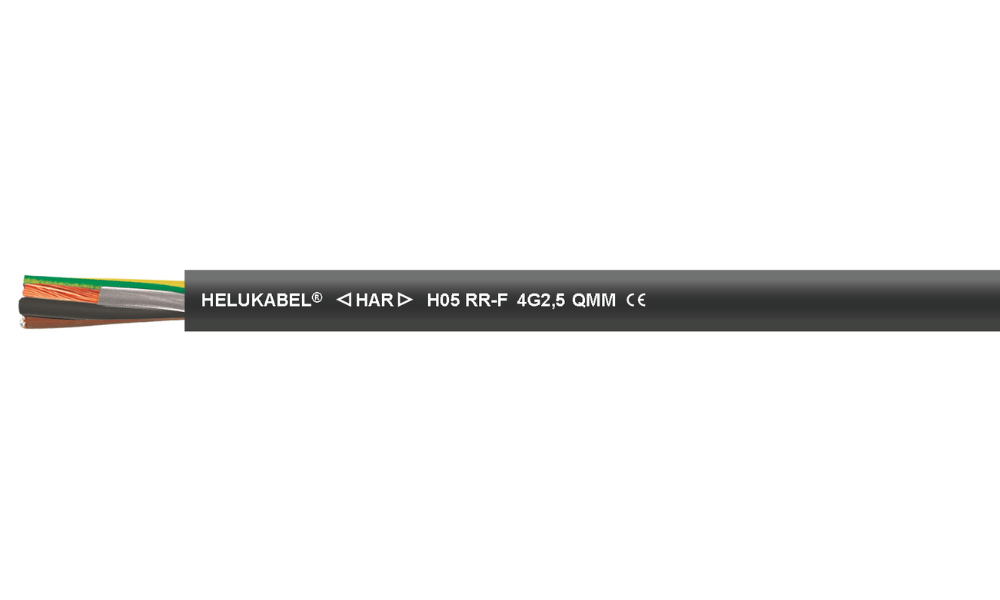
H05RR-F light-duty rubber cable
Construction and features: H05RR-F cable consists of finely stranded copper conductors, rubber insulation and a standard rubber outer sheath. It is highly flexible and designed for light-duty applications.
Rated voltage: H05RR-F has a rated voltage of 300/500 V, making it suitable for low-voltage applications.
Mechanical strength and durability: This cable is designed to withstand light mechanical stress and is not recommended for harsh environments or heavy industrial applications.
Applications: Household appliances, small workshop tools, handheld equipment and temporary outdoor installations (under light-duty operating conditions). Due to its limited mechanical strength, H05RR-F should not be used in applications exposed to oil, chemicals or harsh environmental conditions.
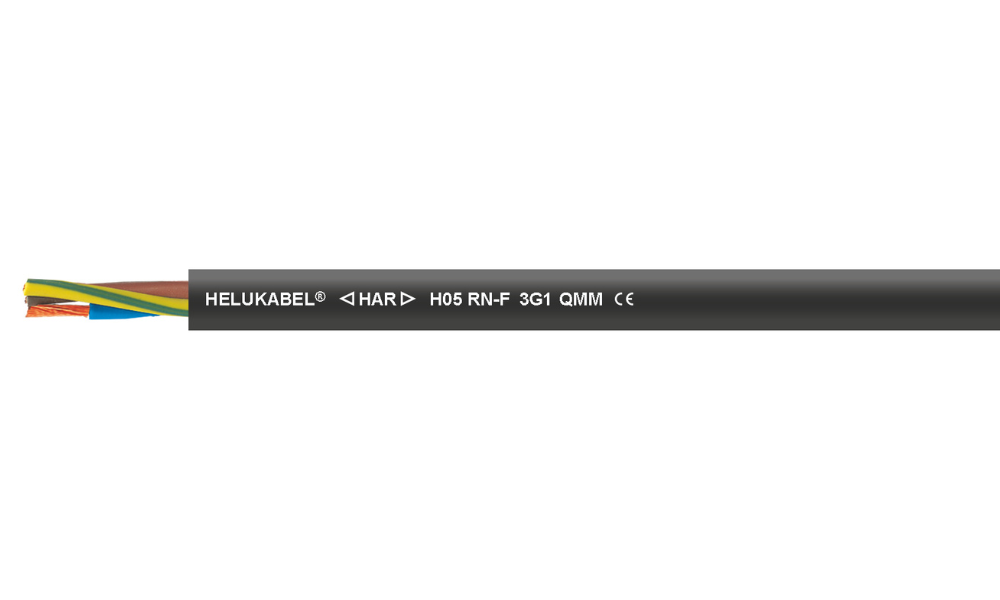
H05RN-F medium-duty rubber cable.
H05RN-F medium-duty rubber cable
Construction and features: H05RN-F cable features rubber insulation and a Neoprene (chloroprene rubber) outer sheath, providing improved resistance to oil, chemicals and mechanical stress compared with H05RR-F.
Rated voltage: Like H05RR-F, H05RN-F has a rated voltage of 300/500 V.
Mechanical strength and durability: This cable is designed to withstand moderate mechanical stress and can tolerate a moderate level of movement, bending and external impact.
Applications: Kitchen equipment, medium-duty industrial tools, workshop power tools and equipment exposed to light oil and chemical contact.
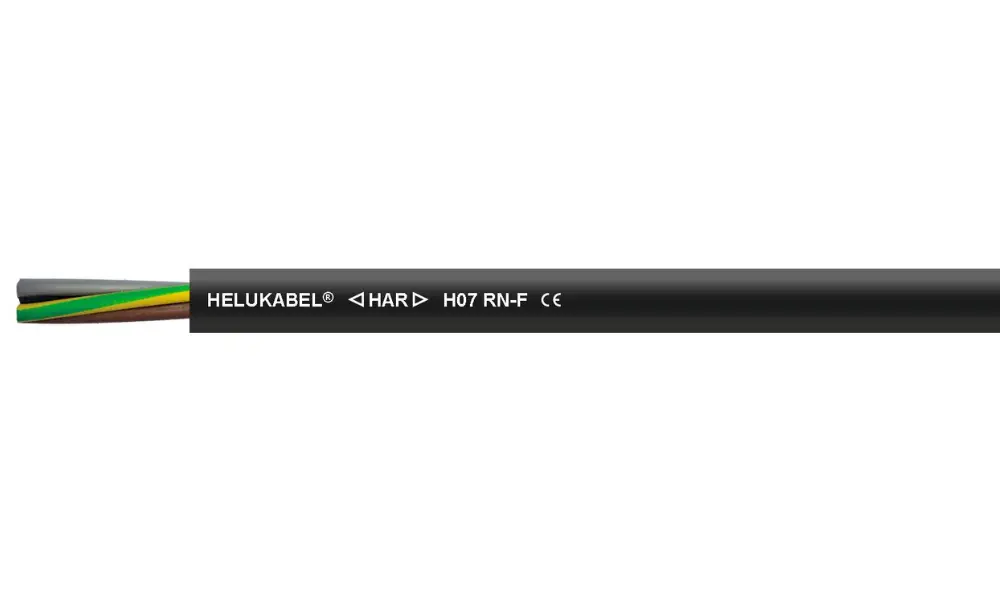
H07RN-F Heavy-Duty Rubber Cable.
H07RN-F heavy-duty rubber cable
Construction and features: H07RN-F cable is constructed with rubber insulation and a Neoprene outer sheath, providing excellent resistance to mechanical stress, oil, chemicals, UV radiation and harsh weather conditions.
Rated voltage: H07RN-F has a rated voltage of 450/750 V, making it suitable for high-power industrial applications.
Mechanical strength and durability: This cable is engineered to withstand high mechanical stress, heavy impact, frequent bending and demanding operating conditions. Its robust construction and flexibility make it ideal for challenging environments.
Applications: Industrial machinery and equipment, construction sites, agricultural applications, outdoor installations, portable power equipment, and marine and shipboard applications.
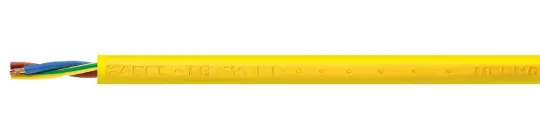
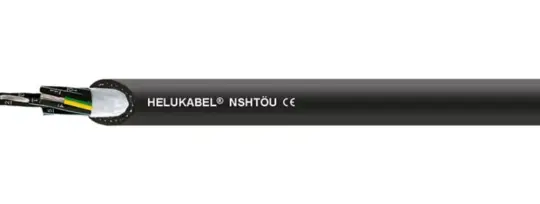
In addition to H07RN-F, NSSHÖU and NSHTÖU are other heavy-duty rubber-sheathed cables designed to withstand extremely high mechanical stress, harsh environments and continuous movement. NSSHÖU is specifically developed for heavy industry, mining operations and fixed industrial machinery, while NSHTÖU is commonly used for cranes, hoists and cable reeling/unreeling applications on cable drums.
Classification of rubber cables by sheath materials
The outer sheath of a rubber cable can be manufactured from various rubber materials, each offering distinct performance characteristics. The five most commonly used sheath materials are natural rubber, silicone rubber, Neoprene, TPE (Thermoplastic Elastomers) and EPDM (Ethylene Propylene Diene Monomer). Each material provides unique properties that enable rubber cables to meet the specific requirements of different industrial applications.
| Type of material | Pros | Applications |
| Natural rubber | - High elasticity - Good electrical insulation - Tensile strength - Low compression set | Machinery, robotics, and automotive applications, where cables need to remain flexible under varying conditions |
| Silicon rubber | - High-temperature resistance - Flexible and durable - Excellent electrical insulation | Automotive engines, ovens, and medical equipment, where the cables need to endure temperature extremes |
| Neoprene rubber | - Weather and ozone resistance - Oil and chemical resistance - Flame resistance | Industrial machinery, construction equipment, and marine applications. |
| Thermoplastic Elastomers (TPE) | - Durability - Processability - Environmental resistance | Household appliances, automotive applications, and power distribution systems, where a combination of flexibility, durability, and ease of processing is required. |
| EPDM rubber (Ethylene Propylene Diene Monomer) | - Weather resistance - Heat resistance - Low permeability | Power cables, automotive wiring, and telecommunications cables, particularly those installed outdoors or in harsh environmental conditions. |
Natural rubber cable
Natural rubber cables feature an outer sheath made from latex extracted from rubber trees. This material provides excellent elasticity and high tensile strength, making it a popular choice for applications that require flexibility, durability, and resistance to continuous bending or vibration, such as automotive systems and industrial machinery.
The natural rubber sheath also offers low permanent deformation, allowing the cable to retain its original shape even after prolonged compression. In addition, it provides good electrical insulation, delivering reliable protection against electrical leakage in critical electrical systems.
Silicone rubber cable
Silicone is often mistaken for plastic, but it is actually a synthetic rubber produced from silicon-based polymers. Thanks to its stable molecular chain structure, silicone can withstand temperatures ranging from -60°C to 200°C, making it ideal for cables used in extreme hot or cold environments while maintaining reliable performance.
In addition, silicone rubber cables offer excellent flexibility and outstanding dielectric properties, making them well suited for high-temperature applications. Silicone is also non-toxic, making it suitable for use in the medical and food processing industries.
Neoprene rubber cable
Neoprene is a synthetic rubber known for its outstanding resistance to oil, weathering, ozone, and aging. Even under prolonged exposure to sunlight, harsh weather, and ozone, the neoprene sheath maintains its durability, making it particularly suitable for outdoor applications.
Likewise, cables with neoprene rubber sheaths are widely used in environments where they are frequently exposed to oil and petroleum-based chemicals, making them ideal for manufacturing plants and petrochemical facilities. Furthermore, neoprene possesses flame-retardant properties, allowing these cables to play an important role in applications with stringent fire safety requirements.
TPE rubber cable
Thermoplastic Elastomer (TPE) is a rubber-like material that combines the elastic properties of rubber with the easy processing characteristics of thermoplastics. Owing to its excellent mechanical properties, flexibility, and durability, TPE is commonly used as an alternative to traditional rubber materials in applications requiring both flexibility and ease of manufacturing.
Since TPE can be easily molded and extruded, manufacturers commonly use it to produce various types of cables. TPE rubber cables offer excellent abrasion resistance while maintaining their flexibility over time. In addition, TPE provides good resistance to water, oil, and chemicals, making it suitable for a wide range of industrial applications.
EPDM rubber cable
EPDM (Ethylene Propylene Diene Monomer) is a synthetic rubber with excellent resistance to UV radiation, ozone, and weathering. As a result, EPDM rubber cables are widely used in applications that require superior weather resistance, such as outdoor power cables, automotive wiring, and telecommunications cables.
In addition, EPDM offers excellent heat resistance, making it an ideal sheath material for cables used in industrial environments. Its low permeability is another key advantage, enabling the cable to withstand exposure to gases or vapors in a variety of demanding applications.

Criteria for selecting rubber cable sheath materials
The sheath of a rubber cable not only protects the conductor from environmental influences but also determines the cable's performance under specific operating conditions. Depending on requirements such as temperature resistance, chemical resistance, mechanical strength, and electrical insulation, manufacturers select the most suitable sheath material to ensure cable performance, safety, and service life.
Heat resistance
In environments with high temperatures or frequent temperature fluctuations, the sheath material must maintain its stability and continue protecting the conductor. Materials such as silicone and EPDM are commonly preferred due to their excellent heat resistance, making them suitable for furnaces, motors, production lines, and other industrial equipment.
Oil and chemical resistance
For applications that are frequently exposed to oil, fuel, solvents, or industrial chemicals, the sheath material must provide excellent chemical resistance to prevent swelling, cracking, or premature aging. Neoprene, EPDM, and TPE are widely used in these demanding environments.
Mechanical Strength
During operation, cables may be subjected to tensile forces, repeated bending, abrasion, or impact. Therefore, the sheath material must provide sufficient mechanical strength to minimize damage and extend the cable's service life. Natural rubber and neoprene offer excellent tensile strength and abrasion resistance, while TPE and silicone provide superior flexibility for applications involving continuous movement.
Electrical insulation
Electrical insulation is one of the most critical criteria when selecting a rubber cable sheath material. Materials with excellent dielectric properties help reduce the risk of electrical leakage, improve operational safety, and ensure stable system performance. Silicone and EPDM are highly regarded for their electrical insulation performance, making them suitable for a wide range of electrical and industrial applications.
How to select the right rubber cable for different applications?
Each industrial application places specific demands on rubber cables, ranging from mechanical strength and abrasion resistance to oil resistance, heat resistance, and waterproof performance. Below are the key technical requirements for common applications, along with the corresponding cable types recommended by HELU Vietnam.
General-purpose rubber cable
General-purpose rubber cables are designed to meet a wide variety of applications, from temporary power supply to connections for industrial machinery and equipment. With excellent flexibility and good mechanical durability, these cables are suitable for general indoor and outdoor working environments.
| Applications | Cable specifications | Recommended cable types |
| - Construction sites - Temporary power supply - Industrial machinery and equipment - Hand-held tools | - Flexible - Easy to install - Suitable for both indoor and outdoor use |
H05RN-F H07RN-F |
Rubber cables for heavy-duty equipment
In heavy-duty applications or environments subject to frequent mechanical stress, rubber cables must feature a robust construction to ensure reliable continuous operation. In addition to high tensile strength, the cable should provide excellent impact resistance, abrasion resistance, and stable performance under demanding operating conditions.
| Applications | Cable specifications | Recommended cable types |
| - Overhead cranes - Cranes - Lifting equipment - Heavy industrial machinery - Steel plants | - High tensile strength - Impact resistant - Abrasion resistant - Reliable performance under continuous movement |
H07RN-F NSHTÖU NSSHÖU |
Rubber cables for oil and chemical environments
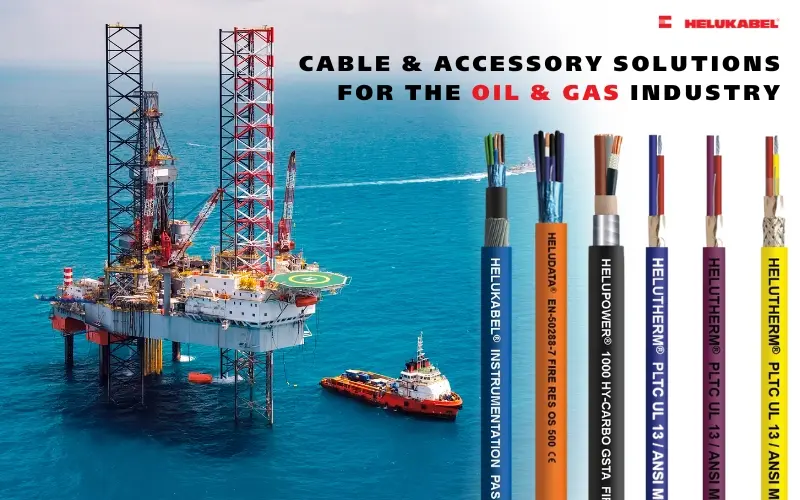
In industries such as oil and gas, mechanical engineering, and automotive manufacturing, electrical cables are frequently exposed to oil, fuel, and various industrial chemicals. Therefore, the cable sheath must provide excellent resistance to these substances to minimize material degradation, maintain durability, and ensure a long service life.
| Applications | Cable specifications | Recommended cable types |
| - Oil and gas facilities - Mechanical engineering - Automotive manufacturing plants - Hydraulic presses | - Oil resistant - Fuel resistant - Chemical resistant |
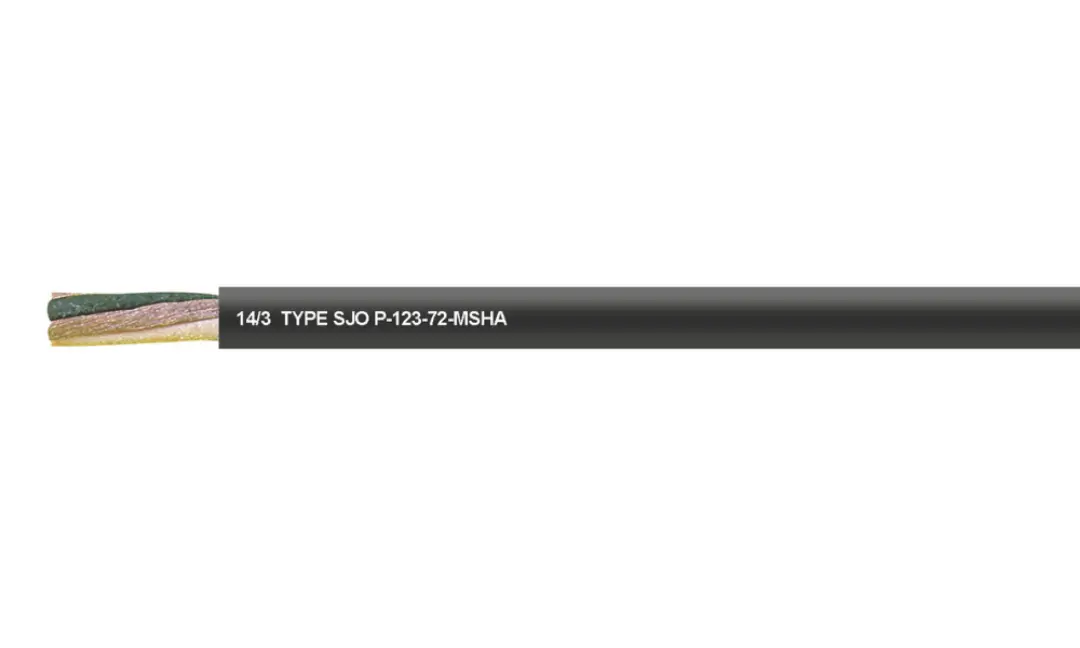
H07RN-F NEOPRENE |
Rubber cables for the mining industry
The mining industry places extremely high demands on the durability and safety of electrical cables, as they must operate in environments with dust, moisture, vibration, and potential fire hazards. Therefore, rubber cables used in mining applications must comply with stringent technical standards to ensure safe, reliable, and continuous operation.
| Applications | Cable specifications | Recommended cable types |
| - Underground mines - Open-pit mines - Mining equipment | - Flame resistant - High abrasion resistance - High mechanical strength - Compliant with mining industry standards | NSSHÖU |
Rubber cables for extreme temperature environments
Applications operating under prolonged high- or low-temperature conditions require rubber cables that can maintain both flexibility and electrical insulation performance. Selecting the right cable helps ensure stable system operation while minimizing the risk of cracking, material degradation, or performance loss caused by extreme temperatures.
| Applications | Cable specifications | Recommended cable types |
| - Metallurgical plants - Industrial furnaces - Cold storage facilities - Outdoor equipment | - High-temperature resistant - Low-temperature resistant - Maintains flexibility |
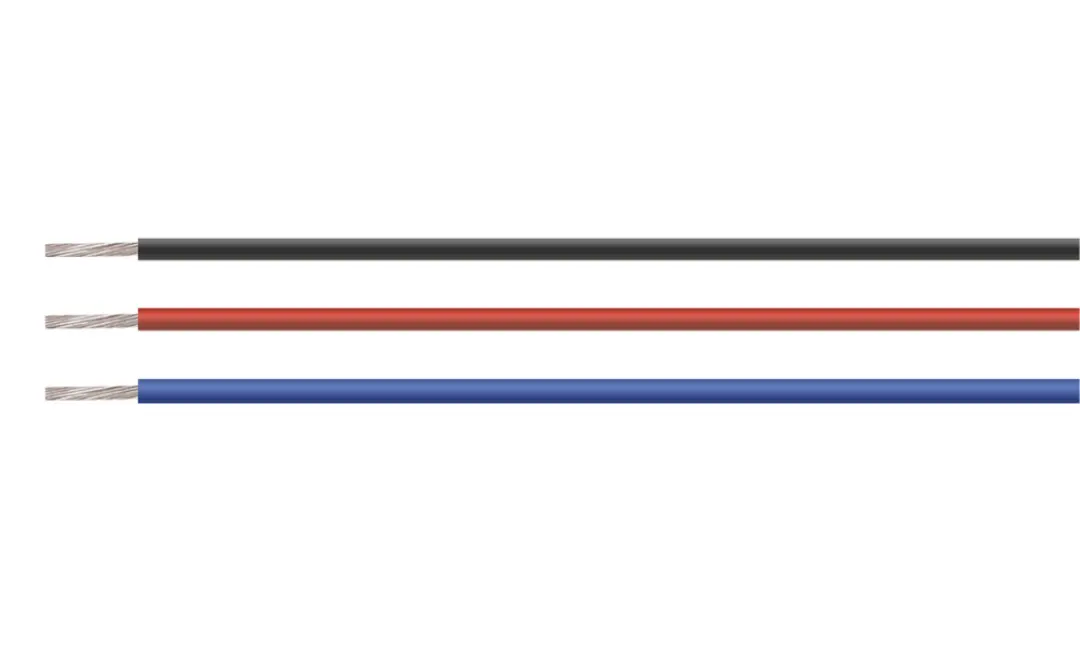
SiF SIFF HELUTHERM® SINGLE CORE UL STYLE 3512 |
Rubber cables for fire safety applications
For facilities with stringent fire safety requirements, rubber cables must comply with flame-retardant or fire-resistant standards. These properties help limit flame propagation, maintain circuit integrity during fire incidents, and enhance the overall safety of the electrical system.
| Applications | Cable specifications | Recommended cable types |
| - Power plants - Tunnels - Data centers - Public buildings | - Flame retardant - Fire resistant - Maintains circuit integrity during fire |
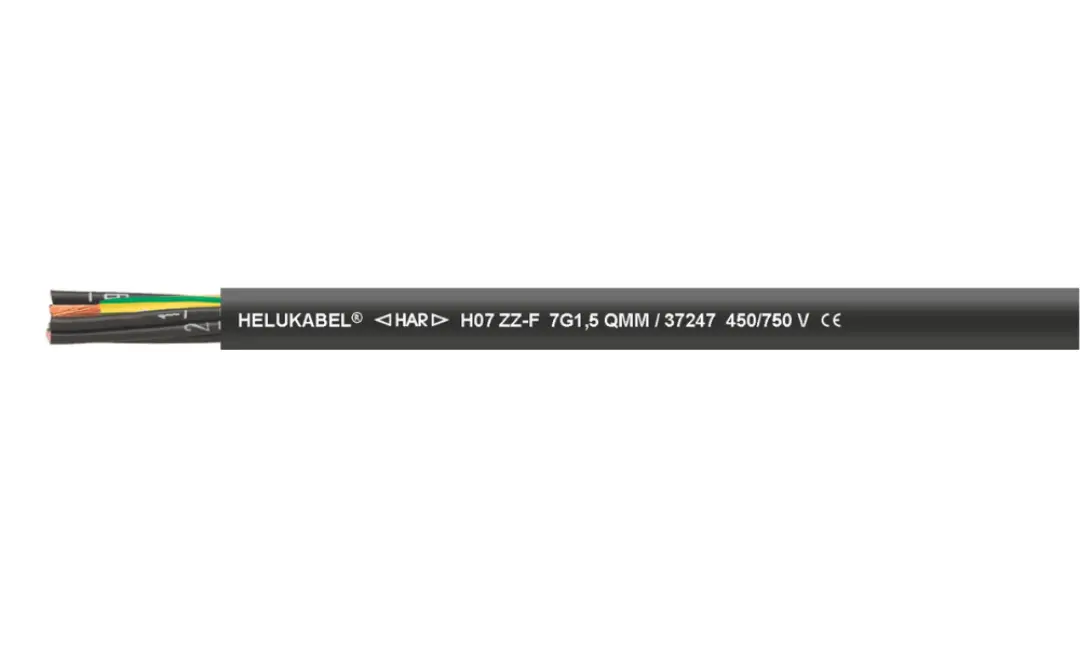
HELUPOWER H07RN-F LS0H H07ZZ-F |
Rubber cables for wet and submerged environments
Electrical systems operating in high-humidity environments or with frequent exposure to water require rubber cables with effective waterproof performance. The cable sheath must prevent water ingress, protect the conductor, and ensure reliable operation even when submerged or exposed to harsh weather conditions.
| Applications | Cable specifications | Recommended cable types |
| - Water pumps - Ports and harbors - Water treatment facilities | - Waterproof - Moisture resistant - Suitable for submerged operation |
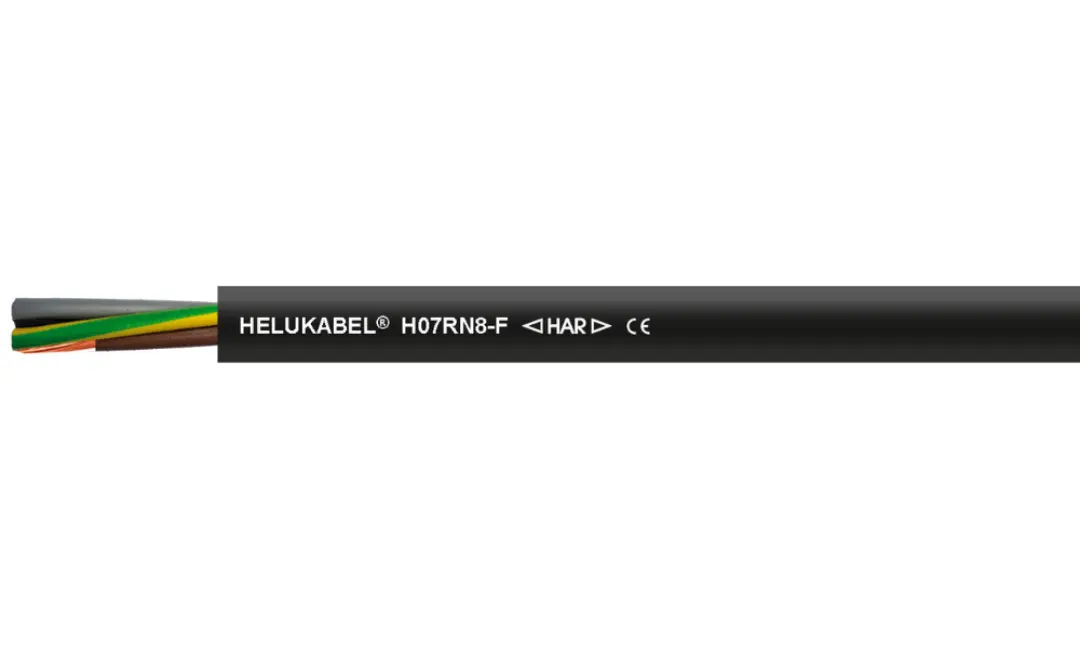
H07RN8-F Tauchflex-R Tauchflex-FL |
Rubber cables are an optimal solution for a wide range of industrial applications thanks to their flexibility and reliable performance under various operating conditions. However, each cable type is designed to meet specific requirements. Selecting the right cable not only ensures stable system operation and extends equipment service life, but also enhances safety and optimizes maintenance costs throughout the cable's lifecycle.
If you are looking for the right rubber cable for your project or application, the engineering team at HELU Vietnam is ready to provide recommendations based on your actual operating conditions, technical requirements, and applicable industry standards. With a comprehensive portfolio of rubber cables for construction, lifting equipment, mining, harsh environments, and many other industrial applications, we can help you identify a solution that is safe, reliable, and tailored to your system.