


What is a wire harness? Structure, functions & applications
A wire harness is a solution for grouping and organizing electrical wires into a unified assembly, helping connect components and transmit electrical power and signals throughout a system. So, what is a wire harness made of, where is it used, and what should you consider when choosing one? Let’s explore these questions with us in the following article.
Table of contents
1. What is a wire harness?
A wire harness is an assembly of electrical wires integrated into a unified system consisting of various components. Instead of installing each wire individually, the wires are arranged, bundled, and secured according to a design to form a complete assembly. Its purpose is to connect components within a system while transmitting electrical power and signals between devices. Depending on the application, a wire harness can be designed with different configurations in terms of wire length, number of branches, connector types, and protective materials.
2. What are the components of a wire harness?
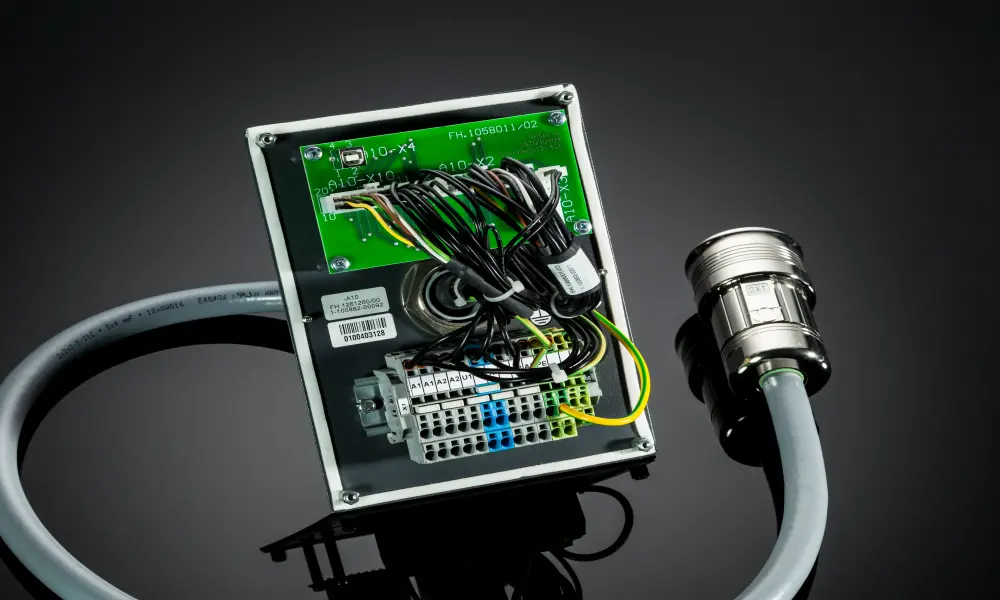
A wire harness typically consists of several components that work together to ensure electrical power and signal transmission, device connectivity, and wire protection during operation. The main components include:
2.1. Electrical wires
Wires are the main components responsible for transmitting electrical power and signals between different parts of a system. Stranded copper conductors are commonly used because of their good electrical conductivity and flexibility, making them suitable for applications involving vibration or movement. Depending on the voltage, temperature, and operating environment, wires may use insulation materials such as PVC, XLPE, or PTFE.
2.2. Terminals
Terminals are metal contact components crimped onto the ends of wires to establish electrical connections and secure the wires inside connectors. Depending on the design, terminals may be flat, ring-shaped, or pin-shaped. Terminal materials and plating are selected based on conductivity requirements, corrosion resistance, and operating conditions.
2.3. Connectors
Connectors hold terminals in the correct positions and provide the interface between the wire harness and electrical devices. Some connectors feature locking mechanisms, positioning structures, or sealing gaskets to help prevent incorrect connections and protect connection points against dust and moisture. Connector selection should match the required number of contact pins, voltage, and operating conditions.
🔎 Learn more about connectors HERE.
2.4. Protective sleeves and tape
These materials help bundle wires and reduce the risk of damage caused by friction, temperature, or environmental factors. Depending on the application, protective materials may include braided PET sleeves, PVC, silicone, or fiberglass sleeves. For example, in high-temperature areas, suitable heat-resistant materials are preferred over conventional protective sleeves.
2.5. Cable ties and fixing accessories
Cable ties, clips, and other fixing accessories keep the wire harness routed according to the design and prevent it from shifting during operation. Proper securing also reduces friction between wires and machine frames, metal edges, or moving components, thereby helping prevent insulation wear.
2.6. Conduits and protective grommets
Conduits protect the wire harness against pinching, compression, and mechanical impact. Rubber grommets are commonly installed where wires pass through metal panels or partitions to prevent direct contact with sharp edges. These components are particularly useful in systems subject to vibration or where wires pass through multiple installation points.
3. Functions and benefits of a wire harness
Wire harnesses are widely used because of their key functions and benefits, including:
- Transmitting electrical power and signals: Ensures that electrical current and control signals are transmitted between components, allowing the system to operate as designed.
- Protecting wires: Reduces the risk of damage caused by friction, moisture, high temperatures, and other environmental factors, helping maintain system stability.
- Optimizing installation space: Groups wires into a compact assembly, reduces tangling, and makes it easier to fit them into limited spaces.
- Simplifying installation and maintenance: Wires and connectors are arranged according to the design, making it easier for technicians to assemble, inspect, disconnect, and repair the system when needed.
- Reducing electrical safety risks: Proper wire routing and protection help reduce the risk of unintended contact with conductive parts during installation and maintenance.
4. Common types of wire harnesses
Wire harnesses can be classified into different groups based on various criteria, such as structure, level of customization, and manufacturing method. Common types include:
| Wire harness type | Key characteristics |
| Closed bundle wire harness | The wire branches are enclosed in protective materials to reduce exposure to moisture, friction, and environmental factors. |
| Open bundle wire harness | The wire branches do not have an additional enclosing protective layer, making them easier to access, inspect, and repair while reducing the overall weight of the assembly. |
| Standard/Universal wire harness | Manufactured according to a standard configuration, with predefined connectors and wire layouts for convenient installation in compatible applications. |
| Customized wire harness | Designed according to the technical specifications, installation space, and operating conditions of a particular application. |
| Hybrid/Multi-branch wire harness | Consists of a main wire bundle with multiple connection branches, suitable for systems with several devices requiring power or signal transmission. |
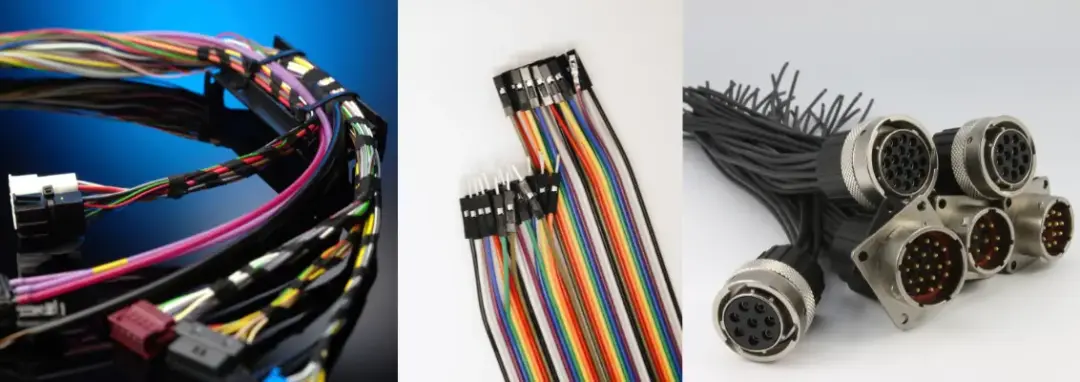
| Flat wire harness | Wires are arranged parallel to one another on the same plane, creating a slim, compact structure suitable for space-constrained installations. |
| Circular wire harness | Wires are arranged into a bundle with a circular cross-section, often surrounded by an outer sheath to help protect against friction and bending, depending on the construction. |
5. Where are wire harnesses used?
Wire harnesses are used across various industries, particularly in systems with numerous wires and connection points. Common applications include:
| Industry | Wire harness applications |
| Automotive, aerospace, and transportation | Connects sensors, controllers, lighting systems, batteries, and electronic devices while protecting wires against vibration and environmental factors. |
| Telecommunications | Organizes and protects signal-transmission wires, supporting stable connections and reducing the risk of incorrect wiring. |
| Electronic devices and control panels | Arranges wires neatly in limited spaces, such as flat-panel displays, electrical cabinets, and control panels. |
| Industrial machinery and construction equipment | Groups, secures, and routes wires away from moving components, heat sources, and other areas where damage may occur. |
| Specialized information technology equipment | Protects wires and connections in heavy industrial environments or harsh operating conditions where dust and friction may cause damage. |
| Household appliances | Standardizes internal wiring, making factory assembly and appliance installation more convenient. |
| Medical equipment | Organizes internal wiring and reduces the risk of wires becoming tangled or damaged by dust, liquids, and mechanical impacts. |

6. Wire harness manufacturing process
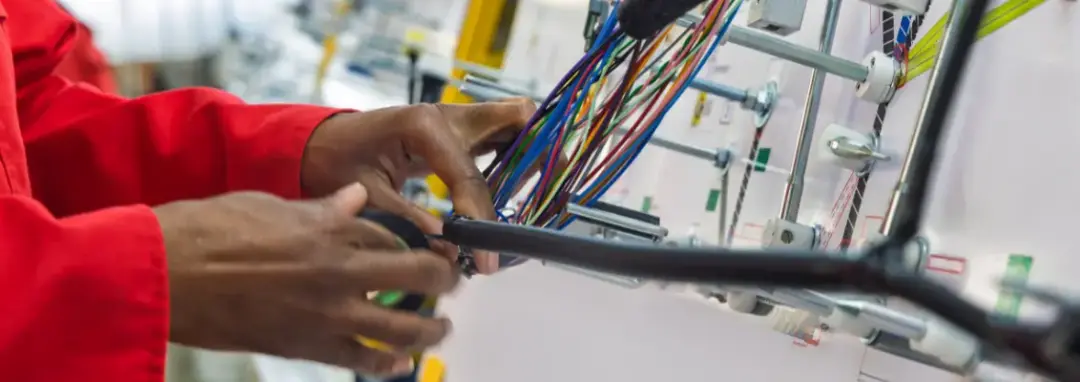
Wire harness manufacturing begins with software-based design, followed by processing and assembly at the factory. The main steps typically include:
Step 1: Electrical system design
First, engineers determine the functions of the electrical system, power requirements, installation locations, and connections between devices. They then develop the electrical schematic and identify the components that need to be connected.
Step 2: Wire harness design
Based on the electrical schematic, engineers plan the wire layout, determine wire lengths and connector positions, and define the branching structure. The design must also account for different system configurations to meet practical application requirements.
Step 3: Creating 2D drawings and 3D models
The 2D drawings and 3D models help verify the wire harness layout before production. The 2D drawings show wire arrangements, connector positions, and wire protection methods. Meanwhile, the 3D models help determine wire lengths and the placement of accessories such as cable ties, protective sleeves, electrical tape, and fixing clips.
Step 4: Cutting wires to the required length
Once the design is complete, wires are cut to the specified lengths. The insulation at both ends may also be stripped to prepare the wires for terminal crimping or subsequent processing.
Step 5: Processing and pre-assembly
Wires are crimped with terminals or fitted with connectors according to the design. They are then arranged, grouped, and secured into individual branches to create the required wire harness structure.
Step 6: Final assembly and inspection
The wire branches are combined into a complete wire harness, followed by the addition of necessary protective and fixing accessories. Finally, the finished assembly is inspected for connection integrity, wire arrangement, and other relevant technical requirements before being put into use.
Note: The wire harness manufacturing sequence may vary depending on the design, production scale, and requirements of each application.
7. Wire harness vs. cable assembly: What are the differences?
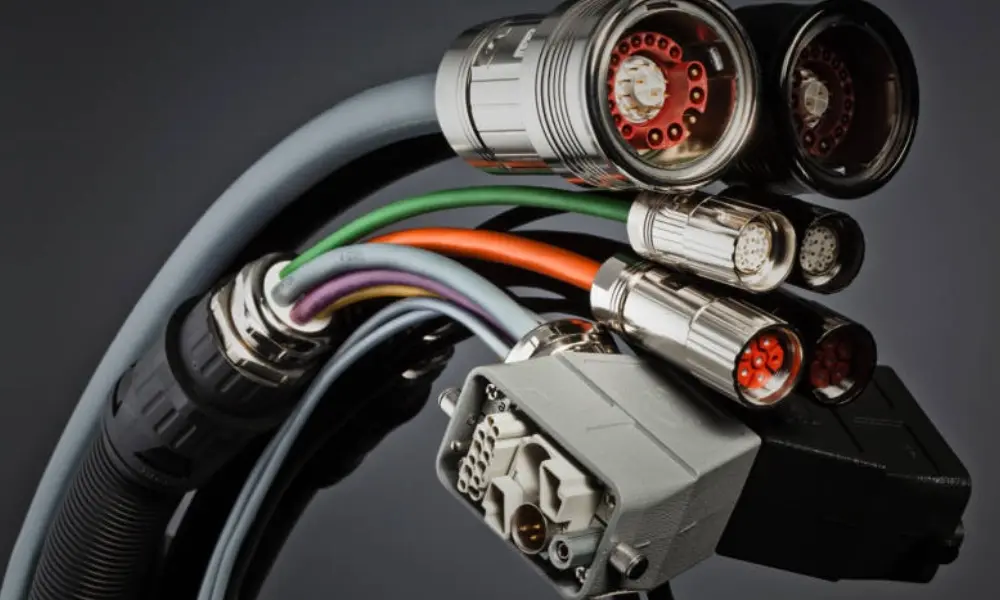
Wire harnesses and cable assemblies are often mistaken for the same thing. However, they differ in structure and intended use. A wire harness focuses on organizing multiple wires into a bundle according to a connection diagram, whereas a cable assembly typically consists of one or more cables pre-assembled with connectors and protective features suited to specific technical requirements.
| Criteria | Wire harness | Cable assembly |
| Construction | - Multiple wires bundled, branched, and secured according to the design. - Wire sizes typically range from 30 to 10 AWG. - Commonly uses terminals and multi-pin connectors. | - One or more cables assembled with connectors, potentially including an additional protective sheath. - Wire sizes typically range from 30 to 4 AWG. - May use industrial connectors, sealed connectors, or overmolded connectors, depending on the design. |
| Voltage and Temperature | Typically up to 600V, with a temperature range of -40°C to 105°C. | Typically up to 1000V, with a temperature range of -60°C to 200°C. |
| Protection | May use conduits, tape, or protective sleeves to reduce exposure to external factors. | May incorporate shielding, abrasion-resistant materials, or sealed structures to meet specific requirements. |
| Applications | Automotive electrical systems, household appliances, control cabinets, and industrial machinery. | Automation equipment, telecommunications, and applications requiring specialized protective features. |
| Cost | Can help optimize costs in systems with numerous wires and connection branches. | Costs depend on the cable type, connectors, and level of processing and protection required. |
Although wire harnesses and cable assemblies have distinct characteristics, they are not mutually exclusive. A wire harness system can still incorporate cable assemblies at points requiring specialized connections or additional protection.
8. Factors to consider when choosing a wire harness
To choose the right wire harness, you need to consider several criteria, including:
- Identify factors such as temperature, humidity, vibration, and friction at the installation site to select suitable wires, insulation materials, and protective layers.
- Consider the number of connection points, branching structure, installation space, and the possibility of configuration changes in the future.
- Evaluate the total costs of materials, processing, installation, and maintenance to find a solution that fits your budget while meeting technical requirements.
- Check the standards and certification requirements applicable to your industry or specific application.
- Prioritize suppliers that can provide technical consultation, custom manufacturing, and product quality inspections to ensure consistency across production batches.
9. Does HELU provide wire harness solutions?
Yes. HELU provides cable harnessing solutions that can be customized to meet the technical requirements of individual systems. Depending on actual needs, cable harnessing can be tailored in terms of cable type, wire length, connectors, and wire routing and protection methods to suit the design and operating conditions of each system.
With experience in industrial cables, we HELU Vietnam help businesses identify suitable connection solutions, simplify installation, and reduce costs. To learn more about customized cable harnessing solutions, feel free to contact our HELU Vietnam engineering team for detailed consultation.

Contact HELU Vietnam today for consultation and a product quote
10. Frequently asked questions about wire harnesses
A wire harness groups, organizes, and connects electrical wires to transmit electrical power and signals between components within a system.
A wire harness typically includes electrical wires, terminals, connectors, protective sleeves, tape, and wire-fixing accessories.
A wire harness focuses on organizing multiple wires into a bundle, often with several connection branches. A cable assembly consists of cables assembled with connectors and may incorporate additional protective layers as required.
Wire harnesses are used in automotive, electronics, household appliances, industrial automation, telecommunications, and medical equipment.
Yes. Wire harnesses can be customized in terms of wire length, connector types, branching structure, and protective materials to suit the design and operating conditions of a system.
Yes, they can. Pre-assembled wire harnesses reduce on-site wiring work, minimize connection errors, and make maintenance more convenient.


