CVV & CXV cables: Comparing DSTA, DATA, SWA, AWA types
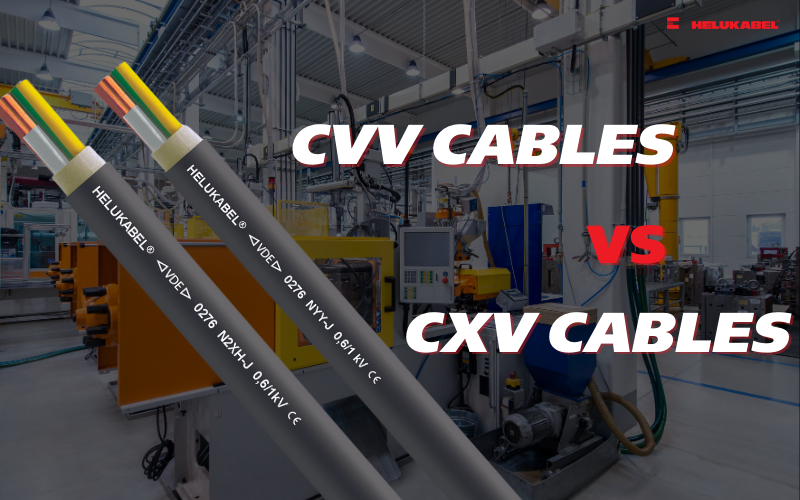
CVV and CXV cables are two common copper-conductor power cable types in Vietnam. In terms of basic construction, CVV uses PVC for both insulation and sheath, while CXV uses XLPE for insulation and PVC for the sheath. In armoured cable constructions, you may come across designations such as DSTA, DATA, SWA and AWA. These designations indicate the type and material of the metal armour, such as steel tape armour, aluminium tape armour, steel wire armour or aluminium wire armour. So, what are the differences between CVV and CXV? What are DSTA, DATA, SWA and AWA, and how do they differ? Let’s explore them in detail below.
Table of contents
What are CVV and CXV cables?
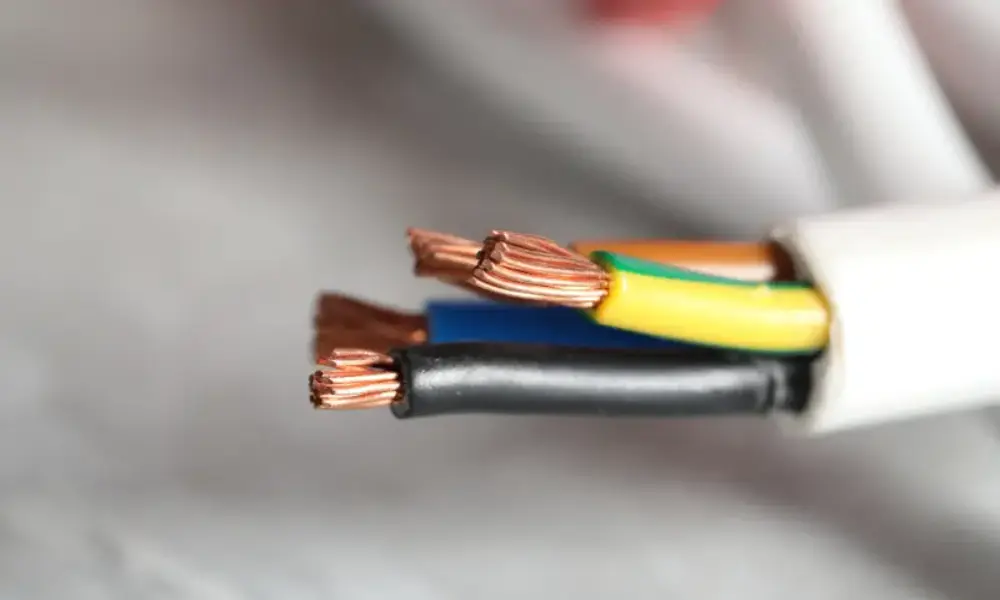
Before comparing CVV cables and CXV cables, it is important to understand the definition, construction and applications of each type:
1.1. What is a CVV cable?
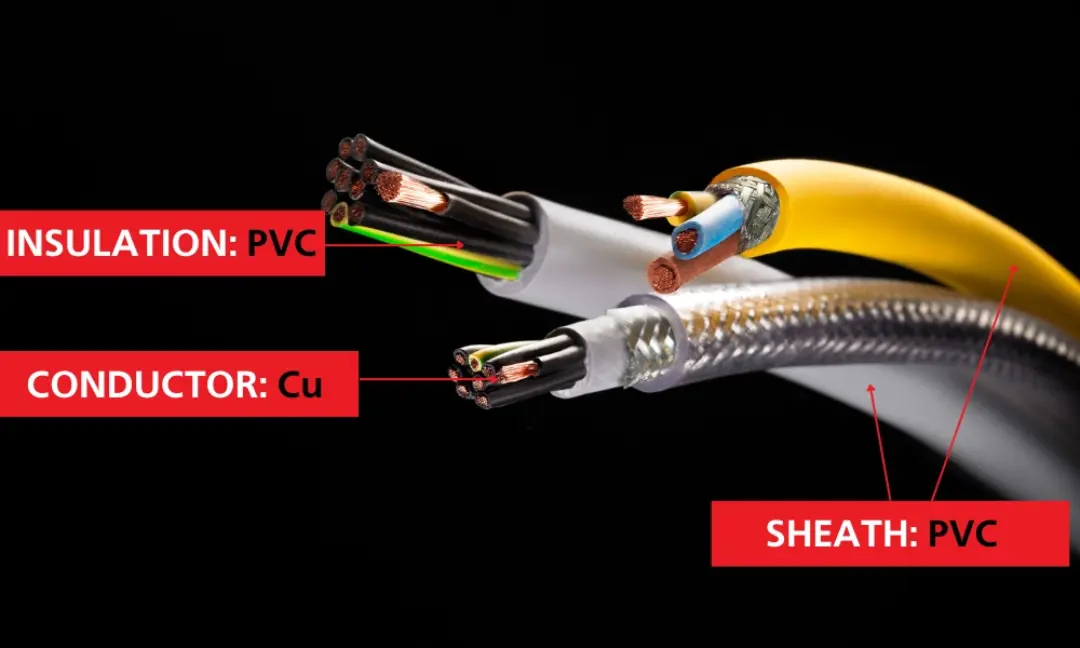
CVV is a common designation for the Cu/PVC/PVC construction, consisting of:
- C: Copper conductor (Cu)
- V: PVC insulation
- V: Outer protective PVC sheath
CVV cables are commonly used in low-voltage power transmission and distribution systems, residential buildings, commercial buildings and factories. Depending on the design and technical specifications, the cable can be installed in fixed installations on cable trays, in conduits or in locations that meet the usage conditions specified by the manufacturer.
1.2. What is a CXV cable?
CXV is a designation for the Cu/XLPE/PVC cable construction, in which:
- C: Copper conductor (Cu)
- X: XLPE (Cross-linked Polyethylene) insulation
- V: PVC protective sheath
CXV cables are used in low-voltage power distribution systems, construction projects, factories and industrial electrical systems. Thanks to XLPE insulation, these cables are suitable for applications requiring higher temperature resistance and insulation performance according to the design specifications. Some CXV cable types are also designed for medium-voltage systems, but they must be distinguished based on their voltage rating and specific construction.
2. How are CVV and CXV cables different?
The table below summarizes some key differences between CVV and CXV cables.
| Criteria | CVV cable | CXV cable |
| Conductor | Copper | Copper |
| Insulation material | PVC | XLPE |
| Sheath material | PVC | PVC |
| Basic construction | Cu/PVC/PVC | Cu/XLPE/PVC |
| Main difference | PVC insulation | XLPE insulation |
| Key advantages | Common construction, suitable for various low-voltage electrical systems and fixed installation conditions | Higher temperature resistance, suitable for systems with higher requirements for operating temperature and current-carrying capacity |
When should you choose CVV or CXV cables?
- Choose CVV cables: When the system has standard requirements for insulation performance and operating temperature, and a cable suitable for low-voltage electrical systems and fixed installations is required.
- Choose CXV cables: When the system has higher requirements for temperature resistance or requires the cable's current-carrying capacity to be utilized under suitable conditions. XLPE has a higher continuous operating temperature than PVC, so CXV is often considered for these applications.
3. Meaning of DSTA, DATA, SWA and AWA designations for CVV/CXV cables
Typically, CVV and CXV cables are manufactured with a construction consisting of a conductor, insulation and outer protective sheath, without an armour layer. However, under certain installation conditions, an additional armour layer may be required to enhance protection against external mechanical impacts. Depending on the technical requirements and installation environment, the armour can be designed using different materials and constructions, commonly including DSTA, DATA, SWA and AWA. These armour types can be distinguished as follows:
| Criteria | DSTA | DATA | SWA | AWA |
| Full name | Double Steel Tape Armour | Double Aluminium Tape Armour | Steel Wire Armour | Aluminium Wire Armour |
| Armour material | Steel | Aluminium | Steel | Aluminium |
| Construction | Double tape | Double tape | Wire | Wire |
| Mechanical protection | Yes | Yes | Yes | Yes |
| Magnetic properties | Magnetic | Non-magnetic | Magnetic | Non-magnetic |
| Common cable construction | Multi-core cable | Single-core cable | Multi-core cable | Single-core cable |
3.1. CVV/DSTA and CXV/DSTA cables
DSTA (Double Steel Tape Armour) is an armour layer consisting of two layers of steel tape wrapped around the cores of CVV/CXV cables, providing increased protection against external mechanical impacts. This type of armour is commonly used in multi-core power cables, particularly cables installed underground or in environments where there is a risk of impact and mechanical stress.
3.2. CVV/DATA and CXV/DATA cables
DATA (Double Aluminium Tape Armour) is an armour layer consisting of two layers of aluminium tape, with a construction similar to DSTA but using aluminium instead of steel. Thanks to the non-magnetic properties of aluminium, CVV/CXV cables with DATA armour can be used in certain single-core AC cable designs to minimize the effects of electromagnetic induction.
3.3. CVV/SWA and CXV/SWA cables
SWA (Steel Wire Armour) is an armour layer consisting of steel wires arranged helically around CVV/CXV cables. The wire construction provides mechanical protection for the cable and is suitable for various power and industrial cable designs. SWA armour is commonly used in multi-core cables, such as cables installed underground or in areas where there is a risk of mechanical stress.
3.4. CVV/AWA and CXV/AWA cables
AWA (Aluminium Wire Armour) is an armour layer consisting of aluminium wires arranged around CVV/CXV cables. Compared with SWA, the main difference is that AWA uses non-magnetic aluminium. Therefore, AWA armour is often considered for single-core cable designs used in AC systems to minimize electromagnetic induction and related losses.
4. When should you choose armoured CVV/CXV cables?
The choice of whether to use armoured CVV/CXV cables depends on the installation conditions, the required level of mechanical protection and the technical requirements of the project. You may consider using armoured cables in the following cases:
- When the cable route is exposed to mechanical impacts: If the cable is installed in an area where it may be exposed to impact, compression or other mechanical forces, you should consider using an armoured cable to provide additional protection for the cable structure.
- When the installation method requires mechanical protection: For underground cable routes or installations with specific protection requirements, you should select an armoured cable that is suitable for the installation conditions and technical requirements of the project.
- When electrical characteristics need to be considered: For single-core cables used in AC systems, you need to select an appropriate armour material to minimize the effects of electromagnetic induction.
- When balancing protection and installation requirements: If an armoured cable is used, you need to consider factors such as weight, overall diameter, bending radius, cable pulling and securing methods, as well as suitable cable accessories and terminations.
In general, the final selection should be based on the product datasheet, applicable standards and actual project conditions to ensure that the cable meets both operational and installation requirements.
>>> Read more: 7 outstanding features of SUPERTRONIC®- 310-C-PVC CVV cable
5. How to choose armoured CVV/CXV cables?
To choose a standard CVV/CXV cable or a suitable armoured type, you should consider the following factors:
- Determine the number of cable cores: Identify whether the system requires a single-core or multi-core cable, as the core configuration affects the choice of armour type. In particular, for single-core cables used in AC systems, you should pay attention to the requirement for non-magnetic armour materials.
- Select the armour material: Consider steel or aluminium armour based on the mechanical and electrical requirements of the system. Steel armour types include DSTA and SWA, while aluminium armour types include DATA and AWA.
- Select the armour construction: Determine whether tape armour or wire armour is required. Choose DSTA or DATA for tape armour, and SWA or AWA for wire armour.
- Check the product's technical specifications: Check the catalogue or datasheet to confirm the rated voltage, conductor cross-section, number of cores, insulation material, armour type, sheath material, overall diameter, minimum bending radius and applicable standards.
>>> Find out more: Choosing insulation for electrical cables
6. Alternative CVV/CXV cable solutions from HELU
We HELU offer various cable types with construction and characteristics similar to CVV and CXV, suitable for different requirements in terms of voltage, flexibility and installation conditions. Some representative cable types include:
| HELU cable series | Similar solutions | Key features | Notable applications |
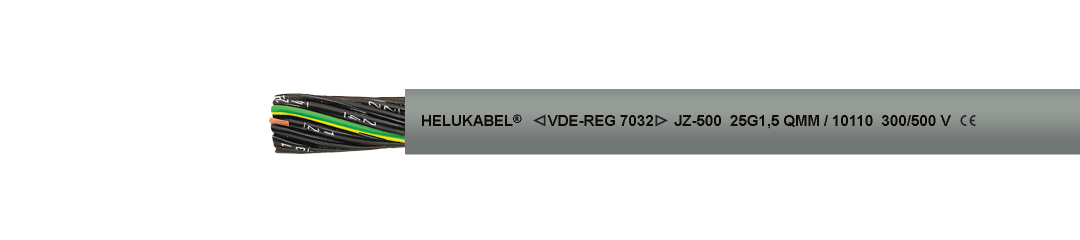
| JZ-500 | CVV | Nominal voltage: AC U0/U 300/500 V Test voltage core/core: 4000 V Breakdown voltage: 8000 V | Machine tools, assembly lines, factories and control systems |
| JZ-600 | CVV | Nominal voltage: AC U0/U 600/1000 V Test voltage core/core: 4000 V Breakdown voltage: 8000 V | Control systems and power supply in industrial environments |
| TRONIC (LiYY) | CVV | Peak operating voltage: 0.14 mm²: 350 V 0.25–1.5 mm²: 500 V | Signal transmission and control in equipment and machinery |
| N2XH-O | CXV | Nominal voltage: U0/U 0.6/1 kV Test voltage: 4 kV | Low-voltage power distribution and fixed electrical systems |
7. Frequently asked questions about CVV, CXV cables and armour
CVV has a basic Cu/PVC/PVC construction, while CXV has a Cu/XLPE/PVC construction. The main difference is the insulation material: CVV uses PVC, while CXV uses XLPE.
DSTA stands for Double Steel Tape Armour, meaning an armour layer made of double steel tape.
DATA stands for Double Aluminium Tape Armour, meaning an armour layer made of double aluminium tape.
SWA stands for Steel Wire Armour, meaning an armour layer made of steel wire.
AWA stands for Aluminium Wire Armour, meaning an armour layer made of aluminium wire.
No. Both use steel, but DSTA is double steel tape armour, while SWA is steel wire armour.
No. Both use aluminium, but DATA is double aluminium tape armour, while AWA is aluminium wire armour.
Aluminium armour (AWA or DATA) is preferred because aluminium is non-magnetic, helping to minimize electromagnetic induction and power losses.
Not necessarily. Armoured cables provide increased mechanical protection, while unarmoured cables are generally lighter and easier to install. The choice depends on the installation conditions and technical requirements.
Each project has different requirements for voltage, cross-section, number of cores, armour and installation conditions. Contact our HELU Vietnam team for consultation on the cable type that best meets your project's technical requirements and actual application.