DMX and hybrid cables: Professional cabling solutions for event lighting
A DMX cable is a signal cable specifically used to control stage lighting systems under the DMX512 standard, while a DMX+Power hybrid cable is a version that also integrates a power line within the same cable jacket. In large-scale event lighting systems, each fixture typically needs two separate cable runs: one for the control signal and one for power. DMX+Power hybrid cable solves this by combining both lines into a single cable sheath, reducing the number of cables that need to be run, cutting installation time, and minimizing the connection points that can cause faults
Article content
1. What is a DMX cable? The role of DMX cable in lighting systems
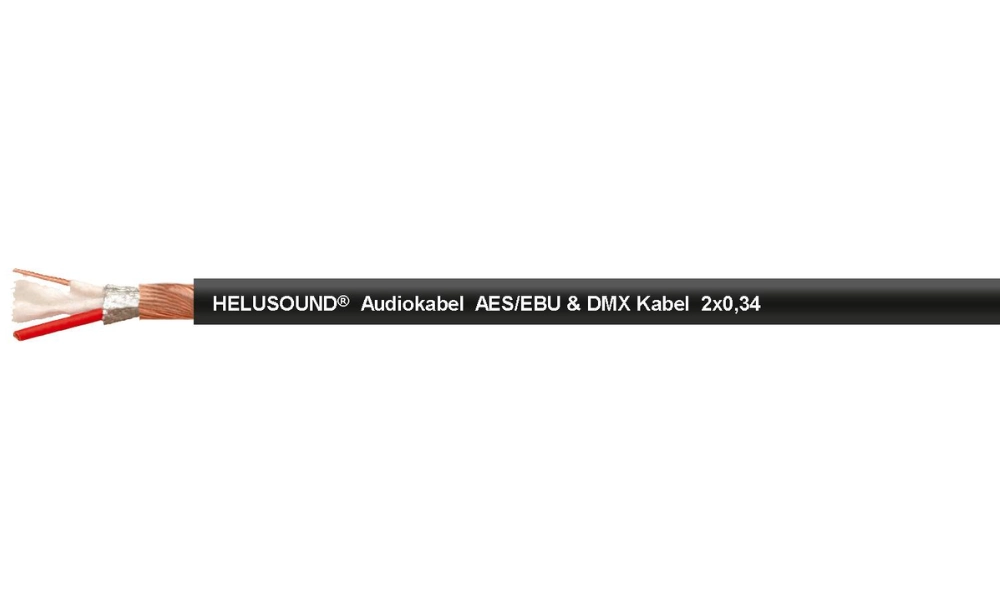
HELUSOUND® AES/EBU DMX SC BLACK Cable, 2 x 0.34 mm²
1.1 What is a DMX cable?
DMX (Digital Multiplex) is a digital communication protocol, standardized as DMX512, used to control stage lighting equipment such as PAR cans, moving heads, fog machines, and many other lighting effects. It is the "language" that a lighting controller uses to talk to fixtures: every time an operator changes a color, triggers a strobe effect, or moves a rotating fixture, that command is sent as a digital data packet. The DMX cable is the physical pathway for this digital "conversation."
Unlike a standard audio cable, a DMX cable's job isn't to carry audio. Instead, it carries control data, relaying changes between the fixtures and the source issuing the commands.
Technically, DMX512 is based on the EIA-485 signaling standard (commonly known as RS-485), transmitting data over a serial interface at a rate of 250,000 bits per second. It's worth noting, however, that not every RS-485 signal cable can substitute for a dedicated DMX cable, because DMX cable is specifically engineered to meet this standard's exact impedance and transmission-quality requirements.
1.2 The role of DMX cable
DMX cable carries the digital control signal from the lighting console to each fixture in the system. Cable quality directly determines the reliability of the signal being transmitted, which in turn affects dimming accuracy, color stability, and the overall lighting effect. A poor-quality cable can cause flickering, signal errors, or even total signal loss. A high-quality cable, on the other hand, keeps the system running smoothly and reliably.
A single DMX512 universe allows one controller to manage up to 512 channels, with each channel corresponding to a distinct control function such as brightness, color, or pan/tilt movement. For simple fixtures with only a single-color dimming function, one data channel is enough to control it, allowing 255 brightness levels (up to 512 such fixtures can be controlled at once). For RGB fixtures with three colors (red, green, blue), each fixture needs three data channels, so the number of RGB fixtures that can be controlled within one universe drops to around 170.
DMX signal travels in one direction only from the controller to the fixtures, which is known as unidirectional communication. Fixtures are usually connected in a daisy chain, and a terminator must be fitted at the end of each DMX line to prevent signal reflection, which is also a cause of flickering or operational errors. In addition, each fixture must be assigned to its own DMX address to receive the correct commands. If the address is set incorrectly, the fixture won't respond as expected. With a refresh rate of up to 44 times per second, DMX systems produce smooth lighting transitions, handling even the most complex lighting shows with ease.
1.3 Why can't standard audio cables be used for DMX?
This is a point many people overlook: microphone cable and DMX cable look alike on the outside but have completely different electrical characteristics.
DMX512 cable requires a characteristic impedance in the range of 100–120 ohms, typically 110 ohms in practice, while standard microphone cable has a much lower impedance, around 45–75 ohms. Using microphone cable for DMX, especially over long distances, causes this impedance mismatch to produce signal reflection and digital waveform distortion, resulting in:
- Uncontrollable flickering of fixtures
- Random fluctuations in color and brightness
- Unstable behavior at the end of the daisy chain
- Errors that are difficult to trace back to their source
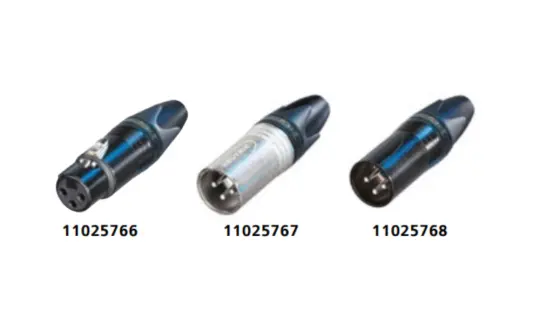
In addition, the ANSI E1.11 standard specifies that DMX cable must use a 5-pin XLR connector (XLR-5), not the 3-pin XLR used for microphone cable. This is because using XLR-3 creates a risk of accidentally plugging an audio cable into DMX equipment, which can damage both devices.
💡 Discover the characteristics, construction, and applications of audio cables
2. Characteristics of DMX cables
2.1 Construction of a DMX Cable
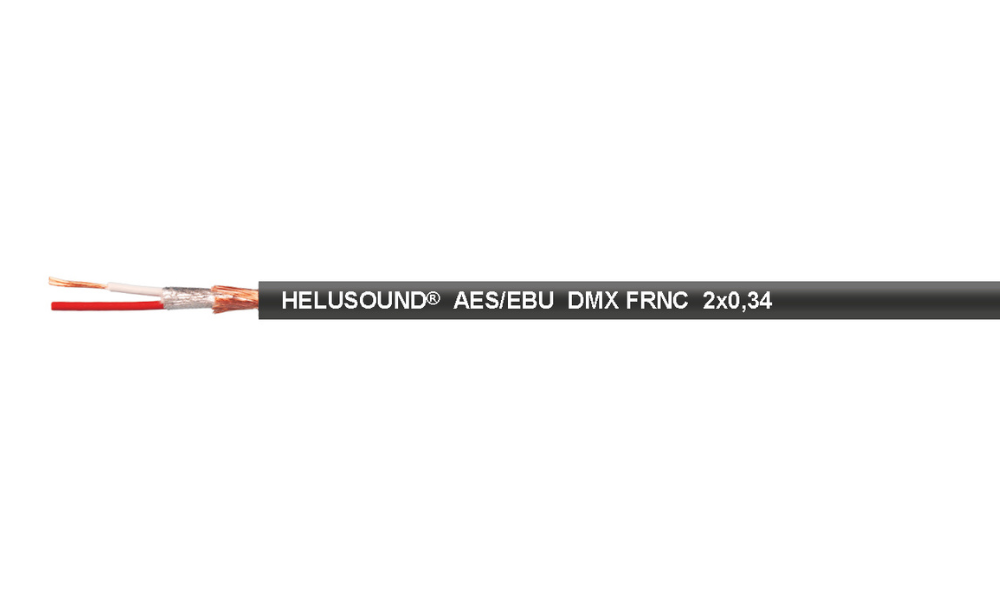
DMX cable typically consists of 2 twisted pairs. A single-pair version is also permitted, provided it is clearly marked to distinguish it from the 2-pair type. The internal conductors are all twisted pairs, which helps maintain signal integrity and reduce interference during data transmission.
For shielding, DMX cable may use individual shielding for each pair, an overall shield wrapping all pairs, or a combination of both. Common shielding materials include aluminum foil, tinned copper foil, or a combination of aluminum foil with a tinned copper braid.
The capacitance between conductors within the same shield must not exceed 65 pF/m, and the capacitance between a conductor and the shield must not exceed 35 pF/m. The lower the capacitance, the less signal loss occurs over the cable and typically achieved by using PE insulation.
The standard physical connector for DMX cable at equipment terminals is the 5-pin XLR connector.
2.2 Typical DMX cable ctructure
| Specifications | Value |
| Number of pairs | 1 pair or 2 pairs |
| Conductor cross-section | 0.22 mm² to 0.25 mm² (24 AWG to 23 AWG) |
| Insulation | PE or XLPE |
| Overall shield | Tinned copper braid combined with aluminum foil |
| Outer sheath | PVC |
| Outer diameter | 6 mm to 8 mm |
| Impedance | 100 to 120 ohms (110 ohms preferred) |
| Capacitance | C1 less than 60 pF/m |
2.3 Impedance in DMX cables
According to the ANSI E1.27-1 standard, DMX512 cable must have a characteristic impedance within the range of 100 to 120 ohms. Technically, since EIA-485 systems have a standard characteristic impedance of 120 ohms, that value is generally preferred. In practice, however, when designing lighting systems, 110 ohms is more commonly favored, as it offers the best balance between signal stability and cable durability.
The 110-ohm value is also specified in the IEC 60958-4-2006 standard, established by AES/EBU, along with the AES3-4-2009 standard. These standards define technical specifications for digital audio cable (AES3 cable), which demands higher performance than DMX lighting-control cable in terms of transmission frequency and capacitance. As a result, cable that meets the AES3 standard is highly backward-compatible with both DMX512 lighting-control cable and analog audio signal cable.
2.4 3-pin and 5-pin DMX cables
3-pin DMX cable uses the standard 3-pin XLR connector, carrying three signals: ground, data negative, and data positive. Because most common and mid-range lighting fixtures today are designed with 3-pin connectors, this cable type is widely used in DJ lighting systems, small-scale event venues, mobile stages, and event production in general.
5-pin DMX cable, meanwhile, is the connector officially specified by the DMX512 standard. It adds two additional pins (4 and 5), which are originally reserved for future data expansion. Although these two extra pins are rarely used in most standard lighting systems, the 5-pin connector remains regarded as the professional standard of the industry.
3. Hybrid DMX cable (DMX + Power)
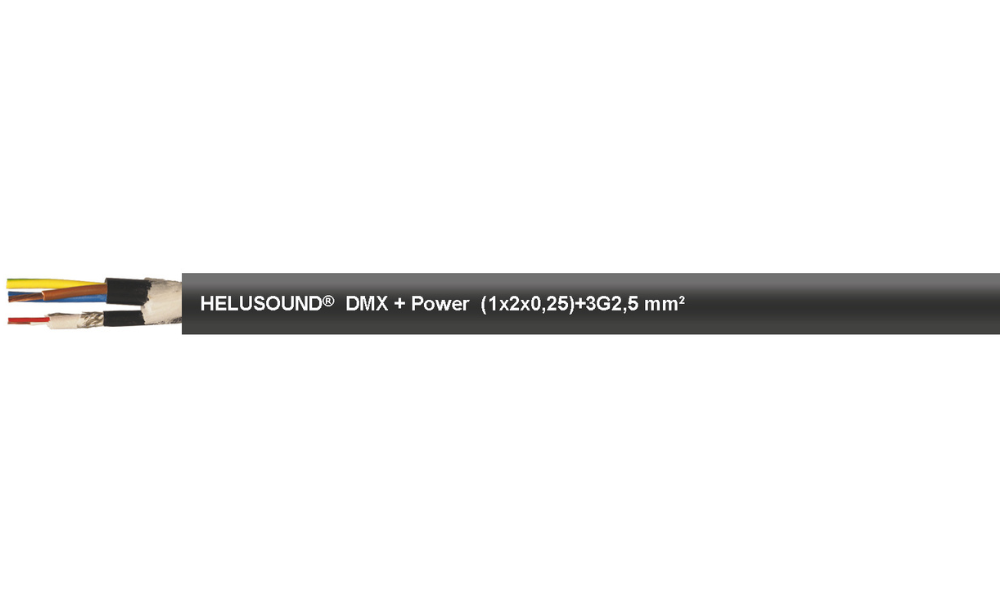
DMX + POWER Hybrid Cable 1x2x0.25 + 3G2.5 mm² black
3.1 What is DMX hybrid cable?
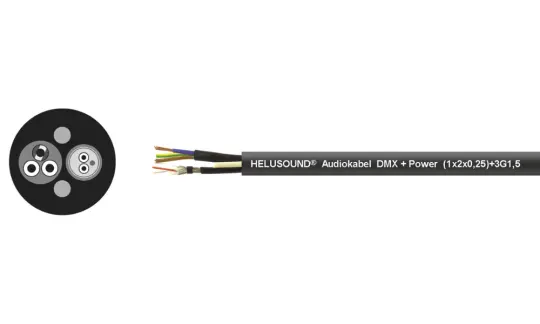
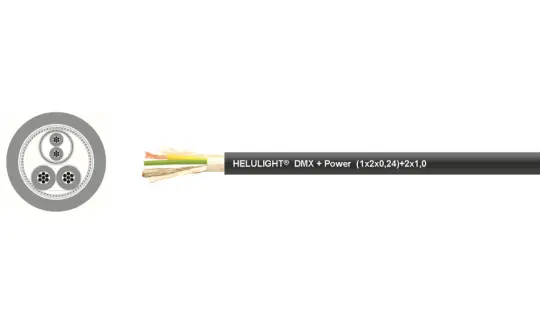
DMX Hybrid cable, also known as DMX + Power cable, is a composite cable consisting of a shielded DMX signal pair together with one or two power conductors, all within a single sheath, with the power core usually having its own inner jacket. Simply put, it's a solution that combines the lighting control signal wire and the power supply wire into a single cable, instead of running two separate cables as before.
The DMX pair inside a hybrid cable is typically double-screened, meeting both the DMX512-A and AES/EBU standards simultaneously, making it suitable for both fixed installations and as a mobile patch cable for touring events.
3.2 Features of DMX+Power Hybrid cable
Combining DMX signal and power supply within a single cable brings several practical benefits:
- Supports both digital audio and DMX signal transmission: This pair of digital signal cables is balanced and has an impedance of 110 ohms, ensuring stable signal transmission for both audio and DMX applications.
- Saves installation space and simplifies the construction and installation process: Integrating the power and signal cables into a single cable significantly reduces the installation space required and the total cable weight compared to using two separate cables. As a result, the construction process is also simplified.
- Thanks to its flexible design, this type of cable can be used for a variety of purposes, from controlling color-changing lights to managing powered speakers.
- The internal power cable is also encased in a separate outer jacket, which enhances durability and protects the cable when used in harsh conditions, effectively meeting the stringent requirements of professional audio, video, and lighting systems.
- When a sensitive signal core is located right next to an electrical power core within the same cable, mutual interference between these two types of signals is more likely to occur and is more severe than in conventional cables. In DMX Hybrid cables, the shielding structure is carefully engineered, typically using a high-quality shield made from special metal foils. When combined with EMC-compliant cable connectors, electromagnetic interference between the signal and the power source can be effectively and reliably controlled.
4. Applications of DMX Cables
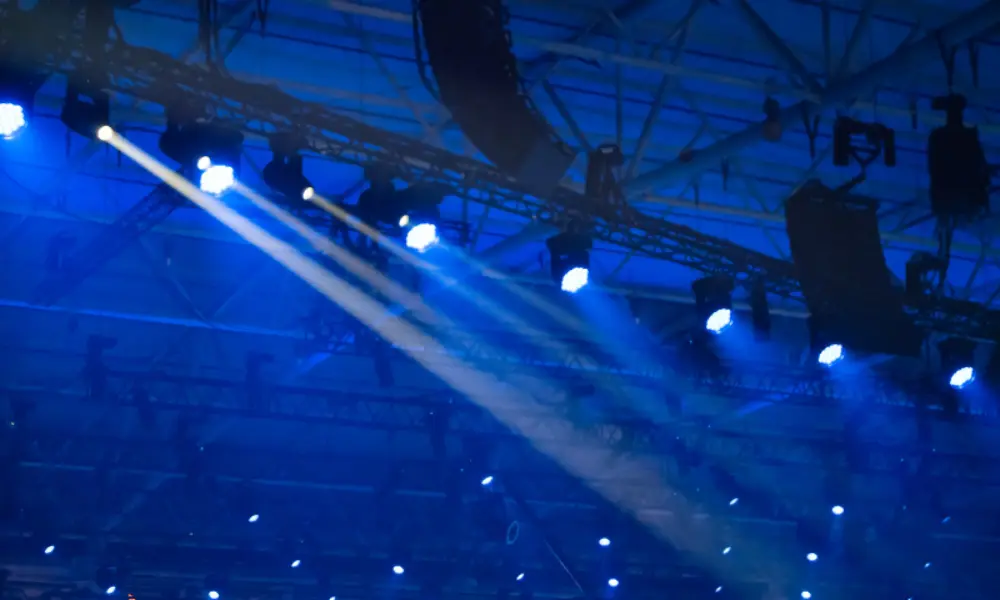
DMX cables are used for professional lighting systems
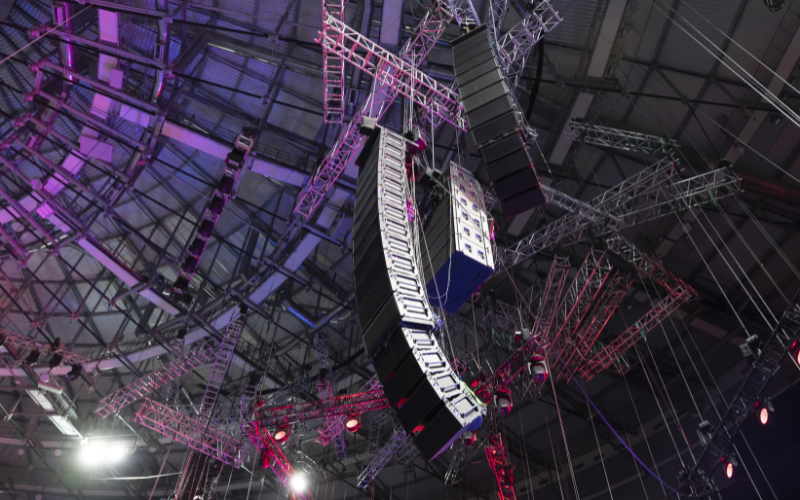
High-quality DMX cable plays an essential role across many lighting fields: concerts and live performances, theatrical productions, architectural lighting for buildings, and film and television production.
DMX is used in fixed architectural lighting installations to control building facades, bridges, and public spaces. These systems are often integrated with building automation systems through gateways that convert between different protocols.
In entertainment, DMX not only controls lighting but also controls many other complex elements of a live show, including moving stage scenery, fog machines and special effects, video content synchronization, and motorized rigging systems.
Amusement parks use DMX to synchronize ride experiences with lighting, sound, and motion. Many productions today also use media servers capable of outputting DMX signal alongside video content, ensuring perfect synchronization between visuals and lighting.
5. HELU's DMX cable and assembly range
HELU offers a comprehensive DMX cable ecosystem for professional lighting control systems, spanning from pure DMX cable and DMX hybrid cable to ready-to-use pre-assembled cables for on-site deployment.
5.1 DMX cables
This is a pure DMX signal cable line, used to control stage lighting and connect digital audio amplifiers. It includes two main variants:
- Flexible PVC-sheathed cable, with a 2-core version suited for stage operation and temporary on-site installation, and a 4-core version for applications requiring more signal channels.
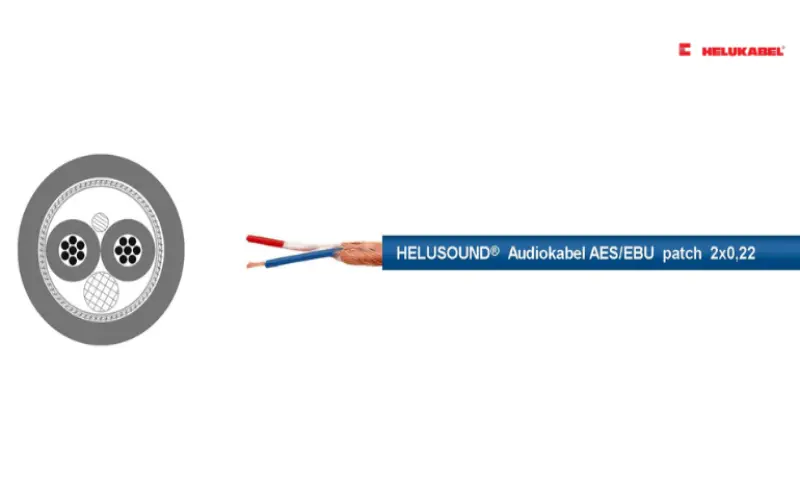
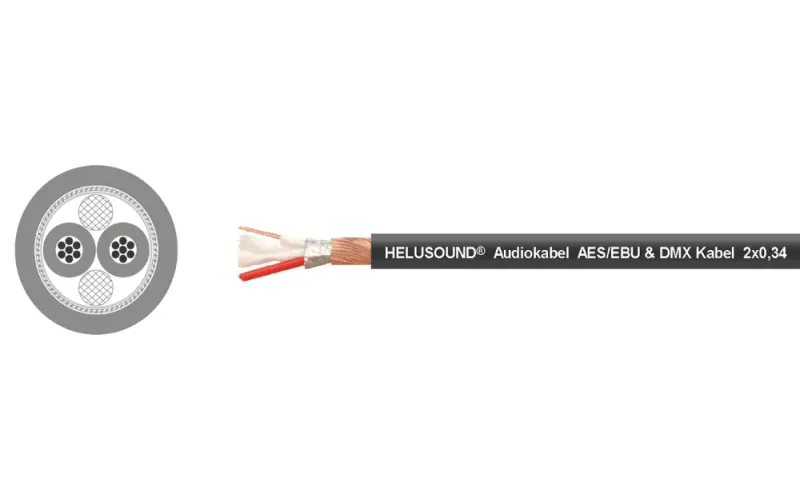
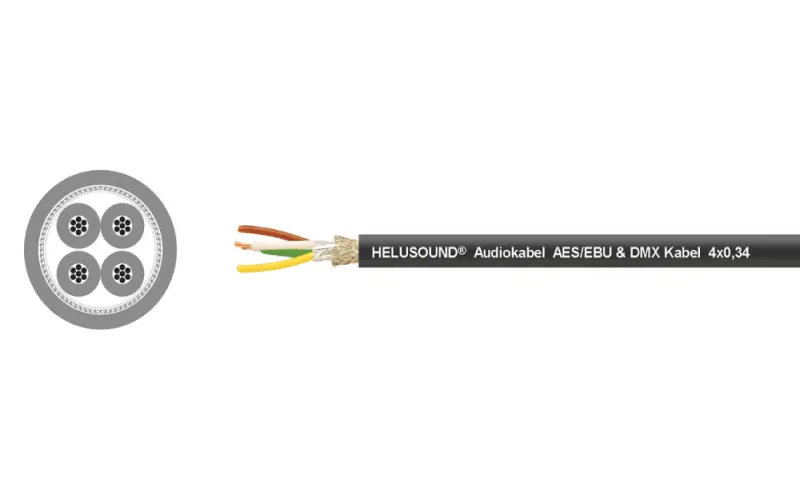
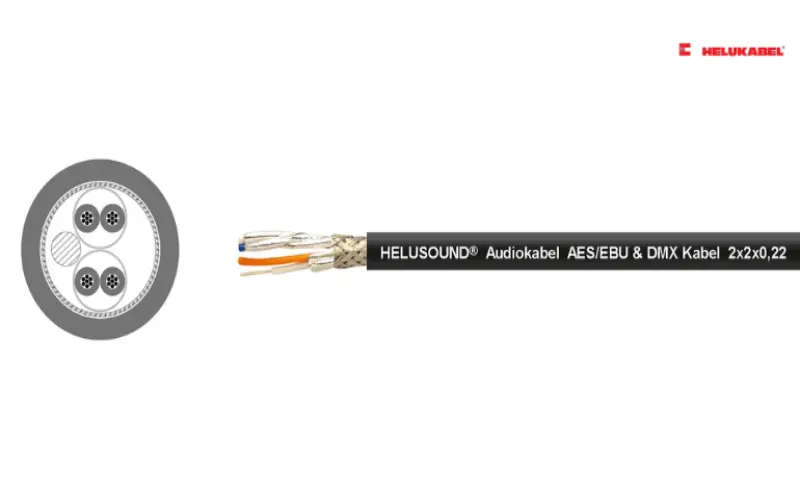
Some products, such as HELUSOUND® AES/EBU DMX SC BLUE 2 x 0.22 mm² (400031) , HELUSOUND® AES/EBU DMX SC BLACK 2 x 0.34 mm² (400032) , HELUSOUND® AES/EBU DMX S BLACK 4 x 0.34 mm² (400033) , HELUSOUND® AES/EBU DMX TP BLACK 2 x 2 x 0.22 mm² (400034)
- Halogen-free FRNC-sheathed cable, for permanent fixed installations such as theaters and public stages, meeting higher fire-safety requirements for both indoor and outdoor use.
Some products: HELUSOUND® AES/EBU DMX FRNC black 2 x 0.34 mm² (400278) , HELUSOUND® AES/EBU DMX AL/PT FRNC black 4 x 0.34 mm² (400279) , HELUSOUND® AES/EBU DMX TP FRNC black 2 x 2 x 0.22 mm² (400280)
5.2 DMX cable assemblies
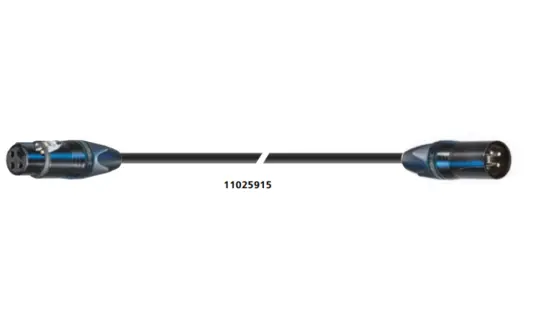
Beyond individual cable products, HELU also supplies DMX cable assemblies, fitted with Neutrik® 3-pin or 5-pin XLR connectors and heat-shrink labeling sleeves on each cable. These assemblies come in a range of lengths , from 2.5m, 5m, 10m, 20m, and up to 50m, allowing installers to deploy quickly on-site without having to terminate connectors themselves.
For systems that need to convert between the two connector standards, HELU also supplies adapter cables between 3-pin and 5-pin connectors, in both directions, making it easy to maintain compatibility between older and newer equipment within the same system.
| Cable type | Connector | Available lengths |
| DMX assembly | 3-pin XLR, male and female | 2.5m / 5m / 10m / 20m |
| DMX assembly | 5-pin XLR (3-pin assigned), male and female | 2.5m / 5m / 10m / 20m / 50m |
| Adapter cable | 5-pin XLR female to 3-pin XLR male | 0.1m / 1m / 2.5m / 5m |
| Converter Cable (Adapter) | 3-pin XLR female to 5-pin XLR male | 0.1m / 1m / 2.5m / 5m |
| 4-core DMX cable assembly | 5-pin XLR (5-pin assigned), male and female | 2.5m / 5m / 10m / 20m / 50m |
5.3 Hybrid DMX cable range
Alongside its pure signal cable line, HELU has also developed a DMX Hybrid cable range, combining both DMX signal and power supply within a single cable. This product line works well for moving-light fixtures, integrated digital audio amplifiers, or any application that needs to both power and control-signal the same device.
Some products include: HELULIGHT® DMX + POWER black 1 x 2 x 0.24 + 2 x 1.0 mm² (400081) , HELUSOUND® DMX + POWER black 1 x 2 x 0.25 + 3 G 1.5 mm² (400151) , DMX + POWER hybrid cable 1x2x0.25 + 3G2.5 mm² black (11025369), HELUSOUND® DMX + POWER black 2 x 2 x 0.22 + 3 G 2.5 mm² (4002117) .
5.4 DMX hybrid cable assemblies
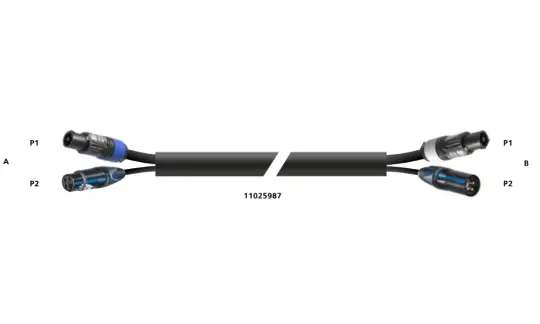
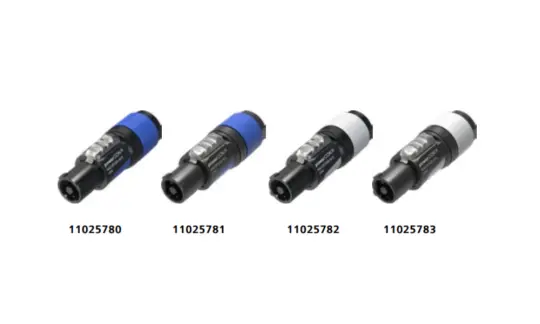
For the DMX Hybrid cable line, in addition to the 3-pin or 5-pin XLR signal connector, HELU also fits powerCON and powerCON TRUE1 power connectors, enabling safe power transmission alongside the control signal. All cable assemblies come with heat-shrink labeling at each connector, making it easy to manage and identify cables when deploying large-scale systems with many cables at once.
| Connector configuration | Description | Available lengths | Cross-sectional area of the power cord |
| 3-pin XLR + powerCON | 3-pin DMX signal connector, standard powerCON power connector | 1.5m / 3m / 5m / 10m | 1.5mm² and 2.5mm² |
| 5-pin XLR + powerCON | 5-pin DMX signal connector, standard powerCON power connector | 1.5m / 3m / 5m / 10m | 1.5mm² and 2.5mm² |
| 3-pin XLR + powerCON TRUE1 | 3-pin DMX signal connector, powerCON TRUE1 power connector with locking latch | 1.5m / 3m / 5m / 10m | 1.5mm² and 2.5mm² |
| 5-pin XLR + powerCON TRUE1 | 5-pin DMX signal connector, powerCON TRUE1 power connector with locking latch | 1.5m / 3m / 5m / 10m | 1.5mm² and 2.5mm² |
| IP65 5-pin XLR + IP65 powerCON TRUE1 | Waterproof, dustproof IP65 version for outdoor or harsh environments | 1.5m / 3m / 5m / 10m | 1.5mm² and 2.5mm² |