What is DNV certification? DNV-approved cables for marine and offshore applications
Components and systems used in the marine industry must meet strict requirements for safety and operational reliability. DNV certification is widely recognized worldwide and serves as proof that a product complies with rigorous technical standards.
1. Specific challenges of the marine environment for electrical cables
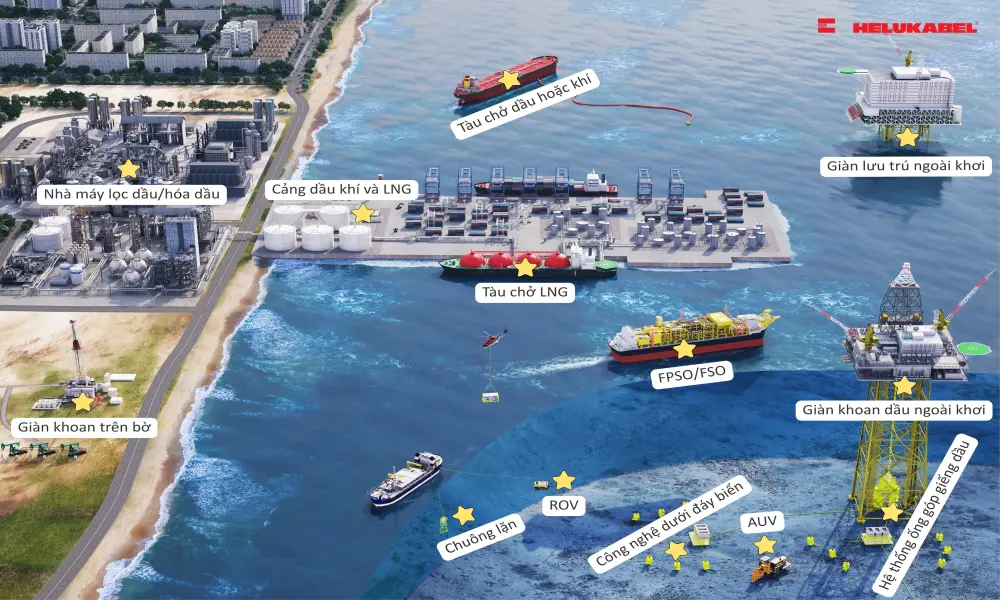
Offshore projects such as ships, oil and gas rigs, offshore wind farms, or marine energy facilities impose particularly stringent requirements on electrical cable systems.
The marine environment presents unique challenges for electrical cables used on ships and offshore installations. Marine cables must operate reliably under high humidity, corrosive saltwater exposure, continuous vibration, and limited installation space. These harsh conditions can accelerate material degradation and increase the risk of electrical failure if cables are not specifically designed for marine applications.
In addition, vessels and offshore platforms often operate far from shore for extended periods, making immediate maintenance or replacement difficult. For this reason, electrical systems must be designed with a preventive maintenance approach, ensuring long-term reliability and minimizing the risk of unexpected downtime.
Safety is another critical requirement in marine environments. In the event of a fire or emergency at sea, external assistance may not be immediately available. Therefore, marine electrical cables must meet strict international standards, including flame retardancy, low smoke emission, and fire resistance, to help protect personnel and maintain the operation of essential systems during emergencies.
Because of these demanding conditions, the marine industry requires specialized cables that comply with international marine standards and certifications. Selecting high-quality marine and offshore cables is essential to ensure safe operation, long service life, and reliable performance of electrical systems on ships and offshore structures.
2. Requirements for cables used in offshore projects
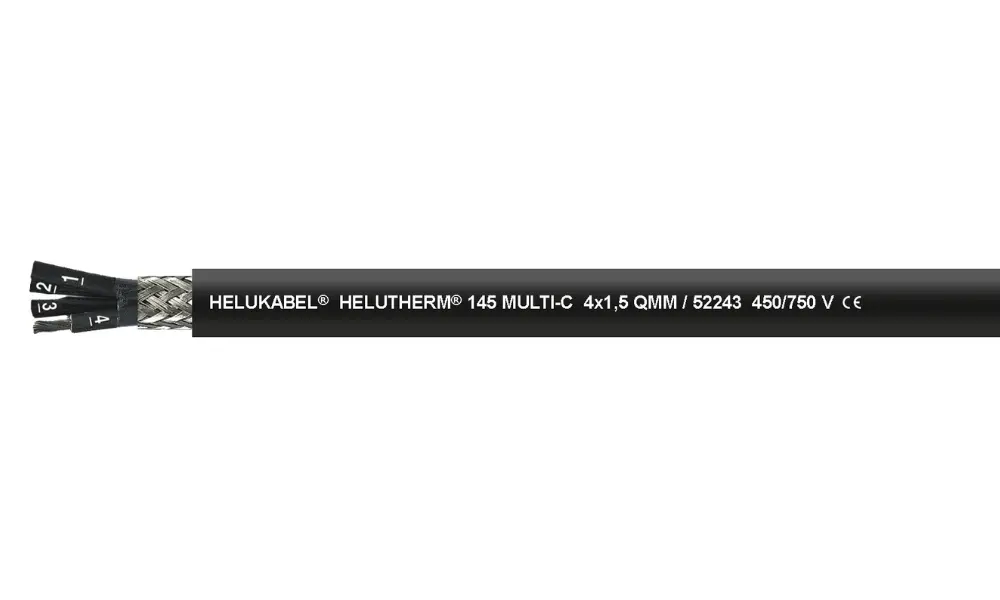
HELUTHERM® 145 MULTI-C temperature-resistant cable with a cross-linked, halogen-free outer sheath
Offshore projects such as ships, offshore oil and gas platforms, offshore wind farms, and marine energy installations impose extremely demanding requirements on electrical cable systems. In these environments, cables are not only responsible for transmitting power and signals but must also ensure long-term operational reliability under harsh marine conditions.
2.1 Flame retardant properties
One of the key requirements for offshore cables is the ability to prevent the propagation of fire. Marine and offshore cables must comply with testing standards such as IEC 60332-1 and IEC 60332-3-22, which evaluate the cable’s flame-retardant performance.
Thanks to specially formulated flame-retardant sheathing compounds, these cables can slow down the burning process and limit the spread of flames along the cable route, helping reduce fire risks in ships and offshore installations.
2.2 Halogen-free materials
In the event of a fire, halogen materials may release toxic and corrosive gases, which can endanger personnel and damage sensitive equipment. For this reason, offshore cables are often manufactured using halogen-free materials.
Materials such as XLPE and EPR are commonly used as insulation or sheathing compounds. These materials help reduce toxic gas emissions, improve safety, and enhance cable durability in harsh environments.
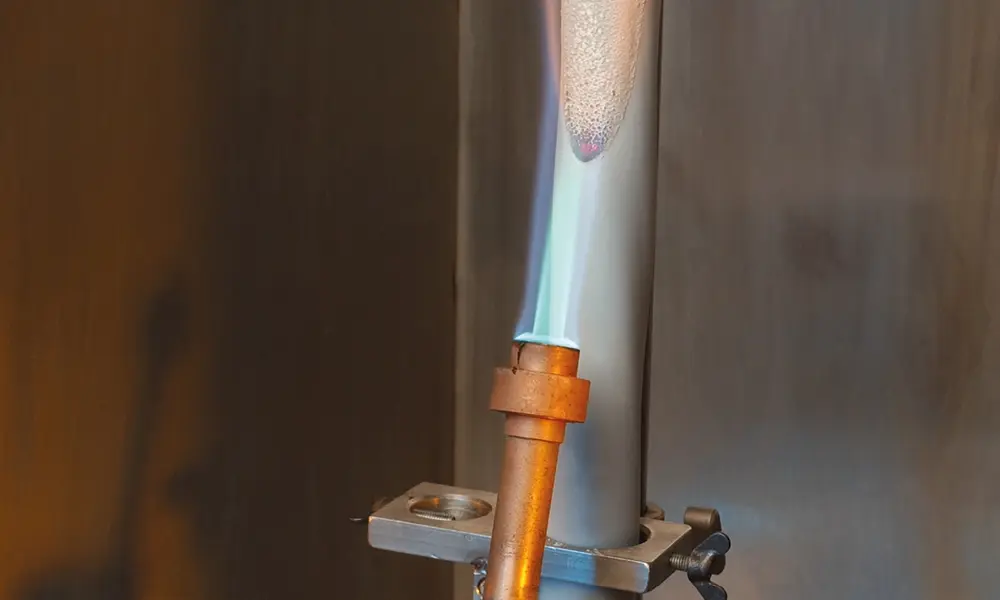
Electrical cables are tested for fire resistance in our manufacturing plant.
2.3 Low smoke development
According to IEC 61034-1 and IEC 61034-2, offshore cables must be tested for smoke emission during combustion. Low-smoke properties help minimize dense smoke generation in enclosed environments, which improves visibility and evacuation conditions during emergency situations on ships or offshore platforms.
2.4 Fire resistance
In addition to flame-retardant properties, many offshore applications require cables to maintain circuit integrity during a fire. According to IEC 60331, cables are tested at temperatures of approximately 830°C to evaluate their fire resistance.
With specialized construction and materials, these cables can continue to operate for a certain period during a fire, ensuring that critical systems such as control systems, fire alarms, and emergency safety equipment remain functional.
2.5 Resistance to mud and chemicals
Offshore installations are frequently exposed to drilling mud, seawater, oil, salt, and various corrosive chemicals. Therefore, offshore cables are typically designed with special sheathing compounds that provide resistance to mud and chemical corrosion.
This specialized outer sheath protects the cable core from harsh environmental impacts, helping extend the service life and operational reliability of cable systems in offshore environments.
Various international classification societies provide quality certifications for electrical cables used in offshore environments. These certifications help project owners, engineers, and operators select reliable offshore cables that meet industry standards. Among these organizations, DNV is one of the most recognized certification bodies for marine and offshore electrical cables.
3. DNV Certification
DNV certification
3.1 What is DNV certification?
DNV is an internationally recognized classification society established in 2013 following the merger of Det Norske Veritas (DNV) from Norway and Germanischer Lloyd (GL) from Germany. The organization is responsible for assessing ships and offshore structures in terms of safety, performance, and operational reliability, while also issuing technical guidelines for design, construction, and operation in the maritime and offshore industries.
The origins of these two organizations date back to the 19th century. DNV was founded in 1864, while Germanischer Lloyd (GL) was established in 1867. Both institutions have a long history of developing standards and supervising the materials and technologies used in the maritime sector, before gradually expanding their scope to include offshore energy, oil and gas, and other industrial sectors.
Through extensive research and technical evaluation, DNV is also capable of assessing and certifying machinery, equipment, and industrial products for specific applications. This form of certification is commonly known as Type Approval, which verifies that a product complies with the relevant technical standards and is suitable for its intended use.
Technical certifications such as DNV Type Approval are particularly important for electrical systems on ships and offshore installations, as they ensure product quality, safety, and compliance with strict international technical standards.
3.2 Benefits of DNV certification for marine and offshore cables
DNV-approved cables provide several important advantages for marine electrical systems, offshore installations, and offshore energy projects:
- Simplified selection and approval process: DNV-approved cables have already been tested and verified to meet the requirements of an internationally recognized classification society. This simplifies the technical selection and approval process, allowing engineers and contractors to implement projects more efficiently without additional complex evaluation procedures.
- High operational reliability: DNV-approved cables offer exceptional reliability, particularly in automation and control systems on ships and offshore platforms. These products undergo rigorous evaluations including technical design verification, manufacturing supervision, quality assurance (QA/QC), and performance testing, which significantly reduces the risk of failure in harsh marine conditions.
- Potential cost reduction for offshore projects: Many international classification societies recognize each other's certifications, meaning that DNV certification can help streamline approval processes across multiple maritime and offshore projects.
4. Applications of DNV-approved cables in offshore projects
Some of the key applications of DNV-approved cables in offshore operations include:
- Power transmission and distribution systems: Power cables are used to supply electricity to industrial machinery, equipment, and operational systems on ships and offshore platforms, ensuring stable and efficient energy distribution.
- Automation and instrumentation systems: Control cables and signal cables play a critical role in automation systems and instrumentation equipment, enabling accurate and continuous transmission of control signals and monitoring data.
- Communication and data transmission systems: DNV-certified communication cables and fiber optic cables are widely used in communication networks and data transmission systems between devices, operational areas, and central control rooms. These applications are particularly important in offshore environments, where reliable communication and coordination between systems are essential for operational efficiency and safety.
5. HELU DNV-approved cable and accessory portfolio
HELU currently offers more than 1000 items with DNV certification, providing high flexibility in selecting cabling solutions for marine and offshore applications.
5.1 HELUTHERM® 145 temperature-resistant single core cables
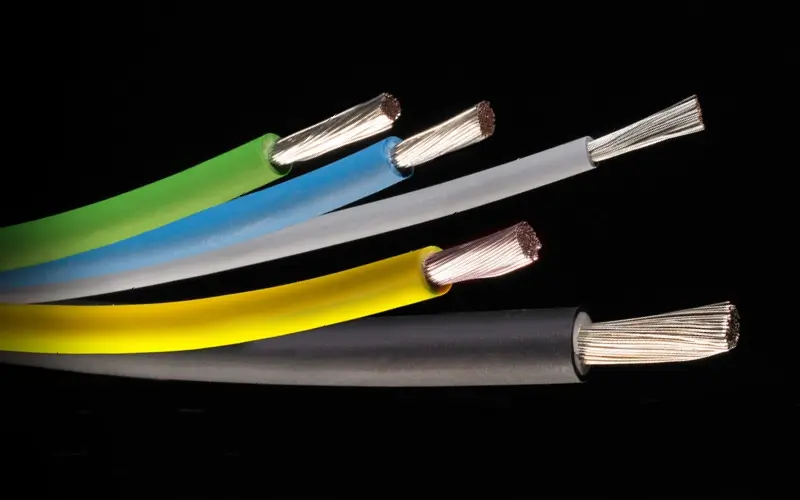
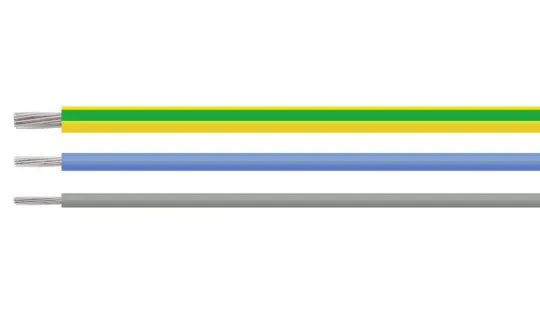
HELUTHERM® 145 is one of HELU’s representative temperature-resistant cables, available in multiple versions to meet a wide range of industrial application requirements. For the single core version, HELU offers two DNV-approved temperature-resistant cables: HELUTHERM® 145 (50999) and HELUTHERM® 145 UL/CSA 600V (59473) . Both products are currently available in various color versions.
These single-core cables are designed for internal wiring of lighting fixtures, heating equipment, electrical machinery, switching systems, and distribution cabinets in industrial equipment, as well as in machinery manufacturing and industrial plant installations.
In addition, for certain conductor cross-sections, HELUTHERM® 145 single-core cables also achieve CPR classifications Eca or Dca, meeting European fire reaction requirements according to the Construction Products Regulation (CPR). This ensures improved safety performance for installations where fire behavior compliance is required.
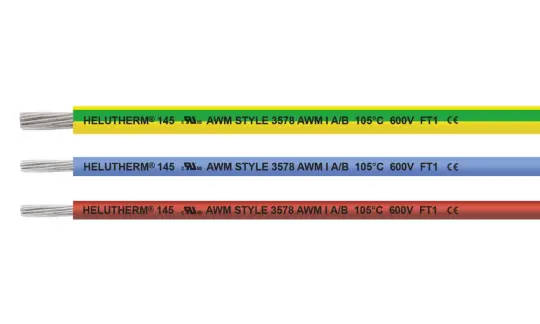
| Cable | Cross-sectional area (mm²) | Nominal voltage | Temperature range | Certification/Approval | Cable color |
| HELUTHERM® 145 | 0.5 – 240 | 0.6-1kV, 450-750V, 300/500V | -35°C to +120°C | EAC, DNV, UKCA | Biege, black, blue, green yellow, red, violet, yellow… |
| HELUTHERM® 145 MULTI | 0.5 - 95 | Black | |||
| HELUTHERM® 145 MULTI-C | 0.25 - 10 | -35°C to +120°C | Black | ||
| HELUTHERM® 145 UL/CSA 600V | 0.25 - 50 | 600 | -35°C to +120°C | UL, CSA, DNV, UKCA | Biege, black, blue, green yellow, red, violet, yellow… |
5.2 HELUTHERM® 145 MULTI temperature-resistant cables
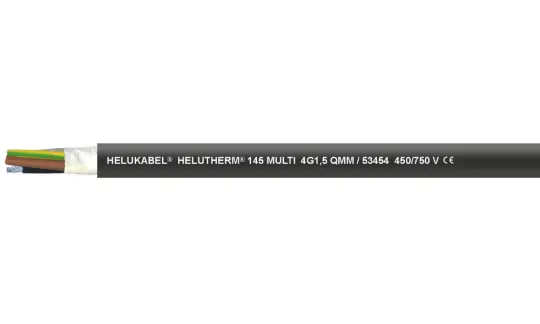
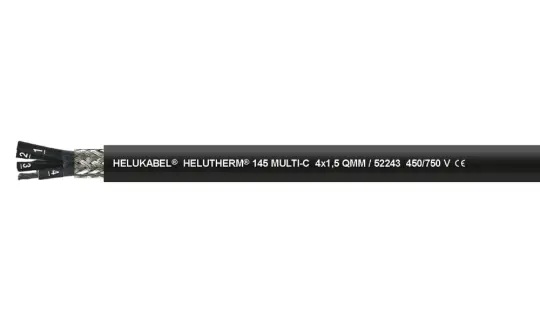
Two versions of this cable series are DNV-certified:
Both cables are manufactured with cross-linked insulation materials that offer high temperature resistance and halogen-free properties, specifically designed to improve safety performance in the event of fire. These cables are commonly used for connecting lighting systems, heating equipment, electrical machinery, switching systems, and power distribution cabinets in industrial installations.
Thanks to their excellent thermal stability, HELUTHERM® 145 MULTI cables provide long service life and high operational reliability under a wide range of operating conditions. In addition, the cables demonstrate strong resistance to weathering effects, moisture, ozone, and UV radiation, making them suitable for outdoor applications, such as traffic control systems and infrastructure installations.
In the event of a fire, the cables generate low smoke emission and do not release corrosive gases, helping to protect both personnel and sensitive equipment. Furthermore, their low fire load reduces the risk of toxic smoke formation and helps minimize potential damage to valuable control and monitoring systems, as well as the concrete and steel structures of industrial plants and facilities.
5.3 DNV-approved ethernet cables
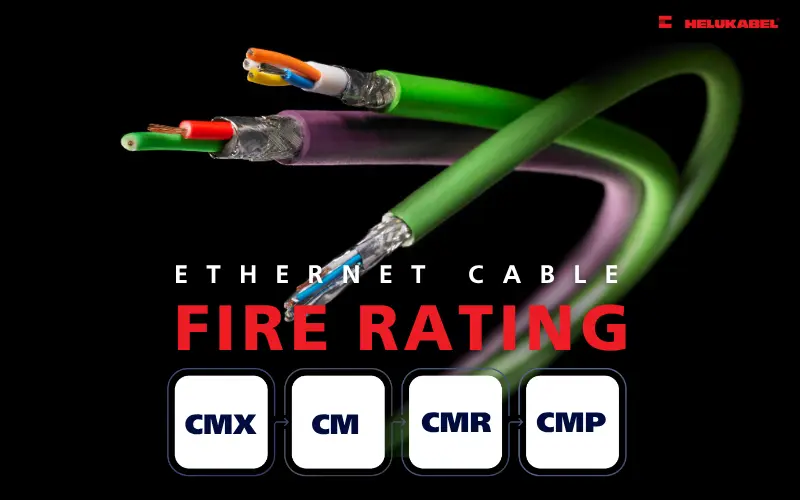
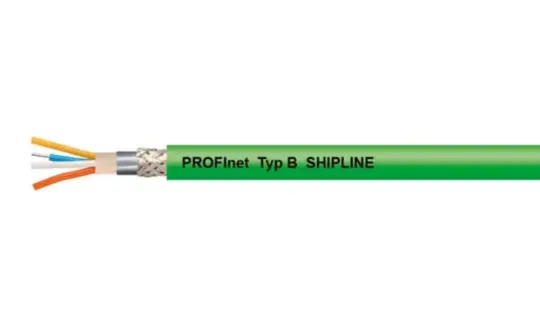
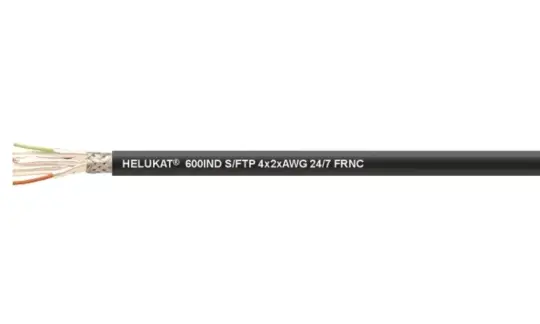
HELUKAT® PROFInet B CAT.5e SF/UTP FRNC SHIPLINE cable features an FRNC (Flame Retardant Non-Corrosive) outer sheath. It is compatible with PROFINET systems up to 100 MHz, making it well suited for industrial Ethernet communication in marine and offshore environments.
HELUKAT® 600IND CAT.7 S/FTP FRNC SHIPLINE cable is specifically engineered for high-performance industrial Ethernet networks. This cable ensures high-speed, stable, and reliable data transmission, even when operating in harsh maritime and offshore conditions.
5.4 DNV-approved cable glands
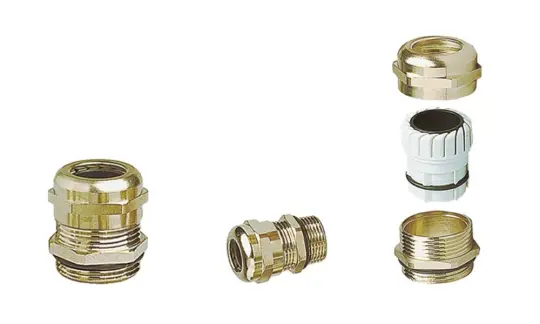
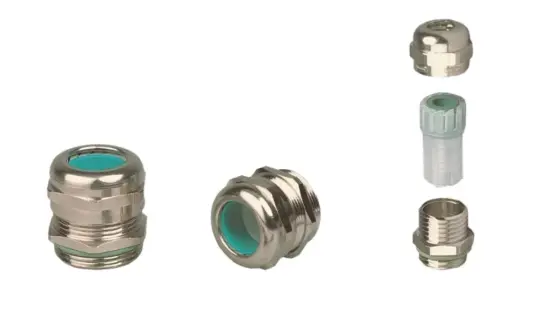
In addition to temperature-resistant cables and ethernet cables, several HELU cable glands are also DNV-certified, including:
- Plastic cable glands
- Brass cable glands
- EMC cable glands
- Cable glands for hazardous areas (ATEX, IECEx)
| Thread system | Certification | Color | Part number | |
| HSK plastic cable gland | Meter, PG, NPT | DNV, UL, CSA, VDE, UKCA | Gray, black, blue (for intrinsically safe applications) | 97558 |
| HSK-MS copper cable gland | Meter, PG, NPT | DNV, UL, CSA, VDE, UKCA | 98285 | |
| HSK-MS-E | Meter, PG, NPT | DNV, UL, CSA, VDE, UKCA | 97335 | |
| HSK-MS-E-D | Meter, PG | DNV, UL, VDE, UKCA | 98055 | |
| HSK-PVDF plastic cable gland | Meter, PG, NPT | DNV, UL, CSA, VDE, UKCA | Natural | 97527 |
| HSK-L plastic cable gland | Meter, PG, NPT | DNV, UL, CSA, VDE | Gray, black, blue (for intrinsically safe applications) | 91690 |
| HSK-MS-L brass cable gland | Meter, PG | DNV, UL, CSA, VDE, UKCA | 91720 | |
| HSK-MS-EX cable gland | Meter, PG | DNV, UL, CSA, VDE, UKCA, ATEX, IECEx | 98045 | |
| HSK-MS-EX-E | Meter, NPT | DNV, UL, CSA, VDE, UKCA, ATEX, IECEx | 92880 | |
| Stainless steel cable gland HSK-INOX | Meter, PG, NPT | DNV, UL, CSA, VDE, UKCA | 98076 | |
| Cable gland for harsh environments HSK-MS-PVDF | Meter, PG, NPT | DNV, UL, CSA, VDE, UKCA | 97571 | |
| EMC HSK-MZ-E cable gland | Meter, PG | DNV, UL, CSA, VDE, UKCA | 98070 |
If you still have questions, don't forget to contact HELU Vietnam's team of engineers for detailed answers.
HELU Vietnam Contact Information
| HELU Vietnam 905 Nguyen Kiem Street, Hanh Thong Ward, Ho Chi Minh City, 700000, Vietnam | Phone:
+84 28 77755578 Email: info@helukabel.com.vn | Connect with us on |
| Order through our online channels Tiki | Shopee | Lazada | Product finder | ||