Power cables: Structure, classification, applications & how to choose
Depending on the voltage, installation environment, and operating requirements, power cables come in various types with different structures and characteristics. Let’s explore the classification, pros and cons, applications, how to choose power cables, and other useful information in the following article.
What is a power cable?
A power cable is an electrical cable used to transmit and distribute electrical energy from a power source to electrical equipment such as machinery, electric motors, industrial equipment, and more. It is designed to transmit high electrical currents while maintaining insulation integrity, mechanical durability, and thermal stability. These characteristics distinguish it from signal or communication cables.
What is the structure of a power cable?
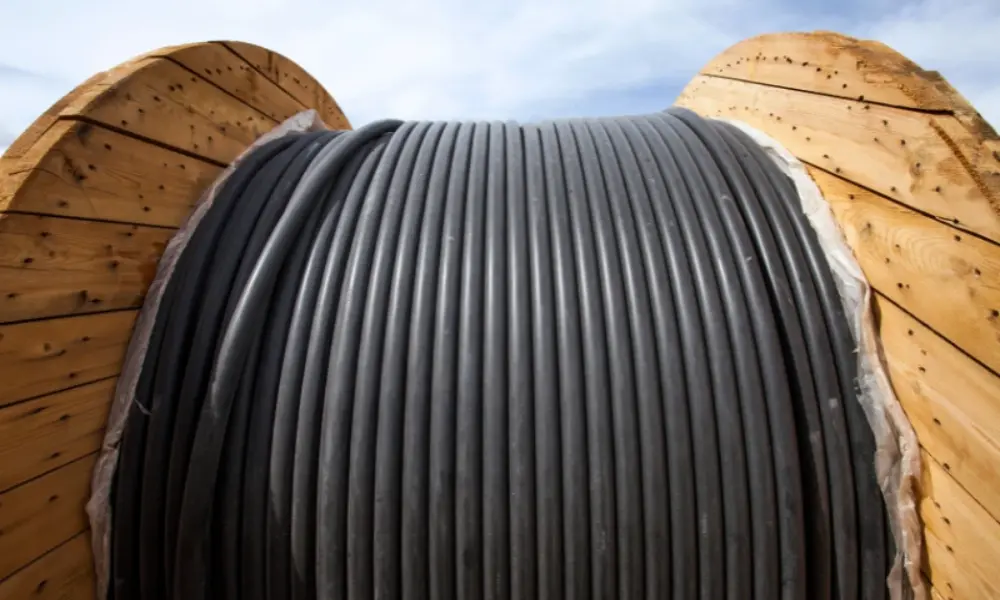
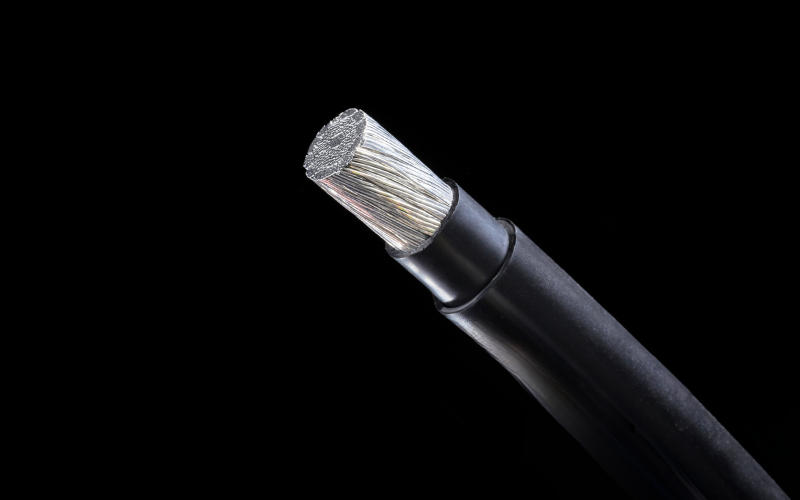
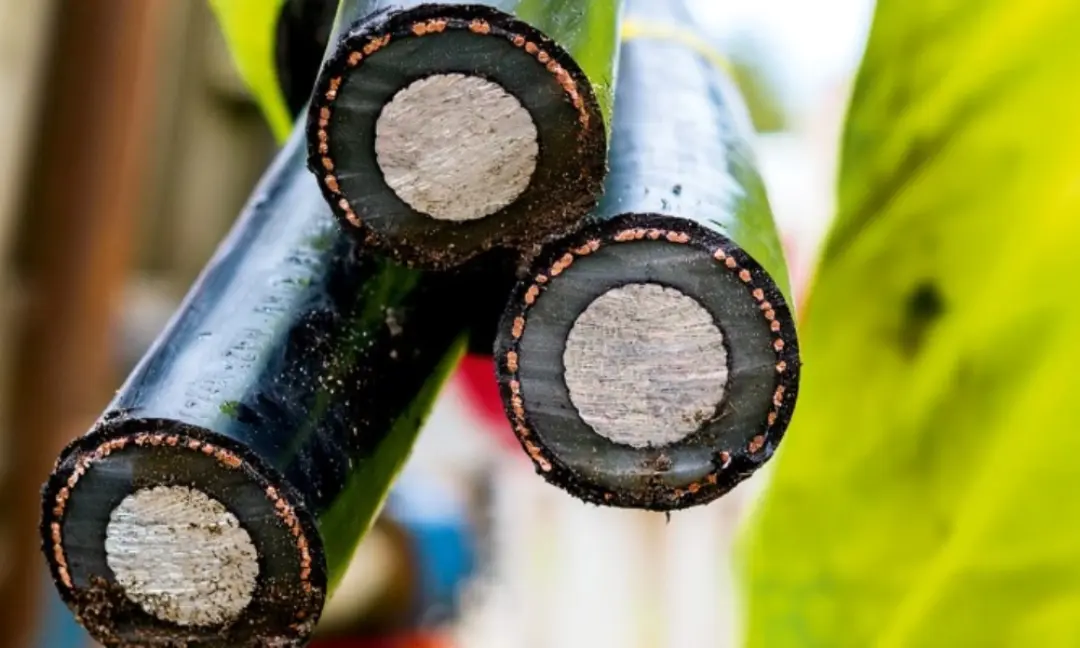
Although designs vary, most power cables consist of basic structural components, including the conductor, insulation, and outer sheath. Each component serves a specific function, contributing to the cable’s ability to transmit electrical energy, safety, and durability during operation.
Conductor
The conductor is the component responsible for carrying electrical current in a power cable. It is typically made of copper or aluminum, depending on requirements for electrical conductivity, weight, and application.
In terms of construction, conductors can be solid or stranded. A stranded conductor consists of multiple small conductive wires twisted together, providing greater flexibility, especially for applications where the cable needs to bend or move.
Insulation
The insulation surrounding the conductor of a power cable helps prevent electrical leakage and short circuits while maintaining system stability during power transmission.
Common insulation materials used for power cables include PVC (polyvinyl chloride), XLPE (cross-linked polyethylene), and EPR (ethylene propylene rubber). The choice of insulation material depends on the cable’s voltage rating, operating temperature, and operating conditions. Therefore, the insulation layer is also one of the factors that directly affects the voltage rating and heat resistance of a power cable.
Outer sheath
The outer sheath is the outermost layer of the cable, typically made of PVC or PE (polyethylene), and protects the internal components from mechanical impact and environmental factors. Depending on the material used, the sheath can help protect the cable against moisture, chemicals, abrasion, and other harsh conditions.
*In addition to the main components above, some power cables may be equipped with an additional armour layer, depending on the application requirements. These layers are commonly used in industrial systems, underground installations, or environments requiring a high level of protection, helping enhance mechanical protection, durability, and cable safety.
How are power cables used?
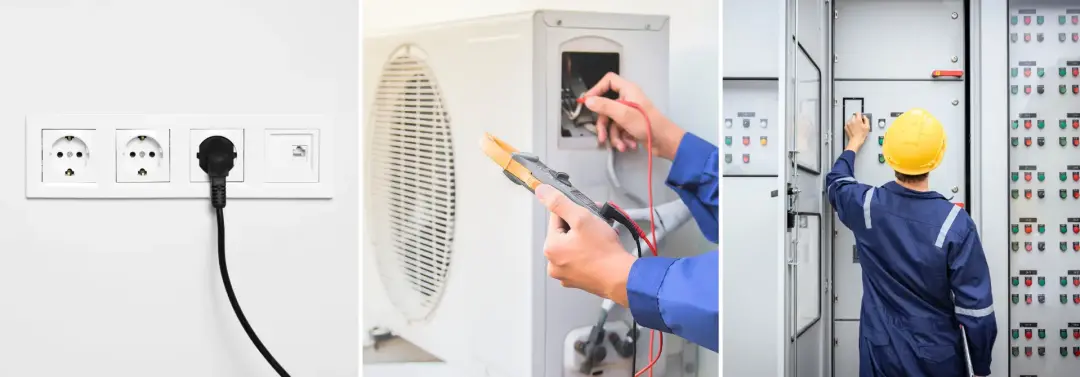
Power cables are used in a wide range of applications, from residential electrical systems to commercial buildings and industrial environments. Depending on voltage, electrical load, and installation conditions, different types of power cables are selected to ensure safe and stable electrical power transmission.
- Residential applications: Power cables are used in residential electrical systems to supply power to electrical outlets, lighting systems, electrical appliances, and other electrical loads.
- Commercial applications: In offices, buildings, and commercial facilities, power cables are used to distribute electricity and supply power to equipment, lighting systems, heating, ventilation, and air conditioning (HVAC) systems, and other electrical systems.
- Industrial applications: Power cables play an important role in supplying power to machinery, motors, production lines, and industrial power distribution systems. In environments with harsh operating conditions, cables are also used in areas with high humidity or high temperatures, environments exposed to chemicals, and systems at risk of mechanical stress.
Pros and cons of power cables
Power cables offer many benefits in terms of electrical power transmission, safety, and adaptability to various installation conditions. However, they also have certain limitations related to cost, technical requirements, and maintenance that should be considered when selecting them.
Pros of power cables
- Carry high electrical currents, making them suitable for various high-power equipment and systems.
- Insulation and outer sheaths enhance safety and help prevent electric shocks, electrical leakage, and short circuits.
- Depending on their construction, they can withstand temperature, moisture, chemicals, UV radiation, and mechanical stress.
- When installed underground, they are less affected by weather conditions such as wind, rain, and lightning.
- Available in various core numbers, cross-sectional areas, voltage ratings, materials, and constructions to suit different applications.
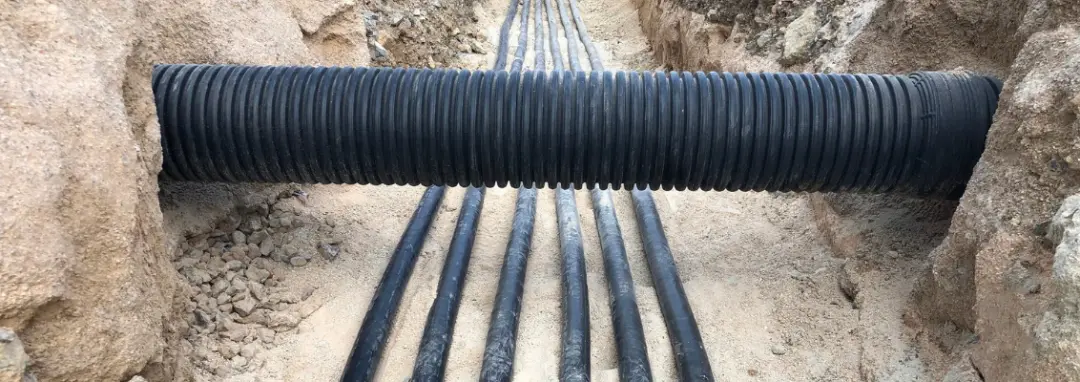
- Can be installed underground, helping save space and maintain the aesthetics of urban areas and factories.
Cons of power cables
- Installation and investment costs can be high, especially for specialized or underground cables.
- Fault detection and locating the exact fault position can be difficult, particularly for underground cables.
- Repairing or replacing damaged cables can take more time and incur higher costs.
- Branching or modifying cable routes after installation can be difficult.
- Cable, accessory, installation, and grounding method selection requires a high level of technical expertise.
- Selecting a cable that is unsuitable for the electrical load or installation environment can cause overheating and reduce cable service life.
Three most common types of power cables
Power cables can be classified into various types based on voltage, number of cores, and construction. However, they are basically divided into three main groups based on voltage differences.

Low voltage power cables
- Voltage: ≤ 1,000 V
- Insulation materials: PVC, XLPE
- Key features: Easy to install, cost-effective, suitable for standard electrical systems
- Typical applications: Homes, offices, stores, and commercial buildings
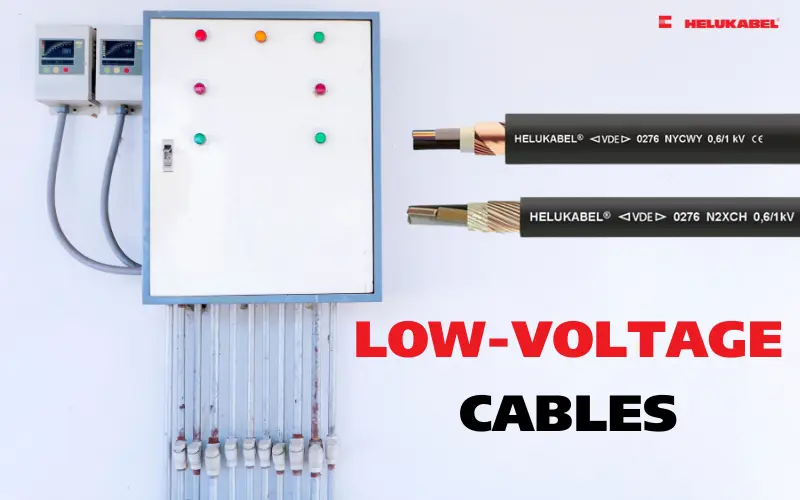
Low voltage power cables are designed for electrical systems operating at low voltage and are commonly used in residential and commercial buildings. These cables can be used to connect electrical outlets, lighting systems, and electrical equipment to the main power supply. The cable’s insulation helps reduce the risk of electric shock and short circuits, contributing to safe and stable system operation.
Medium voltage power cables
- Voltage: 1,000 V – 35,000 V
- Insulation materials: XLPE
- Key features: High current-carrying capacity, stable performance, reduced power losses
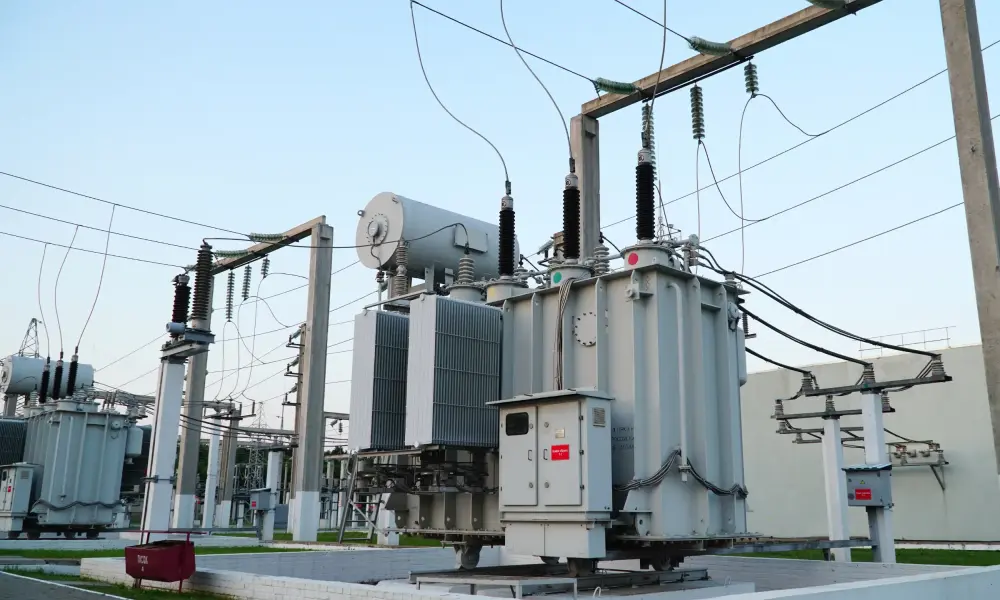
- Typical applications: Factories, industrial parks, substations, and power distribution networks
Medium voltage power cables are designed to meet power transmission requirements at higher voltage levels while providing high load capacity and resistance to harsh environmental conditions. These cables play an important role in providing a stable power supply for industrial systems, public utility systems, and urban infrastructure.
High voltage power cables
- Voltage: ≥ 35,000 V
- Insulation materials: XLPE, EPR
- Key features: Good insulation performance, low electrical stress, reliable long-distance power transmission
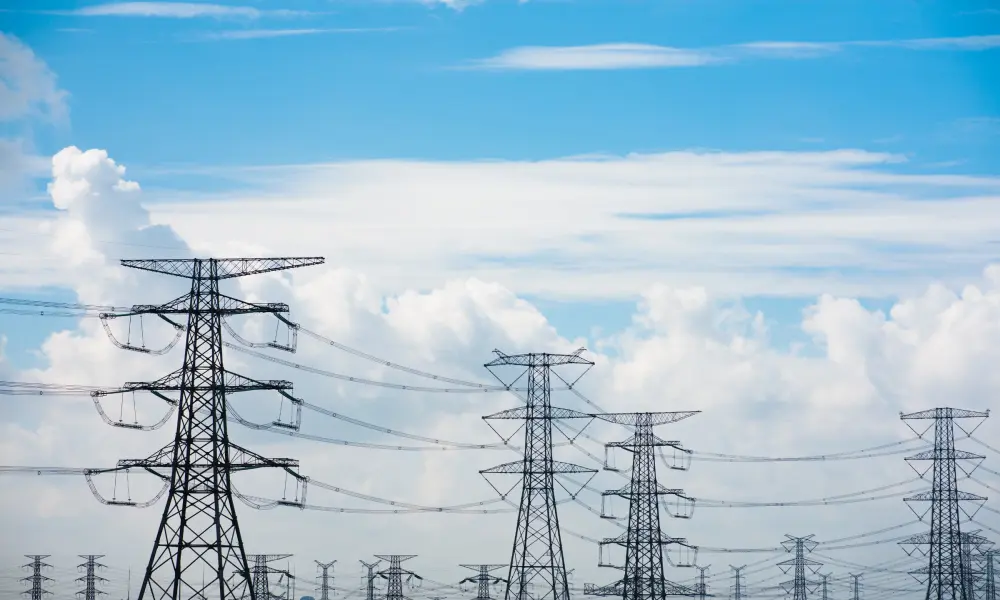
- Typical applications: Power transmission lines and grid connections
High voltage power cables are used to transmit electrical energy at very high voltage levels over long distances, such as in power transmission and distribution networks and for connecting power plants to substations. These cables are designed to handle extremely high electrical loads, minimize energy losses, and withstand environmental impacts.
Specialized power cables for specific applications
Not all electrical systems can use typical power cables. Depending on installation conditions and operating requirements, some specialized power cables are designed with specific structures and characteristics to meet particular environments.
| Cable type | Key features | Common applications |
| Armoured power cables | Equipped with a metal armour layer to protect conductors from mechanical impact while enhancing resistance to moisture, chemicals, and harsh environmental conditions. | Underground installations, construction sites, factories, and environments where cables may be exposed to impact or physical stress. |
| Flexible power cables | Use highly flexible conductors and insulation materials, allowing the cable to bend and move easily. Lightweight and easy to install and maintain. | Portable equipment, moving machinery, temporary power systems, construction sites, events, and equipment that is frequently relocated. |
| Submersible power cables | Designed to operate in wet or underwater environments, with water-resistant insulation and sheath to prevent water ingress and corrosion. | Underwater lighting systems, fountain pumps, marine equipment, and wastewater treatment plants. |
Differences between copper-core and aluminum-core power cables
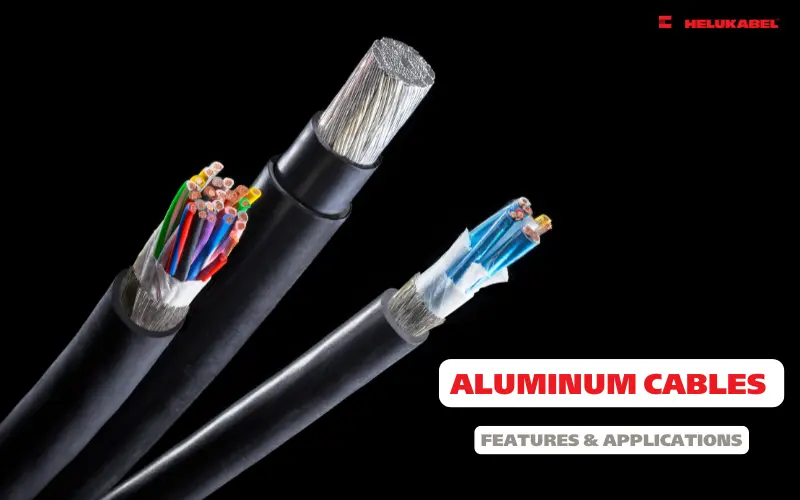
Power cables can use copper or aluminum conductors, each with different characteristics in terms of electrical conductivity, weight, strength, and cost.
| Criteria | Copper-core cables | Aluminum-core cables |
| Electrical conductivity | High | Lower than copper |
| Conductor size | Can use a smaller cross-sectional area for the same current rating | Generally require a larger cross-sectional area to achieve the same current-carrying capacity |
| Weight | Heavier | Lighter |
| Mechanical strength | Good | Lower than copper |
| Cost | Higher | Lower |
| Applications | Suitable for systems requiring high electrical conductivity and limited installation space | Commonly used in power distribution systems and large-scale utility projects |
| Installation | Easier to achieve stable connections | Require careful attention to termination and cable lugs to minimize connection issues |
In practice, the choice between copper and aluminum conductors in construction engineering depends on the project budget, installation method, and long-term maintenance requirements.
Differences between power cables and control cables
Although both are used in electrical and automation systems, power cables and control cables serve different functions. Power cables primarily transmit electrical energy to equipment, while control cables transmit signals for system control, monitoring, and automation.
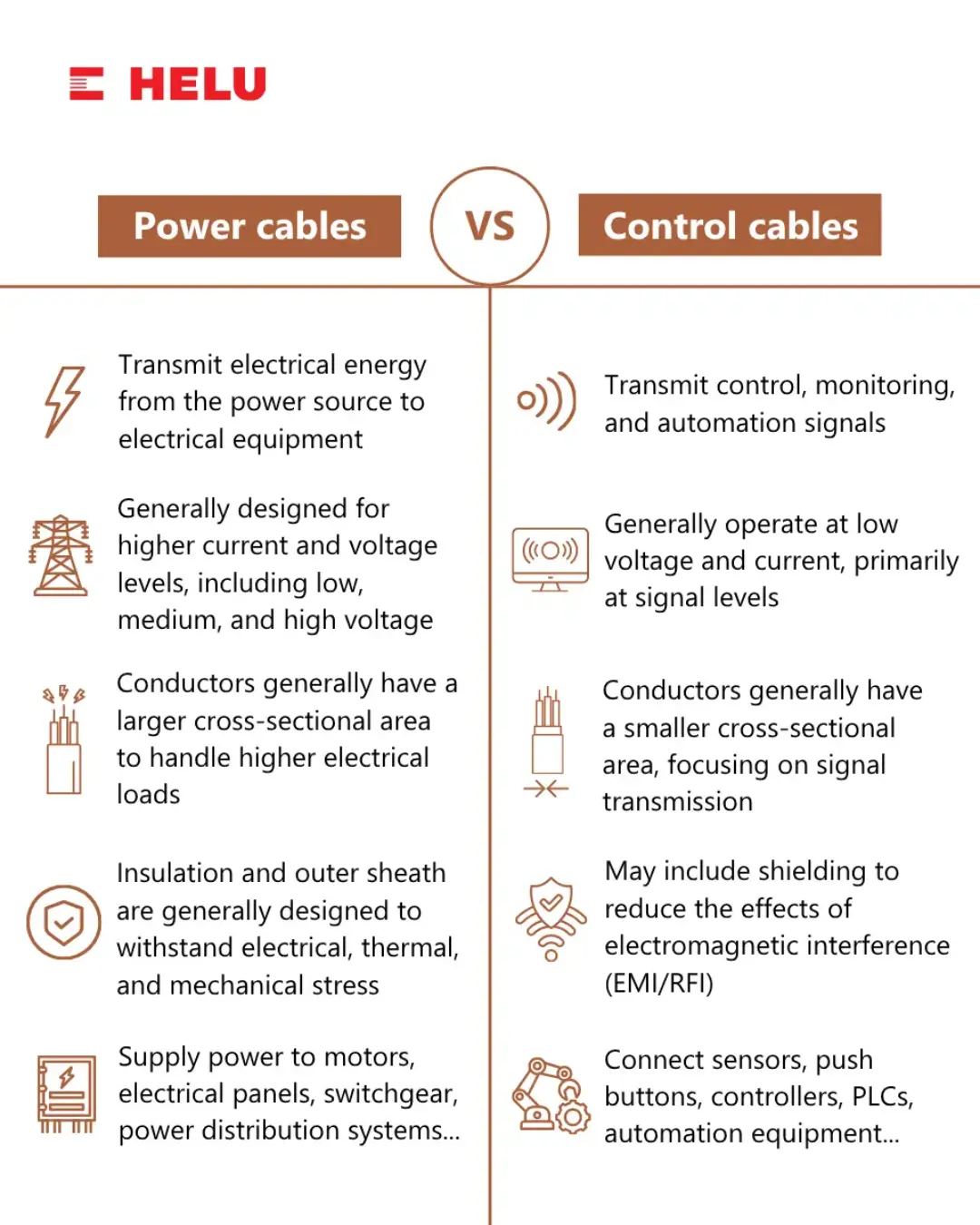
Please note that the system includes both power cables and control cables; therefore, these two types of cables should be spaced apart or protected appropriately to minimize the impact of electromagnetic interference from the power cables on the control signals.
Guide to choose the right power cable
When choosing a power cable, the following factors should be considered to ensure that the cable meets the system’s safety, performance, and operating requirements:
- Voltage and current: Determine the voltage and current required for the application and select a cable capable of handling the required electrical load.
- Environmental conditions: Consider factors such as temperature, moisture, chemicals, oil, UV radiation, and mechanical stress to select suitable cable materials and construction.
- Flexibility and durability: Depending on the application, prioritize cables with high flexibility when frequent bending or movement is required, or cables with high durability when used in harsh environments.
- Cross-sectional area and specifications: Select a conductor cross-sectional area suitable for the load’s current-carrying capacity to minimize the risk of overheating. In addition, consider specifications such as the number of cores, conductor material, voltage rating, insulation material, and minimum bending radius.
HELU power cables – solutions for various electrical systems
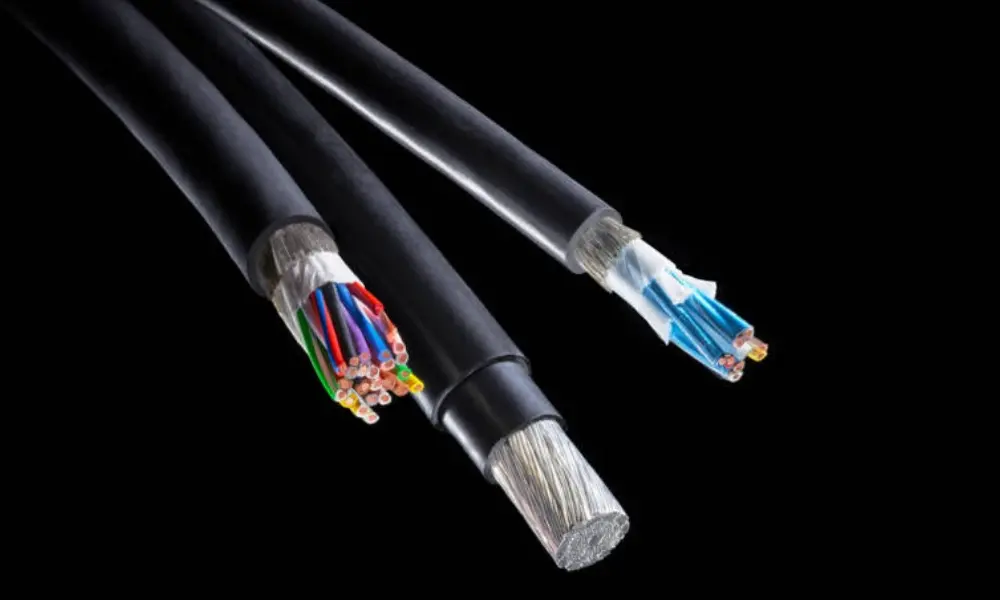
We HELU offer a wide range of power cables designed to meet various power transmission and distribution requirements across residential, commercial, industrial, and energy systems. The product portfolio includes:
- 0.6/1 kv underground and power distribution cables
- Halogen-free underground and power distribution cables
- Medium voltage cables: 6/10 kv, 12/20 kv, 18/30 kv
- Solar power supply cables
- Security cables
- Fire alarm cables
Explore HELU’s range of power cables HERE to find the right solution for your system’s technical requirements and installation conditions.