What is the IEC standard? Common IEC standard in electrical cables
The IEC standard is the shared technical language of the global cable industry — adopted across numerous countries. Understanding IEC means you can read any cable datasheet, from any manufacturer, without needing to consult your supplier. This article explains what IEC is, why it matters, and which IEC standard groups directly affect how electrical cables are selected and used.

Article Content
-
1What is the IEC organization?
-
2What are IEC standards and their benefits?
-
3Other standards and their relationship to the IEC
-
4Summary table of key IEC standards
-
5IEC 60228 standard
-
6IEC 60502 standard - Low & medium-voltage power cables
-
7IEC 60227 standard — Low-voltage cables with PVC insulation
-
8IEC 60332 standard — Flame propagation test standard
1. What is the IEC organization? What does an IEC standard mean?
1.1 The IEC organization
IEC stands for International Electrotechnical Commission. It is an independent, non-profit international organization founded in 1906 in London by a group of engineers and scientists, with the goal of promoting international cooperation in electrotechnical standardization. Its first president was Lord Kelvin — the renowned British physicist.
Today, the IEC is headquartered in Geneva, Switzerland, with more than 80 member countries and over 20,000 experts involved in developing standards. The total number of published IEC standards exceeds 6,500, covering the full spectrum of electrical engineering, electronics, renewable energy, automation, and equipment safety.
A key feature of the IEC model: each member country has an equal vote in the standard approval process, regardless of the size of its economy. In each country, a national committee acts as the representative — for example, BSI (British Standards Institution) in the UK, DIN/VDE in Germany, and the Directorate for Standards, Metrology and Quality (STAMEQ) in Vietnam. Once published, IEC standards are typically adopted by these committees as national standards — which is the basis for Vietnam's TCVN standards being equivalent to IEC.
1.2 What is an IEC standard and why does it matter?
An IEC standard is a technical document developed through international consensus that specifies how electrical equipment — including wires and cables — should be designed, tested, and installed. Each standard reflects the needs and requirements of key stakeholders: manufacturers, engineers, regulators, and end users.
IEC standards and 3 core benefits:


2. IEC and other international cable standard systems
When working with imported electrical equipment and cables, Vietnamese engineers frequently encounter various standard markings on cable jackets or in technical documentation. The table below explains the most common standard systems and their relationship to IEC:
| Symbol | Full Name | Country / Region | Relationship to IEC |
| IEC | International Electrotechnical Commission | Global | The original standard — the foundation for most other systems |
| EN | European Norm | European Union | Often directly adopted from IEC — e.g., EN 60228 = IEC 60228 |
| VDE | Verband der Elektrotechnik (Germany) | Germany | Equivalent to IEC/EN, with additional German testing requirements; VDE is the most respected certification body in Europe |
| DIN | Deutsches Institut für Normung | Germany | German industrial standard; some DIN VDE standards are fully equivalent to IEC |
| BS | British Standards Institution | UK | Pre-Brexit, generally aligned with EN; since Brexit, BS and EN may partially diverge |
| CEI | Comitato Elettrotecnico Italiano | Italy | Adopted from IEC/EN, applied in the Italian market |
| NF | Norme Française | France | French national standard, largely based on EN/IEC |
| IEEE | Institute of Electrical and Electronics Engineers | USA / North America | Independent system from IEC, widely used in telecom and IT equipment |
| UL | Underwriters Laboratories | USA | US safety certification body; not fully interchangeable with IEC |
A note on working across multiple standard systems: IEC is the foundation on which most national and regional standards are built. In many cases they are fully equivalent — for example, EN 60228 and DIN VDE 0295 are essentially the same document as IEC 60228. However, this is not always the case: some countries add supplementary requirements, adjust parameters, or have adopted a different version of IEC at a different point in time. Therefore, when ensuring compliance for a specific market or project, always cross-reference the applicable standard for that market directly — do not assume that IEC certification automatically satisfies all local requirements.
3. The most important IEC standards for cables and wires
3.1 Summary table of key IEC standards
IEC covers thousands of standards across the entire electrical industry. For cables and wires specifically, the following are among the most widely applied globally:
| IEC Standard | Content |
| IEC 60228 | Conductors of insulated cables — cross-sections, number of wires, maximum resistance |
| IEC 60331 | Fire conditions testing of electric cables — maintaining circuit integrity |
| IEC 60332-1 | Flame propagation test — single wire/cable, vertical |
| IEC 60332-3 | Flame propagation test — vertically mounted cable bundles |
| IEC 60502-1 | Power cables with extruded insulation, low voltage 1–3 kV |
| IEC 60502-2 | Power cables with extruded insulation, medium voltage 6–30 kV |
| IEC 60702 | Mineral insulated cables and terminations — up to 750 V |
| IEC 60754-1 | Test on gases evolved during combustion of cables — halogen acid gas content |
| IEC 60754-2 | Determination of acidity of gases evolved during combustion — pH and conductivity |
| IEC 60840 | Power cables with extruded insulation, high voltage 30–150 kV |
| IEC 61034 | Measurement of smoke density of cables burning under defined conditions |
| IEC 61158 | Fieldbus cables for industrial control and measurement systems |
| IEC 60092 | Electrical installations on ships |
| IEC 60793-1 | Optical fibers |
| IEC 60794-1 | Optical fiber cables |
| IEC 62930 | Power cables for PV systems with a rated voltage of 1.5 kV DC |
| IEC 60227 | Low-voltage wires and cables with PVC insulation |
3.2 IEC 60228 — The conductor standard
IEC 60228 is the most fundamental standard in the cable industry. It specifies the nominal cross-sectional area, minimum number of wires, and maximum DC resistance of conductors (copper and aluminium) in electrical cables. The standard defines four main conductor classes:
💡Learn about the characteristics of each conductor class according to IEC 60228
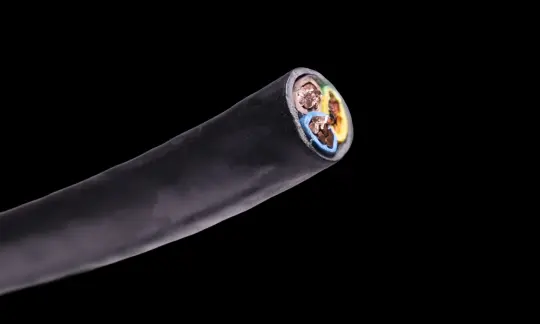
| Class | Conductor Type | Typical Application |
| Class 1 | Solid (single-wire) | Fixed installation in walls and conduit |
| Class 2 | Stranded, fixed installation | Switchboards, fixed cable trays |
| Class 5 | Flexible, fine-stranded | Portable cables, equipment power cords |
| Class 6 | Extra flexible, very fine-stranded | Welding cables, robot cables, continuous flexing applications |
The standard also defines a range of nominal cross-sections from 0.5 mm² to 2,500 mm², ensuring consistency across manufacturers worldwide.
Maximum DC resistance of copper conductors per IEC 60228 / DIN VDE 0295 (measured at 20°C, unit: Ω/km):
| Cross section (mm²) | Bare copper | Tinned copper | Aluminum | ||
| Class 1 & 2 | Class 5 & 6 | Class 1 & 2 | Class 5 & 6 | Class 1 & 2 — Al | |
| 0.5 | 36 | 39 | 36.7 | 40.1 | __ |
| 0.75 | 24.5 | 26 | 24.8 | 26.7 | __ |
| 1.0 | 18.1 | 19.5 | 18.2 | 20.0 | __ |
| 1.5 | 12.1 | 13.3 | 12.2 | 13.7 | __ |
| 2.5 | 7.41 | 7.98 | 7.56 | 8.21 | __ |
| 4 | 4.61 | 4.95 | 4.7 | 5.09 | __ |
| 6 | 3.08 | 3.3 | 3.11 | 3.39 | __ |
| 10 | 1.83 | 1.91 | 1.84 | 1.95 | 3.08 |
3.3 What is IEC 60502? Standard for low- and medium-voltage power cables
IEC 60502 is the international standard governing the construction, materials, dimensions, and test requirements for power cables with extruded solid insulation, covering voltage ratings from 1 kV to 30 kV. It is the most frequently referenced standard on power cable datasheets worldwide.
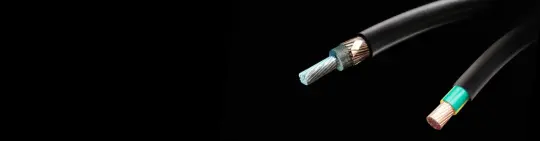
The standard comprises the following main parts:
| Part | Voltage range | Content |
| IEC 60502-1 | 1kV – 3kV | Low voltage cables — residential and industrial power distribution |
| IEC 60502-2 | 6kV – 30kV | Medium voltage cables — utility grids and heavy industry |
| IEC 60502-3 | — | Reserved for future development |
| IEC 60502-4 | 6kV – 30kV | Test requirements for accessories: joints and terminations |
IEC 60502-1 (Low voltage — 1 kV to 3 kV): Applies to cables for fixed installation in power distribution and industrial facilities. Cables according to IEC 60502-1 may incorporate additional features such as flame retardancy or low smoke zero halogen (LSZH) sheathing when fire safety requirements apply.
IEC 60502-2 (Medium voltage — 6 kV to 30 kV): Part 2 is globally recognized and is often referenced directly on medium voltage cable datasheets, facilitating cross-border technical specification without conversion to national standards. Important note: IEC 60502-2 does not apply to cables used in overhead lines, mines, nuclear power plants, ships, or submarine cables — these specialized applications have their own dedicated standards.
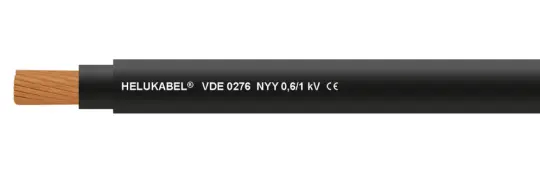
💡Discover the characteristics of NYY and N2XY low-voltage power cables that comply with IEC 60502
3.4 IEC 60227 — Low voltage PVC-insulated cables and wires
IEC 60227 covers PVC-insulated cables and wires rated up to 450/750 V — the most widely used product category in residential and low-voltage industrial wiring.
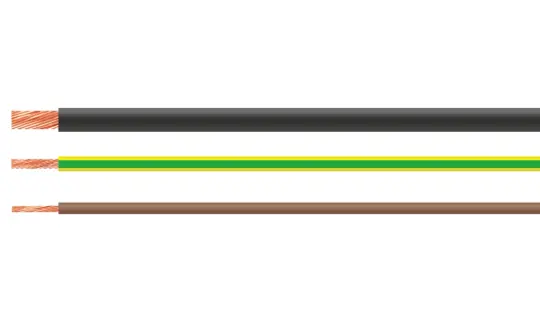
The standard defines a consistent designation system for cables, for example:
- H05VV-F : PVC/PVC flexible cable, 300/500V
- H07V-K : Flexible PVC single-core cable, 450/750V
- H07V-U : Rigid PVC single-conductor cable, 450/750V
This designation system is the foundation for reading the catalog of any European cable manufacturer, including HELU.
💡Guide to Reading European Harmonized Electrical Cable Markings (HAR Cables)
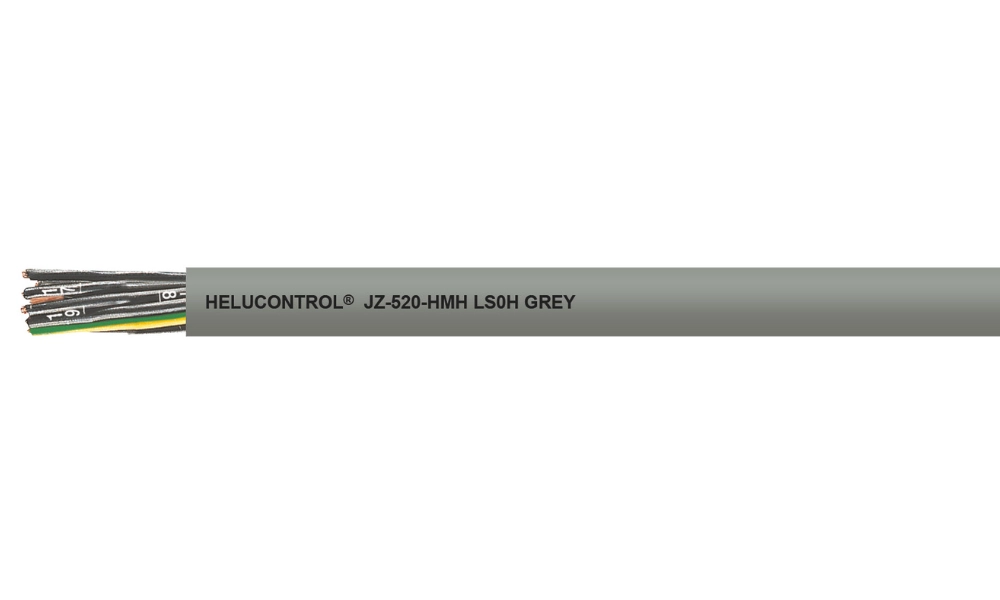
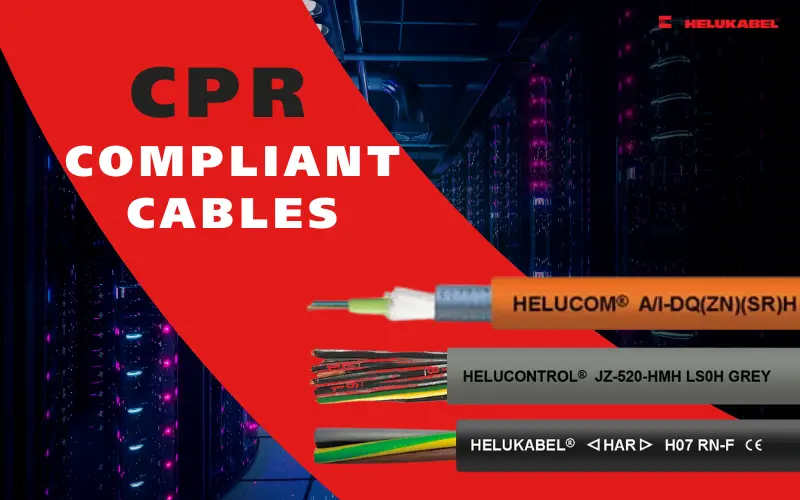
HELUCONTROL® JZ-520-HMH LS0H GREY control cable, B2ca CPR class, meets flame-retardant requirements in accordance with DIN VDE 0482-332-1-2 / DIN EN 60332-1-2 / IEC 60332-1-2
3.5 IEC 60332 standard — Flame propagation test standard
IEC 60332 specifies test methods for evaluating the flame propagation resistance of electrical wires and cables — a mandatory requirement for installations with fire safety demands.
The standard covers two key test groups:
- IEC 60332-1-2: Test on a single insulated conductor or cable — flame applied vertically for 60 seconds; the flame must self-extinguish and the charred portion must not exceed 50 mm.
- IEC 60332-3: Testing of cable bundles — divided into 4 categories:
Category A: Fire load ≥7 liters/m — the most stringent requirement
Category B: Fire load ≥3.5 liters/m
Category C: Fire load ≥1.5 liters/m — most common in practice
Category D: Fire load ≥0.5 liters/m — most common in practice
Facilities such as shopping malls, office buildings, and road tunnels typically require cables rated to IEC 60332-3 Category C or above.
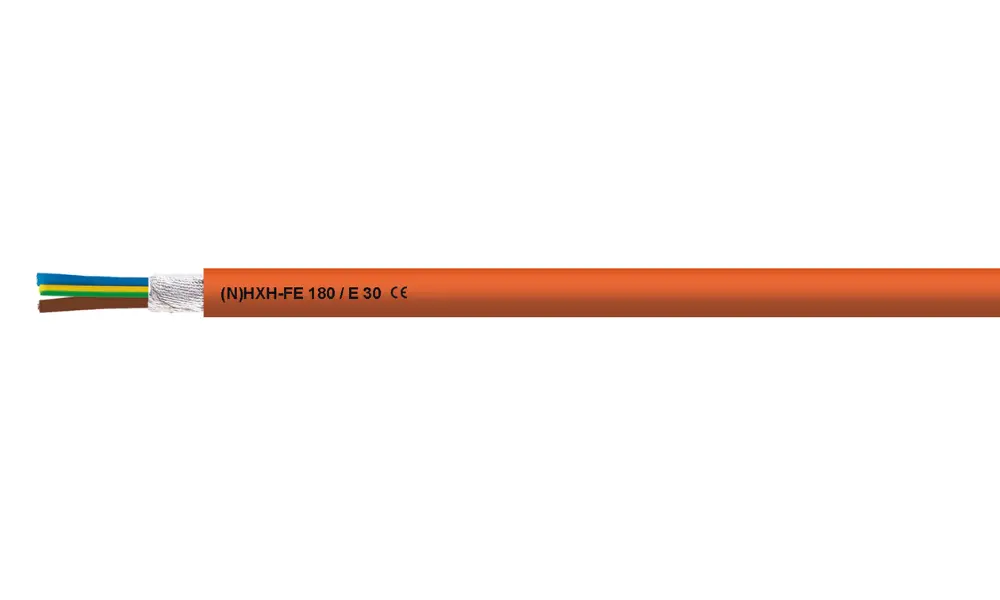
The (N)HXH-FE 180/E 30 security cable complies with DIN VDE 0472 Part 814 and IEC 60331.
3.6 IEC 60331 standard — Circuit integrity under fire conditions
Unlike IEC 60332 (which tests resistance to flame propagation), IEC 60331 addresses a different requirement: whether a cable can continue to conduct electricity and maintain its function while actively burning. This is a mandatory requirement for critical safety systems such as fire alarm circuits, emergency lighting, evacuation lifts, and firefighting systems — circuits that must remain operational precisely when a fire occurs.
Testing is conducted at a minimum temperature of 830°C combined with mechanical shock — simulating real-world conditions where part of the building structure may collapse during a fire.
💡Helpful Information: Understanding the 3 fire-resistant standards: IEC, BS, and UL
| Part | Applies to |
| IEC 60331-1 | Cables with overall diameter > 20 mm |
| IEC 60331-2 | Cables with overall diameter ≤ 20 mm |
| IEC 60331-3 | Cables installed in metal enclosures |
| IEC 60331-4 | High voltage cables up to 30 kV |
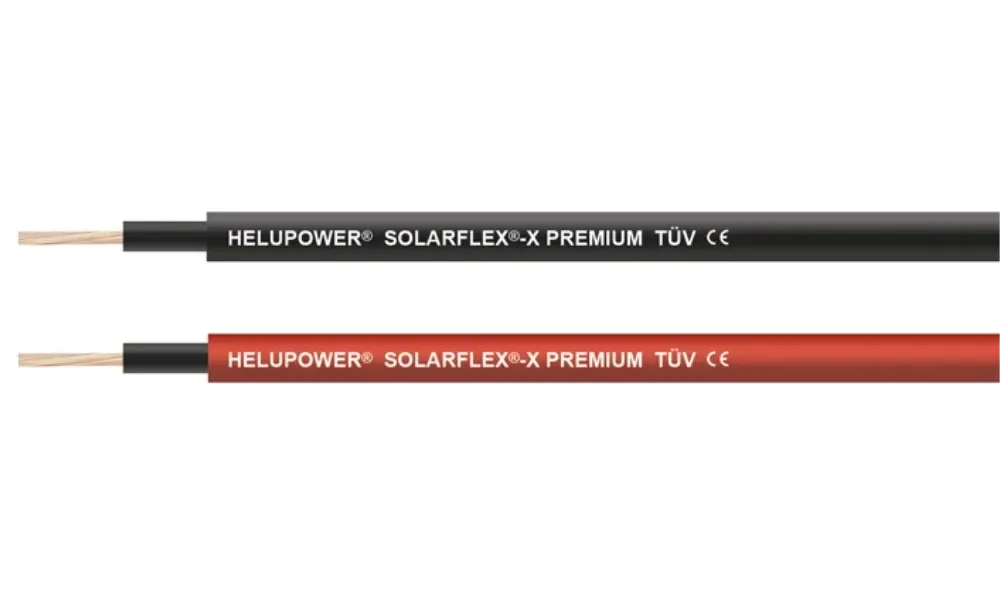
HELUPOWER® SOLARFLEX®-X PREMIUM DC cables comply with DIN VDE 0283-618 / DIN EN 50618, IEC 62930, and TÜV Rheinland 2 PfG 2750
3.7 IEC 62930 Standard for DC Cables in PV Systems
This is the core standard for DC cables in PV systems. DC cables to IEC 62930 are single-core cables with cross-linked insulation (XLPE equivalent), designed to withstand:
- Maximum continuous operating temperature of 90°C
- Maximum short-term temperature of 120°C (limited to 20,000 hours)
- DC voltage up to 1.5 kV between conductors and between conductor and earth
- Compatible with Class II equipment as defined in IEC 61140
💡Summary Table: Which standards do HELU’s DC cable products meet?
In addition, with the rapid growth of solar energy, a separate group of IEC standards applies to cables and equipment in PV systems:
| IEC Standard | Scope |
| IEC 61730 | Safety requirements for photovoltaic modules (solar panels) |
| IEC 61215 | Design and testing requirements for crystalline silicon solar modules |
| IEC 62109-1/2 | Safety of inverters (power converters) for use in PV systems |
| IEC 60364 | Electrical installations for PV systems |
3.8 IEC 61000 — Electromagnetic Compatibility (EMC)
In modern industrial environments with an ever-increasing density of electronic equipment, IEC 61000 addresses electromagnetic compatibility (EMC) - covering both electromagnetic interference (EMI) emitted by cables and the immunity of equipment to such interference. This standard is particularly critical in automation systems, data centers, and industrial control environments, where EMC disturbances can cause signal errors or damage sensitive equipment.
3.9 IEC 60204-1 — Electrical safety in industrial machinery
IEC 60204-1 specifies requirements for electrical equipment on industrial machinery — including cable selection standards, overload protection, wiring methods, and labeling within machine control panels. This standard is a mandatory reference when designing electrical systems for production lines, industrial robots, and CNC machines.
💡 HELU supplies a full range of cables certified to IEC 60228, IEC 60502, and IEC 60332 — from low-voltage industrial cables to fire-resistant cables for specialized installations. View the product catalog or contact our technical team for expert guidance on selecting cables to the right standard for your project.
4. The relationship between IEC and Vietnamese standards (TCVN)
Vietnam does not develop its electrical engineering standards from scratch. Instead, the Ministry of Science and Technology (through the Directorate for Standards, Metrology and Quality — STAMEQ) adopts IEC standards as TCVN (Vietnamese National Standards)
Reference table: IEC cable standards and their TCVN equivalents:
| IEC standard | Equivalent TCVN | Contents |
| IEC 60228:2004 | TCVN 6612:2000 | Conductors — cross-section, wire count, resistance |
| IEC 60502-1:2009 | TCVN 5935-1:2013 | Low voltage power cables (≤ 1 kV) |
| IEC 60502-2:2005 | TCVN 5935-2:2013 | Medium voltage power cables (6–30 kV) |
| IEC 60227-1:2007 | TCVN 6610-1:2014 | PVC-insulated low voltage wires and cables |
| IEC 60332-1-2:2004 | TCVN 6613-1-2:2010 | Flame propagation test — single cable |
| IEC 60332-3-24:2000 | TCVN 6613-3-24:2010 | Flame propagation test — cable bundle (Cat C) |
Practical implication: When a cable product meets the corresponding IEC standard, it is recognized as equivalent to the applicable TCVN. This is particularly important when preparing tender documentation or declaring product conformity to international standards.
6. How does IEC regulate electrical wire colors?
Wire colors are not left to the discretion of individual manufacturers — they are governed by two IEC standards that serve complementary roles: IEC 60446 specifies which color is assigned to which conductor, while IEC 60757 specifies how those colors are abbreviated in technical documentation.
6.1 IEC 60446 — Conductor color identification
IEC 60446 mandates the color coding used to identify each type of conductor in low-voltage electrical systems, ensuring safe installation, operation, and maintenance — regardless of the manufacturer or country of origin.
| Wires | Colors according to IEC 60446 |
| Phase L1 | Brown |
| Phase L2 | Black |
| Phase L3 | Grey |
| Neutral N | Light Blue |
| PE | Green/Yellow |
Note: QCVN 12:2014/BXD is broadly aligned with IEC 60446, but in practice many existing installations still use the older color convention (red/yellow/green for the three phases). When working with imported European equipment or cables, IEC 60446 should be followed.
6.2 IEC 60757 — Color abbreviation codes
If IEC 60446 is the "law of colors," then IEC 60757 is the "common language" for abbreviating color names in catalogs, datasheets, and technical documentation. When a HELU cable catalog lists 3×1.5 mm² BN/BK/GY + BU + GNYE, you need IEC 60757 to decode the abbreviations — and IEC 60446 to understand which conductor each color represents in the system.
| Color | IEC 60757 Code | VDE (Germany) code |
| Black | BK | SW |
| Brown | BN | BR |
| Red | RD | RT |
| Orange | OG | OR |
| Yellow | YE | GE |
| Green | GN | GN |
| Blue | BU | BL |
| Violet | VT | VL |
| Grey | GY | GR |
| White | WH | WS |
| Pink | PK | RS |
| Turquoise | TQ | TK |
7. FAQs
IEC 60228 specifies only the conductor—its cross-sectional area, number of strands, and maximum resistance. IEC 60502, on the other hand, specifies the entire cable structure, including the conductor, insulation, shielding, and outer jacket. In other words, IEC 60502 encompasses and references IEC 60228 for the conductor portion.
Legally speaking, TCVN (Vietnamese standards) are mandatory. However, since most TCVN standards for cables are adapted from IEC standards, products that meet equivalent IEC standards are accepted. Risks associated with using non-compliant cables include overheating, excessive voltage drops, and fire hazards—and, most importantly, they are not accepted by construction insurance providers.
IEC 60439 is the former standard for low-voltage switchgear and controlgear assemblies. This standard was completely superseded by IEC 61439 in 2011. If you see a requirement for IEC 60439-1 in an old bid document, you should request that it be updated to IEC 61439-1 and 61439-2.
IEC 60446 is referenced in QCVN 12:2014/BXD on electrical safety. For projects involving foreign investment or intended for export, compliance with IEC 60446 is mandatory to obtain CE certification. For domestic projects, this is considered best practice, but there are currently no specific penalties for using different colors.
IEC 60502 is an international standard specifying power cables with extruded insulation, covering a voltage range from 1 kV to 30 kV. The standard consists of two main parts that are most commonly referenced: IEC 60502-1 (low voltage, 1–3 kV) for residential and industrial power distribution, and IEC 60502-2 (medium voltage, 6–30 kV) for power grids and heavy industry.
IEC serves as the foundation upon which most national and regional standards are developed. In many cases, these standards are fully equivalent—for example, EN 60228 and DIN VDE 0295 are essentially identical in content to IEC 60228. However, this is not always the case: some countries have additional requirements, adjust parameters, or adopt different versions of the IEC standard. Therefore, it is necessary to directly compare with the standard applicable in that market—one should not assume that compliance with the IEC standard means compliance with all requirements.
Yes. In fact, most high-quality cables are designed to meet multiple IEC standards simultaneously—since each standard specifies a different aspect of the same product. For example, a roll of fire-resistant cable may simultaneously meet:
- IEC 60228 — Conductor cores with the correct cross-sectional area and resistance
- IEC 60502-1 — Cable construction and insulation
- IEC 60331-2 — Electrical circuit integrity under fire conditions
- ...
When reading a datasheet, these standards are usually listed side by side—and engineers need to verify compliance with all of them, not just one, to ensure that the cable meets the project’s requirements.