Industrial electrical conduits: Standards & selection guide
Electrical conduit — also known as conduit tubing — is a technical component that is often overlooked when designing electrical systems. Many installers focus on cable quality while neglecting the outer protective layer, resulting in cables that abrade, crack, or even short-circuit within just a few months of operation. This article provides practical technical guidance to help engineers and technical teams select the right type of electrical conduit for specific environments and industrial applications, based on international standards IEC 61386 and TCVN 7417.

Article content:
-
1Features of industrial conduit
-
2Selection criterion #1: Installation environment
-
3Selection criterion #2: Rigid vs. flexible tubing
-
4Selection criterion #3: Conduit materials
-
5Selection criterion #4: Cable fill capacity
-
6Technical standards to consider when selecting conduits
-
7Selecting conduits for the Automation industry
-
8Selecting conduits for a PV system
-
9Selecting conduit for control panels & switchgear enclosures
-
10Selecting conduits for the F&B and Pharmaceutical industries
-
11Selecting conduits for the mining and oil & gas industries
-
12How to determine the right conduit size
1. How does industrial electrical conduit differ from residential conduit?
A common mistake is using residential electrical conduit (typically specified for building construction) in factory installations. They may look identical — but technically, they are two entirely different products.
| Criteria | Residential | Industrial |
| Mechanical load | Low, relatively static environment | High — withstands continuous impact and vibration |
| Environment | Indoors, stable temperature, normal humidity | Humid, chemical exposure, oil/grease, extreme temperatures |
| Common materials | Standard PVC | PA6, PA12, HDPE, galvanized steel, stainless steel |
Beyond these basic criteria, industrial conduit must also meet additional specialized requirements:
- Electromagnetic interference (EMI) shielding: When signal cables, control cables, and encoder cables in servo or robot systems share the same conduit, EMI can cause signal errors and incorrect encoder readings. Metal conduit provides effective shielding.
- Continuous vibration resistance: Cables attached to CNC machines, robotic arms, and conveyor belts are subject to constant movement — flexible conduit absorbs vibration and prevents mechanical fatigue on cable jackets.
- Chemical and cleaning agent resistance: Particularly in the food & beverage (F&B) and pharmaceutical industries, conduit must withstand strong alkaline or mildly acidic cleaning solutions without corrosion.
2. Key criteria for selecting electrical conduit
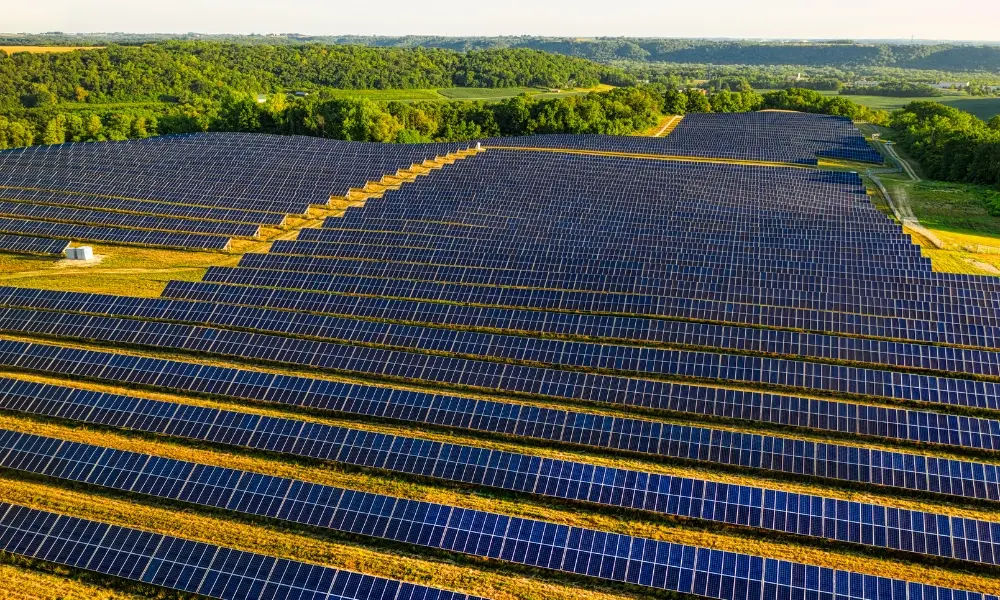
It is important to select the type of conduit that is suitable for the installation environment; for example, in the solar power sector, you should choose a conduit that is UV-resistant.
There is no one-size-fits-all formula for conduit selection. Choosing the right conduit depends on the following criteria:
2.1 Installation environment
The environment drives all selection decisions — material, IP rating, and conduit type. Typical installation environments include:
- Indoors, dry conditions: Standard PVC or PA6 conduit is sufficient.
- Outdoor electrical conduit: Choose materials with UV resistance (HDPE or PA6 with UV-stabilizing additives), especially for solar PV applications.
- Environments with chemicals, moisture, or continuous vibration: Evaluate each factor specifically — which chemicals, vibration severity, maximum temperature. PA12, galvanized steel, or stainless steel is typically required.
2.2 Rigid conduit vs. flexible conduit
| Criteria | Rigid conduit | Flexible conduit |
| Structure | Continuous wall, cannot be bent by hand | Corrugated or helical core, bends freely |
| Primary application | Fixed routing, in-wall or underground | Dynamic connection points, machine heads, robots, control panels |
| Advantages | Superior mechanical protection, high compressive load resistance | Absorbs vibration, easy to install in confined or articulating areas |
| Disadvantages | Requires elbow fittings when changing direction | Shorter span per application, higher unit cost |
| IEC standard | IEC 61386-21 | IEC 61386-23 |
In practice, both types are used together in industrial facilities: rigid conduit for long trunk runs (along machines or cable trays), and flexible conduit at equipment connection points (panel entries, sensor mounting points, robot joints).
2.3 Material — The decisive factor for service life and long-term cost
Each material has its own range of applications—there is no single material that is best in every situation. A common mistake is choosing PVC simply because it is familiar and inexpensive, and then using it in environments it is not designed to withstand. The table below provides a quick comparison of the five most common materials:
| Materials | Advantages | Limitations | Applications |
| Standard PVC | Low cost, lightweight, easy to install, available in multiple colors | Brittle below 0°C, poor UV resistance outdoors | Indoor/dry environments, residential panels, building construction |
| HDPE | Better impact and chemical resistance than PVC, long-term moisture resistance | Higher cost than PVC | Underground, outdoor, heavy industrial areas |
| PA6 / PA12 | Lightweight, good chemical resistance, temperature range –40°C to +100°C, no lubrication required | Higher cost, must specify correct UV grade | Robotics, servo systems, F&B, pharmaceutical |
| Galvanized steel | High mechanical protection, effective EMI shielding | Heavy, susceptible to corrosion if zinc coating is scratched | High-impact areas, EMI shielding requirements |
| Stainless steel | Most durable, resistant to corrosion and extreme temperatures | Most expensive, difficult to work on-site | Oil & gas, concentrated chemicals, offshore environments |
2.4 Cable fill capacity — A frequently overlooked criterion
This criterion directly affects safety but is often neglected when selecting conduit size. According to the National Electrical Code (NEC) and equivalent standards, the cable cross-sectional fill ratio relative to the conduit bore must remain within permitted limits:
- 1 cable: maximum 53% of conduit interior area
- 2 cables: maximum 31%
- 3 or more cables: maximum 40%
Exceeding these limits causes two problems: heat accumulates inside the conduit and cannot dissipate (leading to insulation damage), and pulling cables through during installation or maintenance becomes very difficult — risking jacket abrasion.
Additionally, conduit material affects the actual internal bore size: metal conduit has thinner walls, providing a larger internal diameter than plastic conduit of the same nominal size. This must be accounted for when sizing conduits for multi-cable applications.
3. Technical standards to understand when selecting electrical conduit
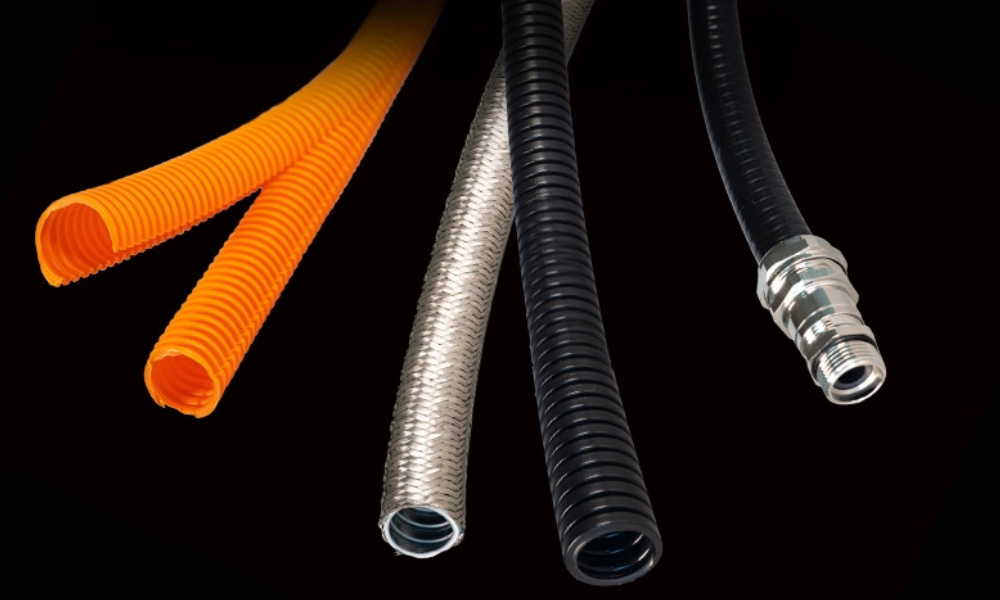
IEC 61386 specifies all technical requirements for electrical conduit systems
Many buyers select conduit based on intuition or past experience — and discover their mistake only after installation is complete. A solid understanding of the following three standard sets enables technical teams to specify products accurately from the outset.
3.1 IEC 61386 — International standard for conduit systems
IEC 61386 is the international standard series published by the International Electrotechnical Commission (IEC), covering all technical requirements for electrical conduit systems. The series comprises multiple parts; engineers should pay particular attention to:
- IEC 61386-1: General requirements — tests for compressive strength, impact resistance, bending, heat resistance, and flame propagation
- IEC 61386-21: Specific requirements for rigid conduit
- IEC 61386-22: Specific requirements for pliable (bendable) conduit
- IEC 61386-23: Specific requirements for flexible conduit
- IEC 61386-25: Conduit installed underground — equivalent to TCVN 7417-25:2015 in Vietnam
3.2 TCVN 7417 — Vietnamese standard equivalent to IEC 61386
In Vietnam, the TCVN 7417 series is published by the Directorate for Standards, Metrology and Quality, and is equivalent to IEC 61386. It serves as the mandatory reference standard when designing electrical systems in construction projects:
- TCVN 7417-1:2010 — General requirements (equivalent to IEC 61386-1)
- TCVN 7417-25:2015 — Conduit installed in the ground (equivalent to IEC 61386-25)
3.3 IP rating (IEC 60529)
The IP (Ingress Protection) rating per IEC 60529 indicates the degree of protection a conduit provides against dust and water ingress. This is the most important rating for outdoor or wet environment installations:
| IP Rating | Dust protection | Water protection | Suitable applications |
| IP40 | Objects >1 mm | No water protection | Indoors, no risk of water contact |
| IP54 | Partial dust protection | Water spray from any direction | Dusty workshops, no direct washdown |
| IP66 | Dust-tight | Powerful water jets from any direction | Minimum standard for outdoor conduit |
| IP67 | Dust-tight | Immersion up to 1 m / 30 minutes | Outdoor, light pressure washdown environments |
| IP68 | Dust-tight | Continuous immersion | Underground installation, extremely wet environments |
4. Selecting conduit by industrial application
4.1 Industrial automation and Robotics
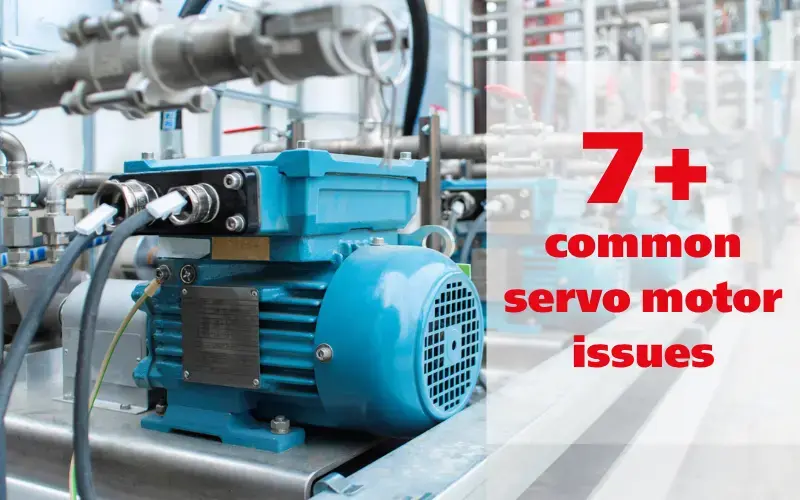
This environment imposes the most demanding requirements on conduit. Cables connecting robots and servo motors must flex continuously, cycling through millions of bending movements over the equipment's service life. Conduit at these connection points must meet:
- Suitable type: Flexible PA12 conduit or metal flexible conduit with PU/PVC outer jacket. Flexible conduit absorbs continuous vibration and prevents bending fatigue stress on encoder signal cable and servo cable jackets.
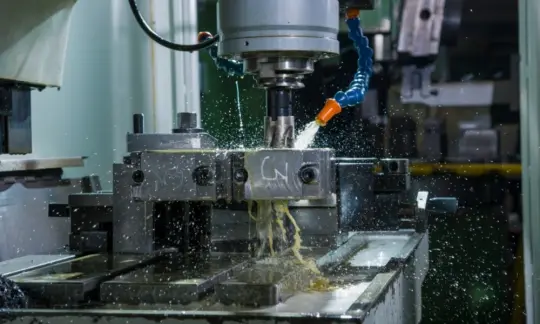
- IP rating: IP54 minimum; IP67 recommended where cutting fluid or coolant may be splashed.
- EMI shield: For control signal cables and encoder cables, use separate metal conduit — do not share conduit with power cables to avoid electromagnetic interference.
- HELU reference products: SPR-PU-AS (IP68, operating temperature range: -50°C to +100°C), JUMBO PA12 (large-diameter PA12 conduit)
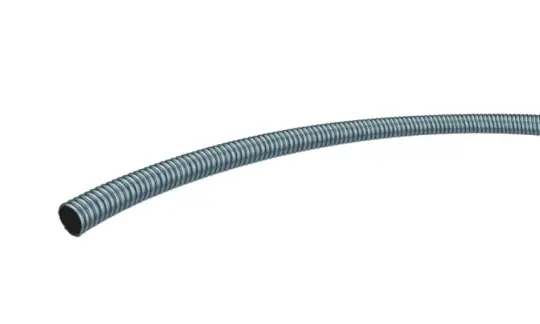
4.2 Outdoor installations and PV systems
Outdoor electrical conduit installations in Vietnam must simultaneously withstand multiple stressors: high-intensity UV radiation, continuously changing environmental conditions, and large temperature differentials. Technical requirements for outdoor conduit:
- IP rating: IP66 minimum (resistance to powerful water jets from any direction)
- Material: HDPE or PA6 with UV-stabilizing additives — standard PVC does not meet this requirement
- Thermal expansion: For long runs, calculate the material's thermal expansion coefficient and provide appropriate expansion joints
- HELU reference products: HELUcond CO-PA (UV-resistant), HELUcond PA6-L, HELUcond W-CO-PA-12-MOD-BS-V2
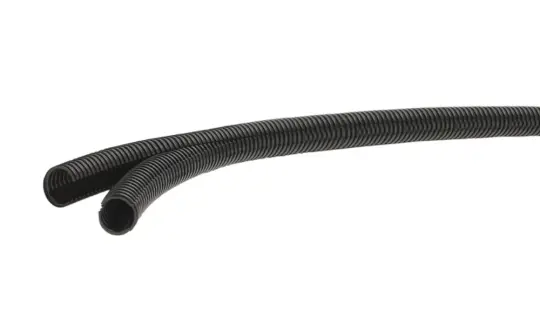
4.3 Control panels and switchgear enclosures
In industrial control panels, conduit is used primarily at the cable entry points where cables pass from outside into the enclosure — these are the critical weak points for IP integrity and mechanical protection of the entire panel.
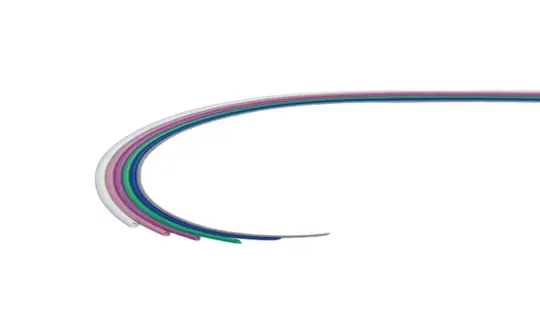
- Suitable type: Short flexible PA6 conduit or multi-color PVC-IC conduit, used in combination with cable glands to ensure IP integrity at panel wall penetrations.
- Important note: The IP rating of the entire panel is only maintained when every cable entry point achieves the same IP rating — a single non-compliant entry point compromises the entire panel's IP classification.
- HELU reference products: PVC-IC, HELUcond PA6-S
4.4 F&B and pharmaceutical industries
These environments impose stringent hygiene and chemical resistance requirements — conduit must withstand industrial cleaning solutions (sodium hydroxide, peracetic acid, chlorine-based agents...) applied directly multiple times per day:
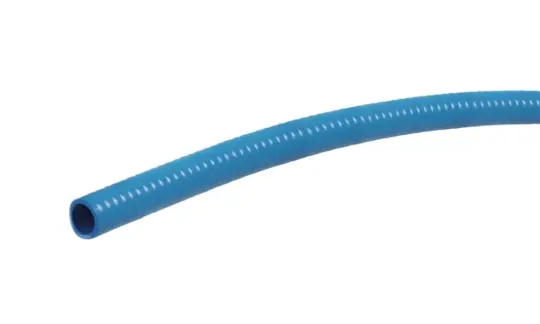
- Suitable type: Chemical-resistant PA6 or special PVC conduit meeting FDA standards
- Do not use: Standard galvanized steel conduit — the zinc coating is attacked by strong alkaline cleaning solutions, causing rust particles to contaminate the production line
- Standards: FDA CFR 21 (indirect food-contact materials), NSF 51
- HELU reference product: Anaconda Sealtite® NMFG-Clean (IP67, compliant with FDA CFR 21 and NSF 51)
💡Learn more about ECOLAB-certified cables and accessories for the F&B industry
4.5 Mining and oil & gas industries
These are among the most extreme operating environments — requirements extend beyond standard ATEX (explosion protection) compliance and demand very high corrosion resistance:
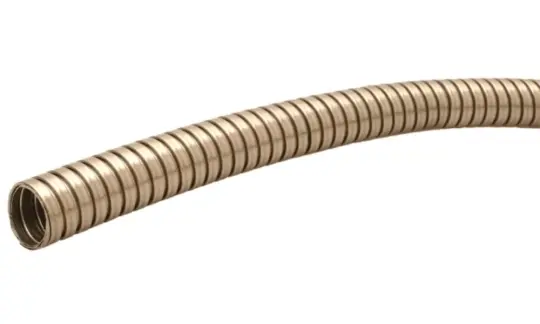
- Suitable type: 316L stainless steel conduit, or heavy-duty galvanized steel conduit with PU outer jacket
- Mandatory standards: IEC 60079 (ATEX Zone 1/2); IP54 minimum, typically IP66 required
- HELU reference product : SWS-UI (stainless steel, withstands temperatures from -100°C to +600°C, IP40)
5. How to determine the right conduit size
Choosing the wrong conduit size is a very common error — too small and cables cannot be pulled through and heat builds up; too large and the installation is wasteful and unwieldy. The first step is to look up the available size range for the product line, then apply fill ratio principles to select the appropriate size.
5.1 Size ranges by HELU product line
Each HELU conduit line is available in multiple sizes within a defined outer diameter range. The table below is compiled from the product catalog to help engineers quickly narrow down their options:
| Products | Materials | Outer diameter (mm) | Key Features |
| HELUcond PA6-L | Polyamide 6 | 10 – 53.8 | Halogen-free, UV-resistant |
| HELUcond PA6 | Polyamide 6 | 10 – 54.5 | UL approval, halogen-free |
| HELUcond PA12 | Polyamide 12 | 13 – 54.5 | Halogen-free, better chemical resistance than PA6 |
| HELUcond PE | Polyethylene | 12.7 – 54.5 | Halogen-free |
| HELUcond PP | Polypropylene | 10 – 54.5 | Halogen-free, UV-resistant, black |
| HELUcond CO-PA | Polyamide (split) | 13.5 – 79.8 | UV-resistant, retrofittable over existing cables |
| JUMBO PA12 | Polyamide 12 | 79.2 – 106 | Large diameter for multi-cable bundles |
| SPR-AS (steel) | Galvanized steel | 10 – 56 | VDE listed, UV-resistant |
| SPR-PVC-AS (steel + PVC) | Galvanized steel + PVC jacket | 10 – 56 | VDE listed |
| S-PU (steel + PUR) | Galvanized steel + PUR jacket | 10 – 56 | Halogen-free, UV-resistant |
Once the right product line for the environment has been identified, the next step is to select the correct size within that range. This is where the detailed datasheet for each product line is needed to obtain the exact inner diameter for each size — e.g., Ø12, Ø16, Ø20, etc. Datasheets can be downloaded directly from the HELU product page, or contact the HELU Vietnam technical team for sizing assistance.
5.2 Sizing principle — Fill ratio
Precisely calculating conduit size using formulas requires the actual outer diameter of each cable from the manufacturer's datasheet, and can become complex when multiple cable types share the same conduit. However, a fundamental guideline applies:
The total cross-sectional area of all cables inside the conduit must not exceed a defined percentage of the conduit's internal bore area. Per the National Electrical Code (NEC) and equivalent standards:
- 1 cable: maximum 53% of conduit interior area
- 2 cables: maximum 31%
- 3 or more cables: maximum 40%
This principle ensures two things: heat generated by the cables can dissipate out of the conduit, and cables can be pulled in or replaced later without jamming or jacket abrasion.
In practice, to ensure accuracy and avoid errors, provide the full cable list (quantity, cross-section, and outer diameter of each cable) to the manufacturer or distributor for professional sizing advice — especially for applications involving multiple cables or cables with non-uniform outer diameters.