What are PG cable glands? PG7 to PG48 size chart and how to choose
PG cable glands have threads made to the German PG system defined in DIN 40430, with 10 sizes from PG7 to PG48. To choose the right size, measure the outer diameter of your cable and compare it with the clamping range of each size. For example, PG7 clamps cables from 3 to 6.5 mm, PG13.5 from 6 to 12 mm and PG21 from 13 to 18 mm. PG threads are still common on older control cabinets and machines, although new equipment has largely moved to metric (M) threads. This article covers the full size chart, how to convert PG to metric, and what to watch out for during installation.

Article content:
1. What are PG cable glands?

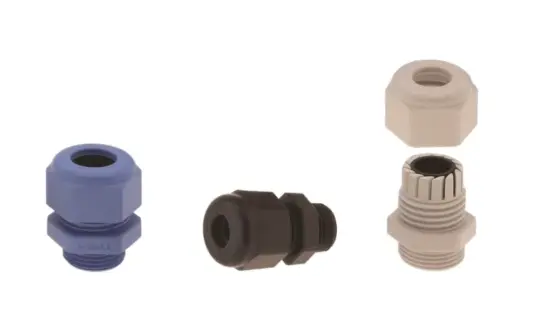
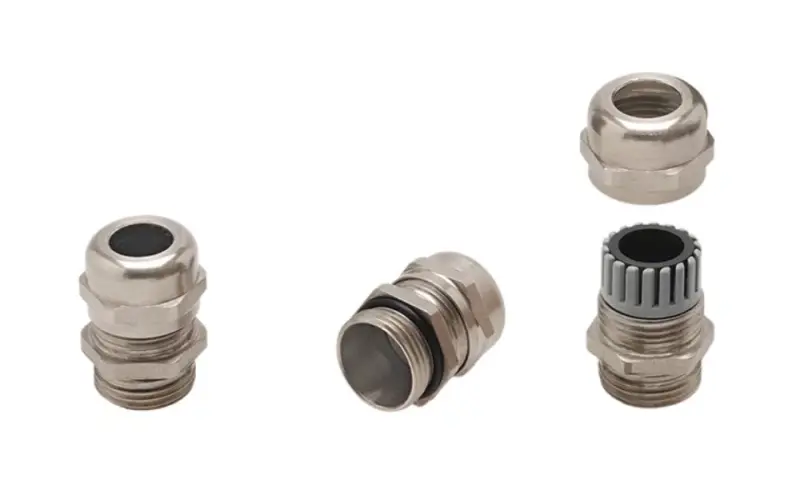
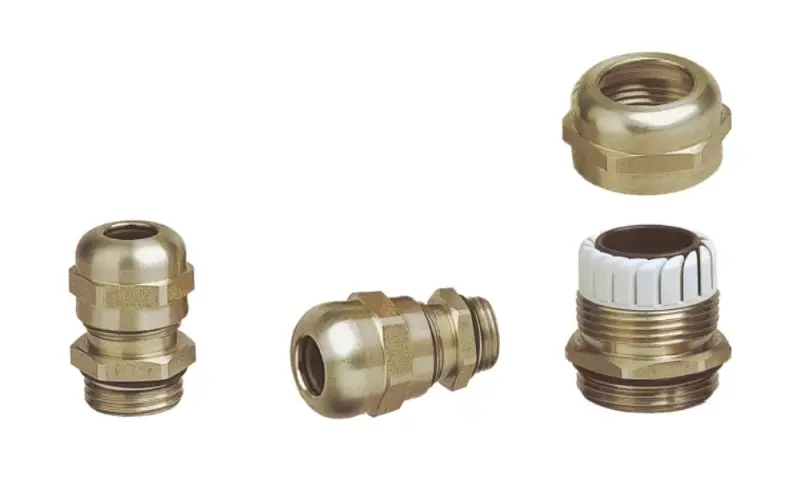
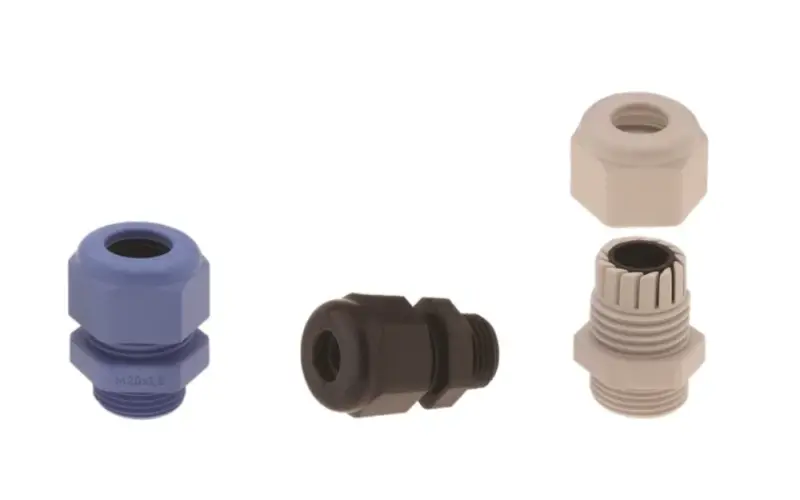
PG-threaded cable glands made of plastic, brass, and stainless steel
A PG cable gland is an accessory that guides a cable into a control cabinet, junction box or equipment housing, and its entry thread follows the PG thread system. When tightened, the gland stops the cable from being pulled out, seals the point where the cable passes through the housing to keep out water and dust, and covers the sharp metal edge of the entry hole so the cable sheath is not cut. For a general overview of how cable glands are built and what they do, see our article on what a cable gland is .
PG is short for the German word Panzergewinde, meaning steel conduit thread. The thread system is defined in DIN 40430 and was originally designed for thin-walled steel conduit. This is why PG threads have a wide 80° flank angle and a shallow thread depth, unlike standard metric threads, which have a 60° flank angle.
On 1 January 2000, DIN EN 50262 came into force and made metric threads the standard for cable glands. PG threads could still be used during a transition period until 1 March 2001, and after that mainly for replacement purposes. In 2013, EN 50262 was itself replaced by EN 62444, which is equivalent to the international standard IEC 62444:2010. PG cable glands are still widely produced today because many control cabinets, motors and junction boxes in service have PG-threaded entries and need like-for-like replacements during maintenance.
2. What do PG7, PG9 and PG13.5 cable glands mean?
The number after “PG” is a nominal size name, not a diameter in millimetres. For example, PG7 has an outer thread diameter of 12.5 mm, while PG13.5 has 20.4 mm. This is a common source of ordering mistakes, leading to glands that do not fit the hole in the enclosure.
The PG system has 10 standard sizes: PG7, PG9, PG11, PG13.5, PG16, PG21, PG29, PG36, PG42 and PG48. The thread pitch also changes by size group. PG7 has a pitch of 1.27 mm, PG9 to PG16 have 1.41 mm, and PG21 to PG48 have 1.588 mm. Metric cable gland threads, by contrast, all share a 1.5 mm pitch, and the size can be read directly from the name. For example, M20x1.5 has a thread diameter of 20 mm.
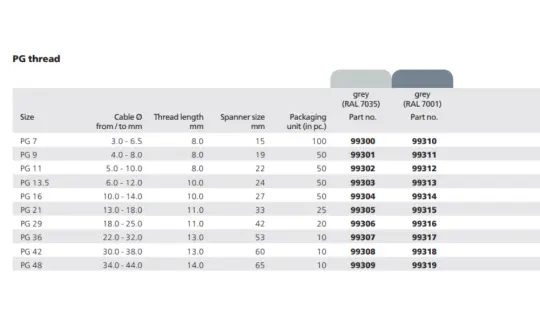
3. PG cable gland size chart from PG7 to PG48
According to the HELU cable accessory catalog , each PG size has its own thread diameter, entry hole size and cable clamping range. Thread diameters and entry holes follow DIN 40430. Clamping ranges and spanner sizes are taken from the HELUTOP® HT plastic cable gland range .
| Thread size | Outer thread diameter (mm) | Through-hole (mm) | Clamping range (mm) | Spanner size (mm) | Common applications |
| PG7 | 12.5 | 12.7 | 3.0 to 6.5 | 15 | Sensor leads, small signal cables |
| PG9 | 15.2 | 15.4 | 4.0 to 8.0 | 19 | Control cables with few cores |
| PG11 | 18.6 | 18.8 | 5.0 to 10.0 | 22 | Control cables with 5 to 7 small cores |
| PG13.5 | 20.4 | 20.6 | 6.0 to 12.0 | 24 | Multi-core control cables, small power cables |
| PG16 | 22.5 | 22.7 | 10.0 to 14.0 | 27 | Medium power cables, control cables with 12 or more cores |
| PG21 | 28.3 | 28.5 | 13.0 to 18.0 | 33 | Motor power cables, control cables with more than 20 cores |
| PG29 | 37.0 | 37.2 | 18.0 to 25.0 | 42 | Large power cables |
| PG36 | 47.0 | 47.2 | 22.0 to 32.0 | 53 | Large power cables |
| PG42 | 54.0 | 54.2 | 30.0 to 38.0 | 60 | Main supply cables for distribution boards |
| PG48 | 59.3 | 59.5 | 34.0 to 44.0 | 65 | Main supply cables for distribution boards |
Note: clamping ranges can vary slightly between product ranges.
For example, in the HSK range, PG42 clamps cables from 32 to 38 mm and PG48 from 37 to 44 mm. If your cable is close to the edge of a clamping range, check the data sheet for the exact part number.

4. How do PG and metric cable gland threads differ?
PG and metric (M) threads cannot be screwed into each other, even when two sizes have almost the same diameter. The flank angle and pitch are different, so forcing them together will damage the thread and break the seal.
4.1 Comparing PG, metric and NPT threads
Besides PG and metric threads, you may also come across NPT, the American thread found on equipment imported from North America. The three thread types differ as follows:
| Criteria | PG thread | Metric thread (M) | NPT thread |
| Standard | DIN 40430 | EN 60423, EN 62444 | ANSI/ASME B1.20.1 |
| Thread form | Parallel | Parallel | Tapered, 1:16 taper |
| Flank angle | 80° | 60° | 60° |
| Pitch | 1.27 to 1.588 mm depending on size | 1.5 mm for all sizes | Given in threads per inch |
| How sizes are named | Nominal name, check a size chart | Read directly in mm, e.g. M20x1.5 | Nominal pipe size in inches, e.g. 1/2" NPT |
| Thread sealing | Sealing washer or O-ring | Sealing washer or O-ring | The taper seals as it tightens, usually with PTFE tape or thread sealant |
| Common sizes | PG7 to PG48 | M12 to M63 | 1/2", 3/4", 1" |
| Current use | Older equipment, replacement during maintenance | Default for new equipment | Equipment built to North American standards |
4.2 How to convert PG to metric threads
When switching from PG to metric, choose the metric size with the same cable clamping range. If the hole in the housing is still PG-threaded, simply add an adapter so you can fit the metric gland. The table below lists the usual pairs, based on HELUTOP® HT clamping ranges and HELU’s adapter range.
| PG Size | Corresponding size M | Notes |
| PG7 | M12x1.5 | Same clamping range, 3 to 6.5 mm |
| PG9 | M16x1.5 | Same clamping range, 4 to 8 mm |
| PG11 | M20x1.5 | M16 is available with the same 5 to 10 mm range; M20 if the cable is near 10 mm |
| PG13.5 | M20x1.5 | Same clamping range, 6 to 12 mm |
| PG16 | M20x1.5 or M25x1.5 | M20 version with 10 to 14 mm range |
| PG21 | M25x1.5 | Same clamping range, 13 to 18 mm |
| PG29 | M32x1.5 | Same clamping range, 18 to 25 mm |
| PG36 | M40x1.5 or M50x1.5 | M40 matches the clamping range; M50 when using a PG36 to metric adapter |
| PG42 | M50x1.5 | |
| PG48 | M63x1.5 | Same clamping range, 34 to 44 mm |
5. How to choose the right PG cable gland size?
The quickest way to choose is to go by the cable’s outer diameter, not the conductor cross-section. Two 4x1.5 mm² cables can differ by several millimetres in diameter because of different sheath materials or an added screen. Follow these three steps:
- Measure the cable’s outer diameter: Use a caliper, or check the “outer diameter” value in the cable data sheet.
- Choose a PG size whose clamping range covers that diameter: If two sizes fit, pick the one where the cable sits closer to the middle of the range. The rubber seal insert will then press more evenly and seal better than when the cable is at the edge of the range.
- Check the hole in the housing: If the hole is already threaded, the PG size must match that thread. Do not rely on measuring the hole with a caliper alone: the thread diameters of PG13.5 (20.4 mm), M20 (20 mm), G1/2 (20.955 mm) and 1/2" NPT (21.223 mm) differ by less than 1.3 mm. Confirm the thread type from the enclosure drawing, the equipment parts list or a thread gauge before ordering. See also how to tell cable gland thread types apart. If the hole is plain (unthreaded), drill it to the size in the “entry hole” column of the table in section 3 and use a locknut.
Example: the JZ-500 7G1.5 control cable has an outer diameter of about 9.2 mm, which falls within the clamping range of both PG11 (5 to 10 mm) and PG13.5 (6 to 12 mm). However, 9.2 mm is close to the upper limit of PG11, while it sits right in the middle of the PG13.5 range. PG13.5 is therefore the better choice.

For the JZ-500 control cable, each PG size corresponds to the following cable codes:
| PG Size | Clamping range (mm) | Example: JZ-500 cable (outer diameter) |
| PG7 | 3.0 to 6.5 | 3G0.75 (5.6 mm) |
| PG9 | 4.0 to 8.0 | 4G1 (6.6 mm) |
| PG11 | 5.0 to 10.0 | 7G1 (8.1 mm) |
| PG13.5 | 6.0 to 12.0 | 7G1.5 (9.2 mm) |
| PG16 | 10.0 to 14.0 | 5G4 (12.1 mm) |
| PG21 | 13.0 to 18.0 | 4G10 (16.4 mm) |
| PG29 | 18.0 to 25.0 | 5G16 (22.8 mm) |
| PG36 | 22.0 to 32.0 | 4G35 (27.9 mm) |
| PG42 | 30.0 to 38.0 | 4G50 (33.0 mm) |
| PG48 | 34.0 to 44.0 | 4G70 (37.9 mm) |
The outer diameters in the table are approximate values from the data sheet. Cables with the same cross-section but with a screen or a different sheath material will be larger, so always check the data sheet for the cable you are using.
If the hole in the housing is larger than the gland you need, you do not have to re-drill the housing. A PG to PG reducer, for example from PG21 down to PG13.5, solves this more neatly. For guidance on choosing glands by operating environment, see our guide to selecting and installing cable glands .
6. Types of PG cable glands and matching HELU products
PG cable glands come in three main materials: plastic, nickel-plated brass and stainless steel. There are also special ranges for hazardous areas, moving cables and screened cables. HELU offers PG-thread versions in all of these groups, so you only need to identify the installation environment and then find the matching product range.
6.1 Plastic, brass and stainless steel PG cable glands
| Materials | Strengths | Use when | HELU ranges with PG threads |
| Polyamide PA6 plastic | Light, insulating, resistant to abrasion and impact, resistant to fuels and cleaning agents, cost-effective | Control cabinets, junction boxes, general automation machinery | HELUTOP® HT (PG7 to PG48, IP68 at 5 bar and IP69K, available in three colors: light grey, dark grey, and black). HSK (PG7 to PG48, IP68 at 10 bar and IP69K, available in blue for intrinsically safe circuits) |
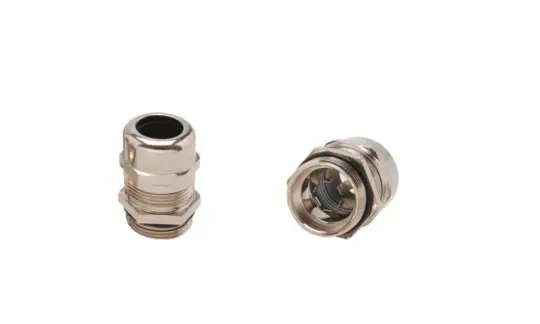
| Nickel-plated brass | Robust, long-lasting, electrically conductive | Machines with heavy vibration, harsh industrial environments | HELUTOP® HT-MS (PG7 to PG48) |
| Stainless steel | Highly corrosion-resistant, withstands many cleaning agents and disinfectants | Food, pharmaceutical and chemical plants, outdoor installation | HSK-Stainless Steel (PG7 to PG48) |
HELUTOP® HT plastic cable glands operate within a temperature range of −20 °C to +100 °C. If you’re deciding between plastic and metal, this article on brass cable glands will help you compare them in more detail.

6.2 PG cable glands for special conditions
| Requirements | HELU's product line features PG threads | Key specifications |
| Areas with flammable gas or dust | HSK-MS-EX (PG7 to PG16) | ATEX certification , Ex e protection type, IP68 at 10 bar and IP69K, DNV certification for marine/offshore applications |
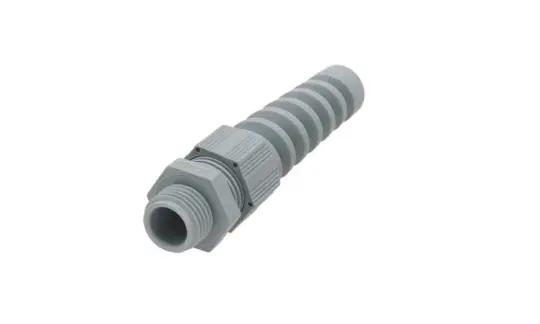
| Moving or vibrating cables, or cables that bend at the cabinet entry | HELUTOP® HT-K (PG7 to PG21) | Anti-kink spiral, IP68 at 5 bar and IP69K |
| Screened cables to drives and servo motors | HELUTOP® MS-E (PG7 to PG48) | Nickel-plated brass body that contacts the cable screen for electromagnetic compatibility (EMC) |
You do not need to buy a special “waterproof cable gland”. HELU’s standard ranges are already rated IP68, which means they withstand water pressure equal to a depth of 50 m for 30 minutes, as long as the cable is within the clamping range and the gland is tightened correctly. These standard ranges also have clamping lamellae that provide category A strain relief to EN 50262, so you only need HT-K when the cable moves regularly.
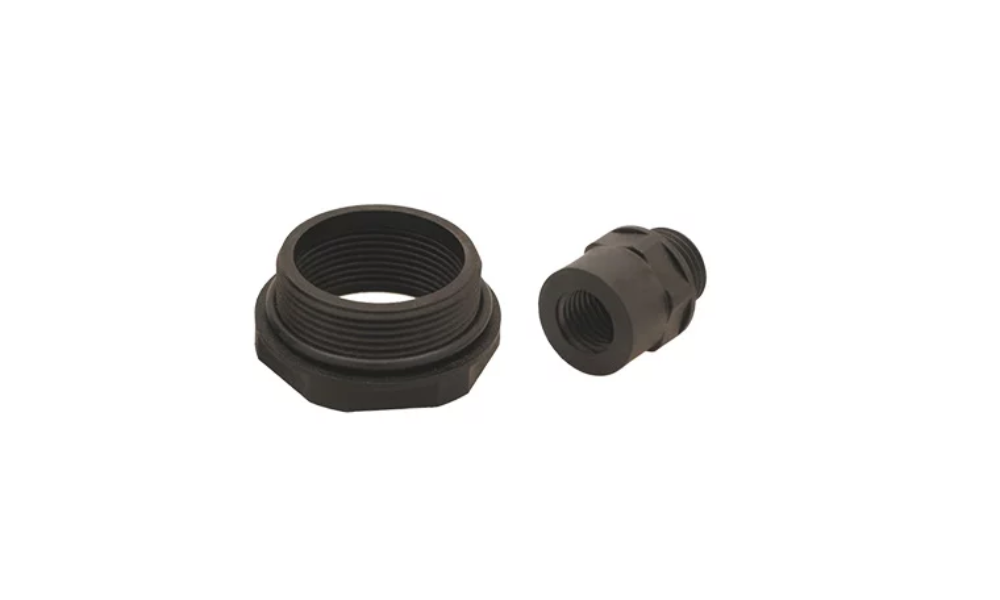
PA-ATEX adapter for converting from PG threads to M threads
6.3 PG gland accessories
HELU offers M-to-PG and PG-to-M thread adapters , PG-to-PG thread reducers, lock nuts, and threaded plugs. With these accessories, you can properly replace parts on older equipment or gradually upgrade to metric threads without having to re-drill the enclosure.
Need advice on PG7, PG9 cable glands, or other sizes?
Please provide HELU Vietnam with the cable type, outer diameter, and installation environment. Our technical team will recommend the appropriate product code for you via the contact form or Zalo.
7. Installation tips for PG cable glands
Installing a PG cable gland is straightforward: screw the gland body into the hole in the housing, pass the cable through, then tighten the cap nut. With ranges such as HELUTOP® HT and HSK, you do not need to take the gland apart. Just loosen the cap nut slightly so the cable slides through easily, then tighten it again.
The gland only reaches its stated IP rating if you pay attention to three points:
- Tighten to the correct torque: Overtightening can crack a plastic PG gland body, while undertightening leaves the rubber seal loose around the cable. Use the correct spanner size and follow the torque values in the data sheet.
- Use a locknut when the hole is not threaded: On thin enclosure walls with a plain hole, a locknut on the inside is needed to hold the gland in place.
- Add a connection thread gasket when the housing surface is uneven: A textured paint finish, a curved wall or a raised edge can leave a gap at the thread. An O-ring or connection thread gasket keeps the required IP rating.
HELU recommends re-tightening the cap nut after a period of operation, because the rubber seal can settle slightly over time. Unused holes in the enclosure should also be closed with PG blanking plugs of the same size.
8. Frequently Asked Questions
A PG7 cable gland fits cables with an outer diameter of 3 to 6.5 mm. The PG7 thread has an outer diameter of 12.5 mm, so the entry hole in the housing should be about 12.7 mm.
PG13.5 is usually replaced with M20x1.5, because both have the same 6 to 12 mm clamping range. However, their threads are different, so an M20 gland cannot be screwed directly into a PG13.5 hole.
Yes, with a PG to metric adapter. The adapter screws into the existing PG hole, and the metric cable gland screws into the adapter. This lets you upgrade older control cabinets without re-drilling the housing.
Choose plastic for control cabinets and machines in normal factory conditions. Choose nickel-plated brass when you need extra mechanical strength or EMC screening, and stainless steel for corrosive environments, food processing or outdoor use.
There is no PG13 size in DIN 40430. The “.5” is part of the size name, so if a supplier lists “PG13”, it is almost certainly PG13.5 with an outer thread diameter of 20.4 mm. Check this with the supplier before ordering.