The meaning of UL and TC-ER markings on electrical cables
Jennifer Crawford, Inside Sales Manager at HELUKABEL USA, is the contact person for UL/CSA-certified cables and wires.
UL stands for “Underwriter‘s Laboratory” and is an independent US testing organisation, similar to the German VDE. Based on the the National Electrical Code (NEC, also referred to as NFPA 79) – the safety standard prevalent in the USA for electrical installations – the Underwriter’s Laboratory defines standards for electrical components and their fields of application. UL approvals are also recognised as safety standards in many other countries due to the strict fire protection requirements found in the NEC.
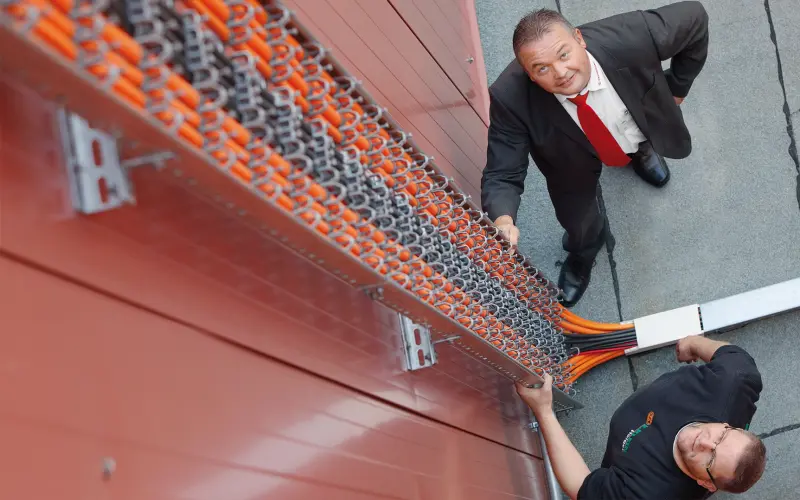
TC is short for “Tray Cable” and is the name given to cables which may be installed in a cable rack cable tray. However, since the North American fire protection requirements are so strict, the cable racks/trays must, in principle, be enclosed or the cables must be laid inside conduits. To avoid this costly and time-consuming installation process, in the interest of the customer, cables suitable for exposed installation, according to UL 1277, NFPA 79 and NEC, are increasingly being used. This is also known as “Exposed Run” (ER). TC-ER cables such as the HELUKABEL JZ-604 or the TRAY-CONTROL 500 and 600 series, do not need to be protected by enclosed trays or conduits, and therefore simplify cable installation in buildings or from the control cabinet to the machine. UL TC-ER-certified cables all provide an interesting opportunity for planners to minimise installation costs without compromising on quality and safety.

FAQ series with HELU
- What is an enclosure’s degree of protection? How do we interpret the IP code?
- The meaning of VDE registration for electrical cables
- Why Is It So Important That Cables and Wires Not Only Be Flame Retardant, but Also Halogen-Free?
- What does “Cat” stand for in the Ethernet world?
- What is the current-carrying capacity of cables and conductors actually dependen upon?
- What’s behind the name “Incoterms”?
- What is the average lifespan of a control cable?
- What are the differences between cables and wires?
- Copper vs aluminum: How to choose the right conductor?
- How many types of brass cable glands are there?