Residential vs. C&I vs. Utility-scale BESS: Understanding the 3 scales of Battery Energy Storage Systems
Residential, C&I, and utility-scale BESS represent three very different scales of battery energy storage systems. A residential BESS serves a single household, typically rated at 5 to 20 kW. A C&I (commercial and industrial) BESS powers factories and commercial buildings, ranging from a few tens of kW to several MW. A utility-scale BESS is the largest of the three, ranging from MW to GW, and connects directly to the power grid at a location with no significant load nearby.
Article content:
A household with rooftop solar panels, a factory in an industrial park, and a large-scale solar farm can all use a battery energy storage system, but their needs, configurations, and investment levels are quite different. This article breaks down all three segments in detail, helping you identify which one your project falls into before you dig into the specific configuration.
💡What is a BESS energy storage system? The role and components of a BESS system
1. Characteristics of residential BESS
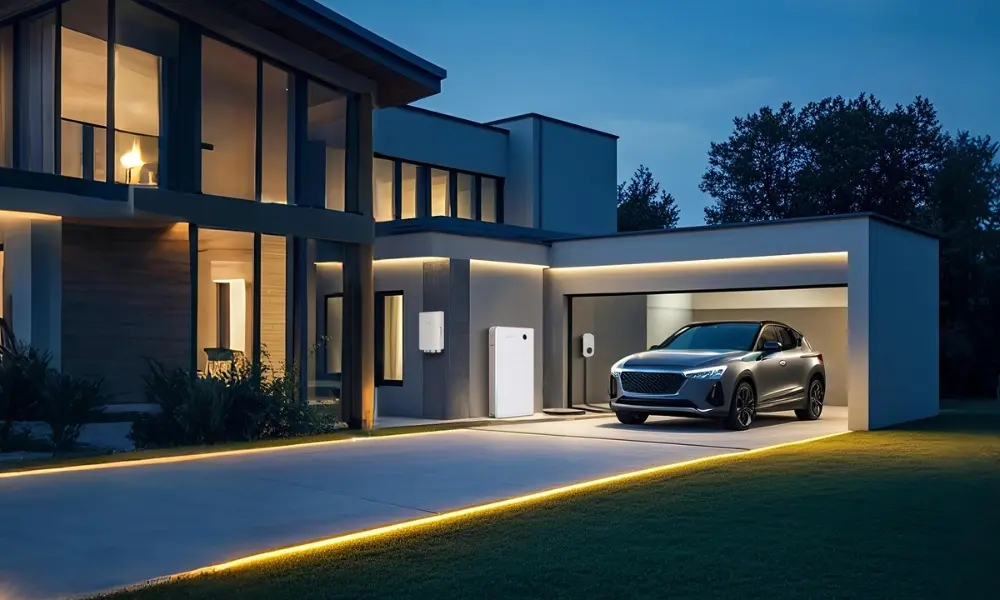
Residential BESS storage batteries are typically installed in single-family homes, primarily in conjunction with rooftop solar power systems
1.1 What is residential BESS?
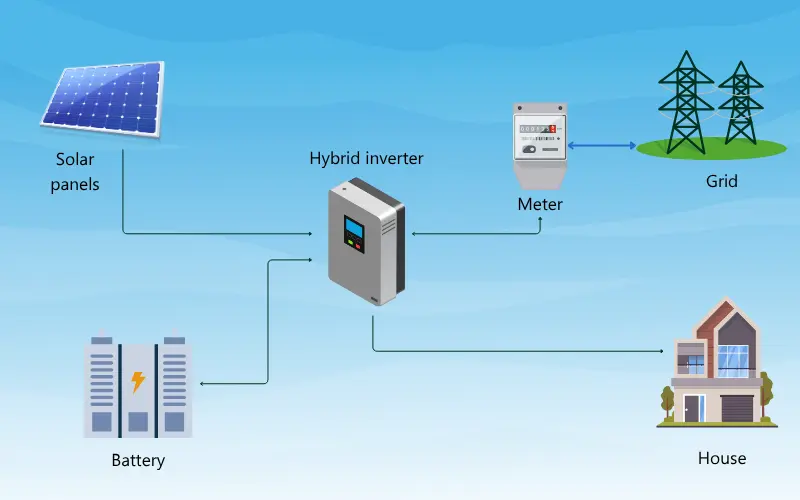
Residential BESS is a small-scale storage system, usually paired with a household's rooftop solar setup. It lets homeowners store electricity when it is available or cheap, then use it later when consumption or electricity prices go up.
Depending on the system design, the battery can be charged from solar panels, from the grid, or from both sources combined. The stored energy is then used to power household appliances, reduce reliance on the grid, or make better use of excess solar generation.
Most residential systems today have a power rating of about 5 to 20 kW, with a capacity of roughly 5 to 30 kWh. They are usually built as compact wall-mounted or floor-standing cabinets, suitable for installation indoors or in a garage.
1.2 Main components of residential BESS
Residential BESS is a fairly simple system, made up of just the most essential parts:
- Battery: the core component of the system
- Inverter: converting DC power into AC power for household appliances
- A simple BMS: typically cooled by natural convection or a small fan rather than a dedicated cooling system
- EMS: optimizing the charging and discharging cycle
1.3 Applications of residential BESS
Residential BESS is a good fit for:
- Households with rooftop solar that want to store excess daytime generation for use in the evening, instead of exporting it back to the grid
- Households in areas with frequent power outages that need a stable backup power source
- Households that want to lower their monthly electricity bill
- Families interested in using clean energy
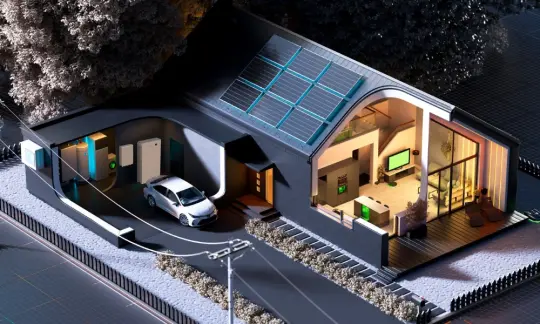
Nearly any household connected to the grid can benefit from a properly sized BESS. The right capacity for a given home depends on several factors: actual electricity consumption, solar system output, the number of circuits to keep powered during an outage, and the desired backup duration. That's why there is no single standard capacity that fits every house, each household needs its own assessment. The table below offers a few reference figures.
| Battery capacity | Applications | Backup duration |
| 5 kWh | Lights, fans, refrigerator | About 6 to 8 hours |
| 10 kWh | Most household appliances | About 12 to 16 hours |
| 15 kWh or more | The whole house | 24 hours or more |
2. Characteristics of Commercial and Industrial (C&I) BESS
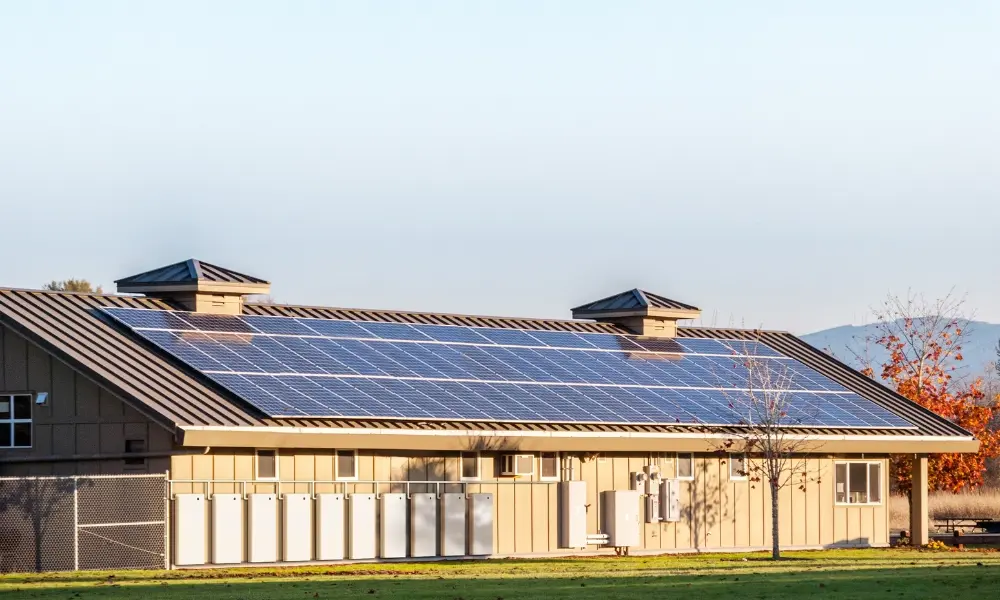
Commercial and Industrial (C&I) BESS serves factories, industrial parks, data centers, and commercial buildings
2.1 What is C&I BESS?
Commercial and Industrial (C&I) BESS serves factories, industrial parks, data centers, and commercial buildings. Its scale is significantly larger than residential systems, ranging from a few tens of kW to several MW.
C&I systems are usually housed in large cabinets or standard 20ft/40ft containers, holding anywhere from 50 kWh to several MWh depending on the project, with a typical battery-side DC voltage of 600V to 1,500V. C&I systems need a more complex, multi-tier BMS architecture than residential ones, along with liquid cooling or industrial HVAC systems to keep operation stable.
2.2 Benefits of C&I system
Deploying BESS in an industrial setting brings both operational and financial value:
- Peak shaving: The system charges when electricity is cheap (typically overnight or during off-peak hours) and discharges when prices rise, flattening the load profile and lowering demand charges. For businesses on a time-of-use (TOU) tariff, the system can follow price signals automatically and operate in real time, helping cut costs.
- Backup power and higher reliability: When the grid goes down, the system switches to backup mode within milliseconds, keeping critical loads such as production lines, cooling systems, medical equipment, or data centers running without interruption.
- Renewable energy integration: The system stores excess solar or wind power generated during peak production hours and releases it at night, on low-sun days, or whenever renewable output drops. This raises the share of self-consumed clean energy, cuts grid dependence, avoids selling surplus power at low feed-in rates, and supports the company's long-term carbon-neutral goals.
- Support for sustainability and ESG goals: Optimizing when and how electricity is used helps businesses lower carbon emissions, improve energy-intensity metrics, and meet growing ESG expectations from regulators, investors, and customers.
2.3 Key componnets of C&I BESS
A C&I system is fundamentally similar to a residential one. The main difference is its greater design complexity and larger scale.
- Higher-capacity batteries
- Battery Management System (BMS): C&I systems need a multi-tier BMS architecture (Slave, Master, Central) to safely manage thousands of battery cells at once
- Energy Management System (EMS) and Power Conversion System (PCS): requires a large, high-efficiency PCS paired with a far more sophisticated EMS software platform; many platforms today use AI to optimize charge and discharge cycles for maximum economic return
- Cooling: active liquid cooling or an industrial HVAC system is required to preserve battery lifespan

The C&I BESS is suitable for use in shopping centers, office buildings, and large-scale projects
2.4 Applications of C&I BESS
C&I BESS suits many types of businesses, including:
- Industrial manufacturing: provides a stable power supply for factory production lines while easing the load during peak hours
- Commercial buildings: used in shopping malls, office towers, and other large facilities to improve energy management efficiency
- Data centers: ensures reliable backup power to keep servers running continuously
- Hospitals and educational facilities: supports stable power for critical areas that require an uninterrupted electricity supply
- Renewable energy projects: paired with solar systems to create an integrated generation-and-storage setup
3. Characteristics of Utility-scale BESS
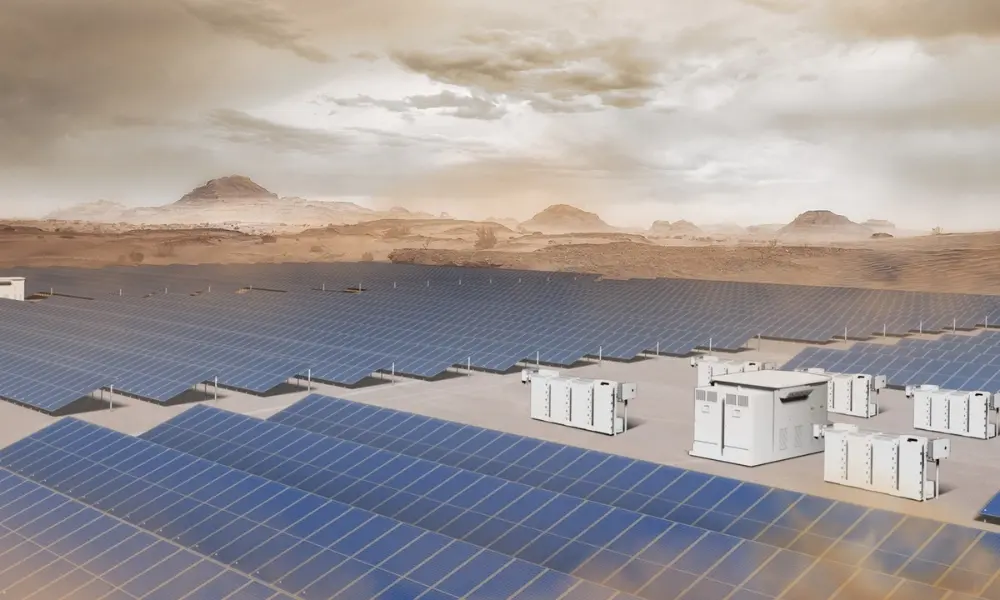
Utility-scale BESS systems are installed independently, are not attached to electricity-consuming facilities, and are connected directly to the national grid.
3.1 What is Utility-scale BESS?
Utility-scale BESS is an energy storage system with a capacity ranging from a few MWh to hundreds of MWh, with power typically measured in MW or GW. Unlike residential or commercial systems, these projects connect directly to and serve the power grid, and can supply electricity continuously for hours, or even days, depending on the system design. As a result, they help use energy more flexibly and efficiently, while helping secure power supply for both the grid and the wider energy system.
Some characteristics of utility-scale BESS include:
- In terms of configuration, utility-scale systems are usually built as outdoor container units or modular blocks.
- In terms of siting, utility-scale projects are typically located near a generation source or a substation, connecting to the grid at either distribution or transmission voltage depending on the project's rated capacity.
- Given their scale, utility-scale BESS projects require a detailed interconnection study, protection coordination, dedicated switchgear, and close coordination with the relevant grid operator before deployment.
3.2 Main components of Utility-scale BESS
A utility-scale BESS is built as a chain: battery racks, a DC combiner, a Power Conversion System (PCS), an MV/LV transformer, and finally the connection to the medium-voltage grid. For larger projects, this architecture is simply replicated across modules.
- Battery racks: each rack includes a built-in fuse and a molded-case switch-disconnector, providing protection and allowing individual racks to be disconnected without affecting the rest of the system.
- DC combiner panel: this panel connects multiple battery racks together at the DC level, while isolating and protecting the entire battery cluster from the rest of the system.
- Power Conversion System: a bidirectional inverter that converts DC power (from the batteries) to AC power (to the grid) during discharge, and the reverse during charging, while precisely controlling both active and reactive power.
- MV/LV transformer: steps up the voltage from the PCS's low-voltage side to the medium voltage needed to connect to the utility grid.
- Medium-voltage collection and grid-connection equipment: includes gas-insulated switchgear for switching and distribution at medium voltage, plus protection relays and controllers to monitor and protect the whole system against grid faults.
- Additional protection systems: including arc-flash mitigation, which detects the light produced by an arc fault and sends a trip signal to the breaker within about 1 millisecond, along with surge protective devices installed on both the DC and AC sides to guard the system against overvoltage.
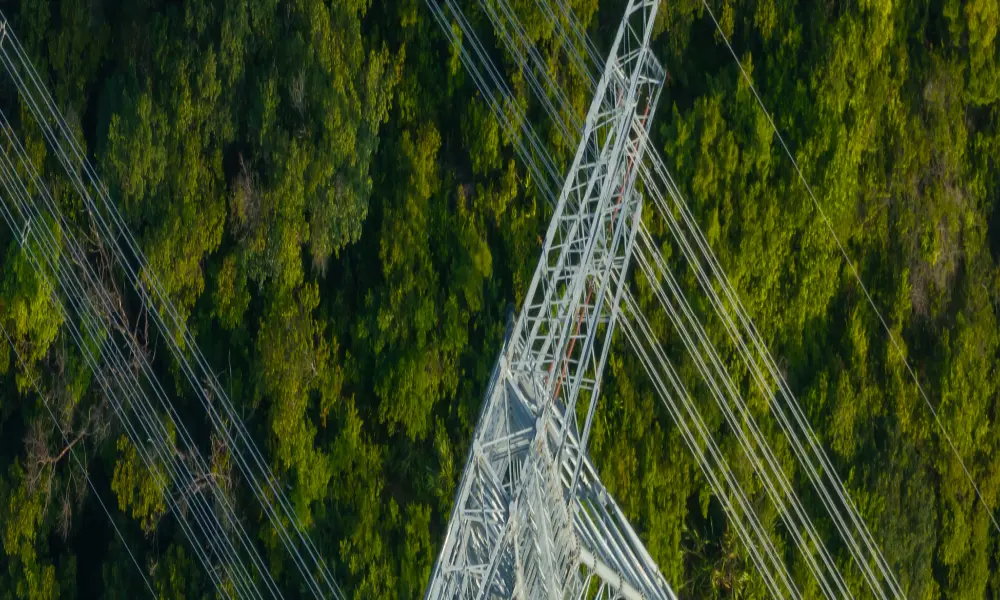
Utility-scale BESS play a pivotal role in modern energy infrastructure
3.3 Applications of the Utility-scale BESS
Utility-scale BESS plays a pivotal role in modern energy infrastructure , focusing on four main application areas.
- Renewable energy integration: The system balances the variability of solar and wind power, storing excess midday solar output and discharging it in the evening when demand stays high but solar output has already dropped.
- Frequency regulation: Thanks to its extremely fast response, BESS helps balance supply and demand in real time and keeps grid frequency stable.
- Peak shaving and load shifting: The system stores energy during low-demand periods and releases it during peak demand, easing pressure on the grid during the most stressed hours.
- Capacity support: BESS acts as a flexible capacity resource, reducing reliance on conventional peaking plants. This is especially valuable when peak demand occurs after solar output has already declined for the day.
4. Comparing the 3 BESS segments: Residential, C&I, and Utility-scale
| Criteria | Residential | Commerce & Industry (C&I) | Utility-scale |
| Power | 5 to 20 kW | A few tens of kW to several MW | MW to GW |
| Battery-side voltage | Low-voltage in-home system | Typically 600V to 1,500V DC on the battery side | Medium/high voltage at the grid connection point, via a substation |
| Installation method | Compact wall-mounted or floor-standing cabinet | Large cabinet or standard 20ft/40ft container | Multiple BESS containers combined into a large-scale plant |
| Primary purpose | Maximizing solar self-consumption, backup during outages, greater energy independence | Peak shaving, demand charge management, backup for critical loads, microgrid support for industrial parks and data centers | Grid balancing, frequency regulation, black start capability, renewable integration, energy market participation |
| BMS and cooling | Simple architecture, natural or small-fan cooling | Multi-tier BMS (Slave, Master, Central) for thousands of cells, usually needs liquid or industrial HVAC cooling | Similar to C&I but at a larger scale |
5. HELU products and solutions for each BESS segment
To turn the three segments above into concrete solutions, HELU builds its BESS ecosystem on Sigenergy technology, combined with HELU's core strength in cables and electrical connection infrastructure. Below are the main product groups for each segment.
5.1 Solutions for residential BESS
In this segment, you can check out the following products:
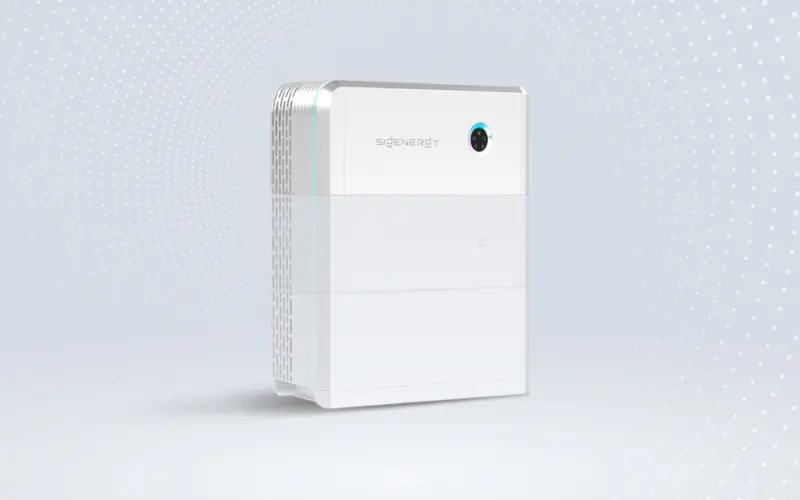
- Sigen Energy Controller (SigenStor EC): a central energy controller rated at 3 to 30 kW, available in single-phase, three-phase, and low-voltage three-phase versions, suitable for a wide range of residential electrical setups. It pairs with the Sigen Hybrid Inverter, rated at 2 to 12 kW for single-phase systems and 3 to 12 kW for three-phase systems.
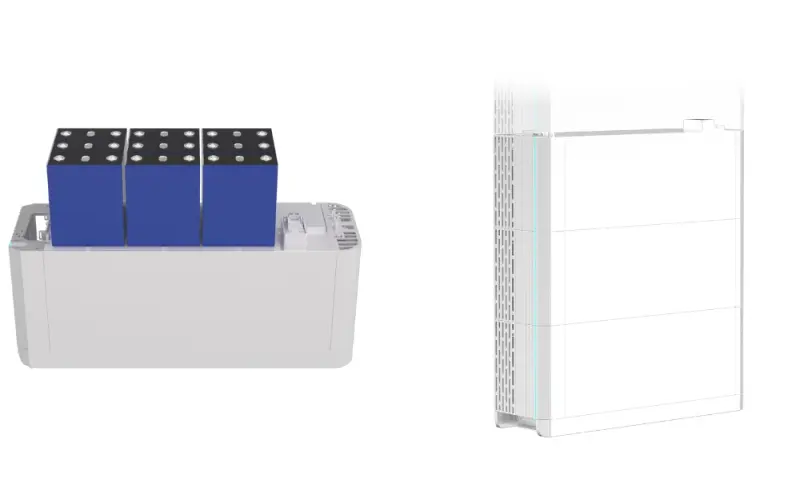
- For the battery, SigenStor BAT uses LiFePO4 technology with 314Ah cells, available in 6.0 kWh and 10.0 kWh modules, rated for up to 10,000 charge/discharge cycles. This lets households expand their storage capacity gradually as needed, instead of investing in full capacity from day one.
- The Sigen Energy Gateway (HomePro/Home series) handles the near-instant switch to backup mode during a grid outage, keeping essential household devices running. For apartments or townhouses with limited roof space, the Sigen Micro Inverter (400/500/800/1000W) is a good fit for small balcony or rooftop solar setups.
Also, HELU handles the cable infrastructure, from the DC cables between the panels and the inverters to the AC cables connected to the home’s electrical panel , ensuring safety and compatibility right from the design phase.
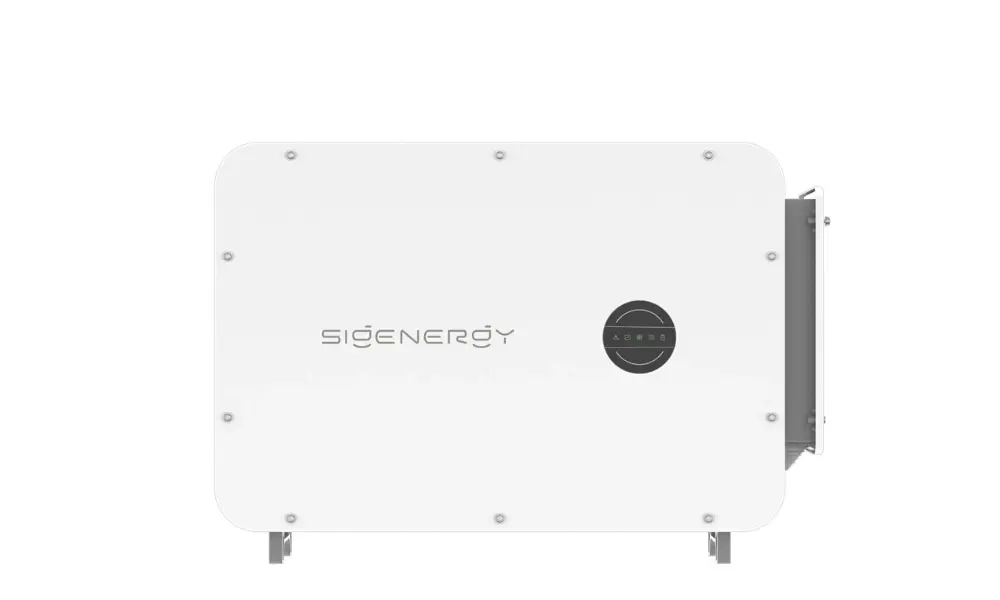
Sigen PV Inverter, 50–125 kW
5.2 Solutions for C&I BESS
For C&I segment, HELU offers the following products and solutions:
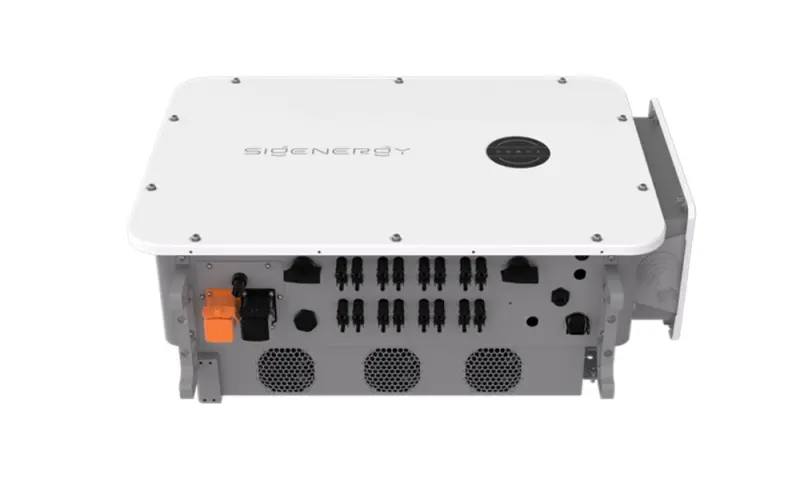
- Sigen PV Inverter, rated at 50 to 125 kW (some configurations up to 166.6 kW), paired with the Sigen Hybrid Inverter in a DC-coupled architecture with the SigenStack BAT 12.0 battery. Each SigenStack module has a capacity of 12.06 kWh, and up to 21 modules can be combined into a system of up to 253 kWh, allowing flexible expansion to match each factory's actual load.
- The system is supported by a DC combiner (Sigen DC Combiner Box) and the Sigen Energy Gateway, available across several power ranges from C60-2 to C1200, suitable for both mid-sized factories and large industrial parks.
- Depending on operational needs, the system can be deployed as an On-grid PV+ESS architecture (running in parallel with the grid) or a Micro-grid PV+ESS architecture (capable of independent operation when needed). This platform has already been deployed in several international projects, including a 1.5MW/3MWh winery in Spain and a 2.4MW/4.1MWh factory in South Africa.
In this segment, HELU is responsible for the entire high-capacity cable infrastructure between the battery modules and the PCS, the medium-voltage cables for MV interconnection projects , and the centralized monitoring system for the entire plant.
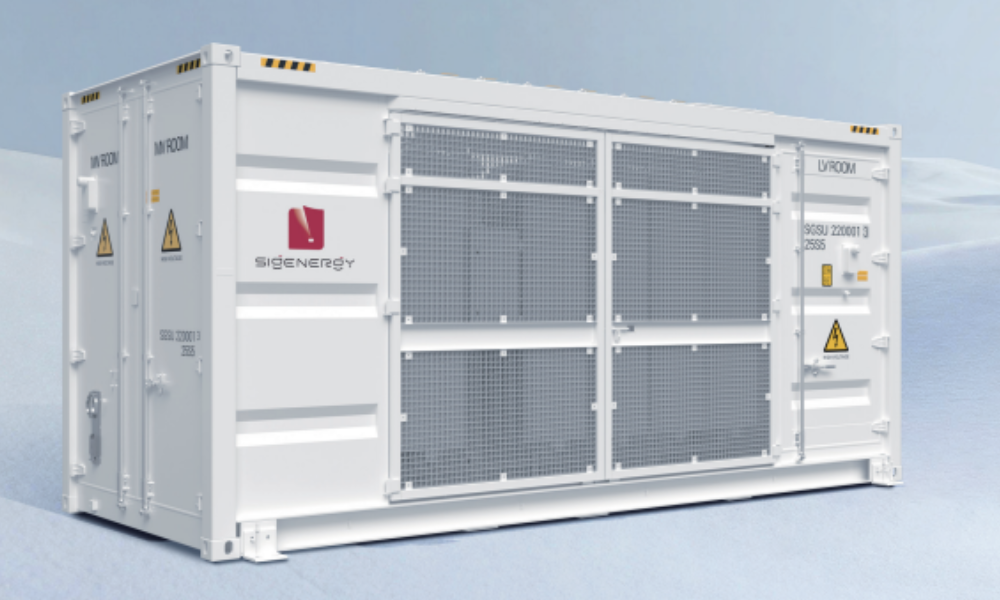
SigenMVT container-type substations have a power range from 4,000 to 11,000 kVA
5.3 BESS Utility solutions
For large-scale projects, HELU also offers matching solutions:
- Sigen PV Inverter (500H1/500H1-T series) rated at 500 kW and supporting 1000V and 1500V AC, along with the 400H2 and 370H2 series for other configurations.
- The SigenMVT container transformer station, available from 4,000 to 11,000 kVA, comes pre-integrated inside a standard container, significantly shortening on-site construction time compared with building a traditional substation.
- Centralized monitoring and data collection for the whole system runs through the Sigen Communication Box (A05 to A08 series) and the Sigen Data Logger (A1-1PLC/A1-2PLC). At this scale, the priorities are optimizing the levelized cost of electricity (LCOE), operational safety through arc-fault protection (AFCI), and optimized operation and maintenance through string-level (MPPT) fault location combined with geo-tagging for every device in the system.
HELU handles the medium- and high-voltage cable infrastructure connecting the container transformer stations, the data cabling between equipment blocks, and the connection switchgear for the entire station.
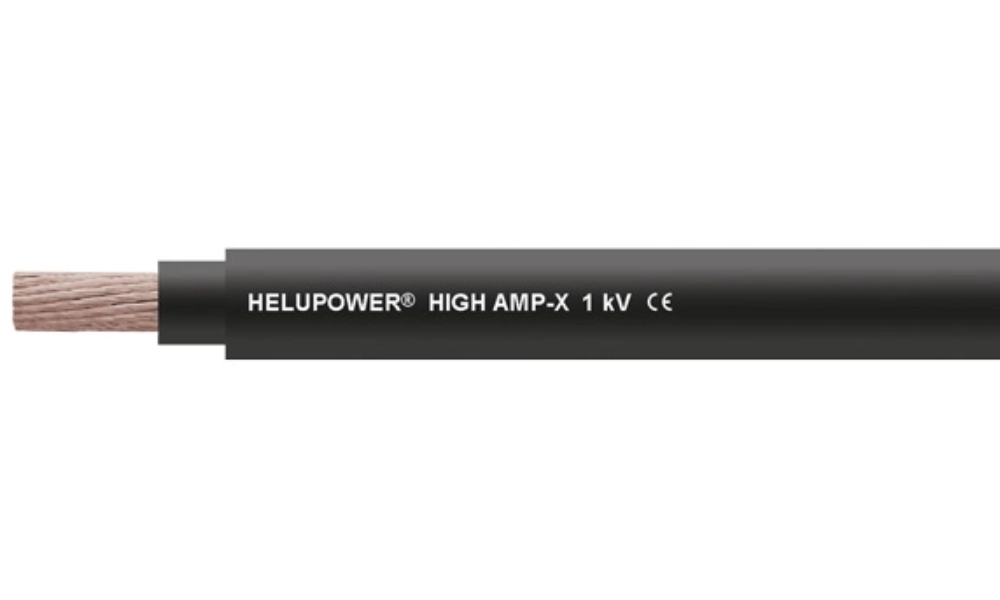
HELUPOWER® HIGH AMP-X single-core cable for BESS
5.4 New specialized cabling solution for BESS: HELUPOWER® HIGH AMP-X
Beyond the standard DC and AC cables used in renewable energy projects, HELU also offers a cable line purpose-built for battery energy storage systems: the HELUPOWER® HIGH AMP-X. This is a single-core cable with cross-linked insulation, engineered with features suited to high-power connections inside a BESS:
- High current-carrying capacity, suited to systems that need to transmit large amounts of power between battery racks, the PCS, and switchgear cabinets.
- An optimized, compact outer diameter, making it easier to route cables through the tight spaces inside a container or equipment room.
- Support for higher DC operating voltage (up to 1500V, with a maximum system voltage of 1.8kV), which significantly reduces transmission losses over long cable runs. This is an important factor for C&I and utility-scale BESS projects.
- Suitable for both outdoor installation on cable trays and direct burial, cutting down on installation effort since no additional conduit is needed, though it is not designed for permanent underwater installation.