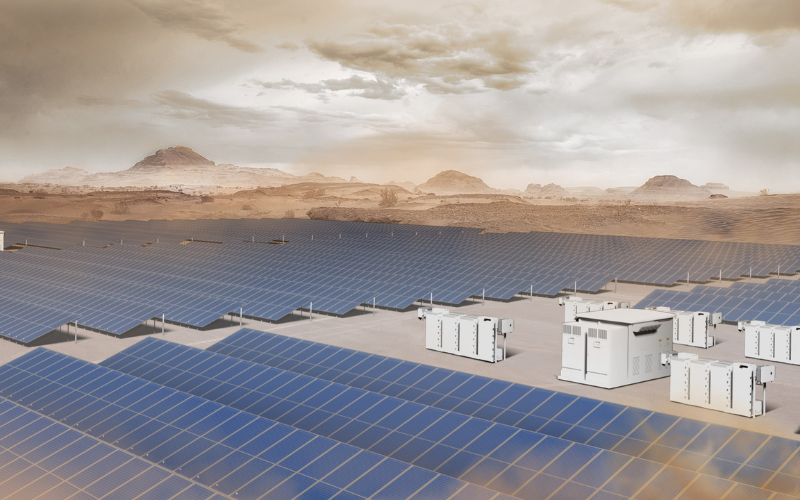
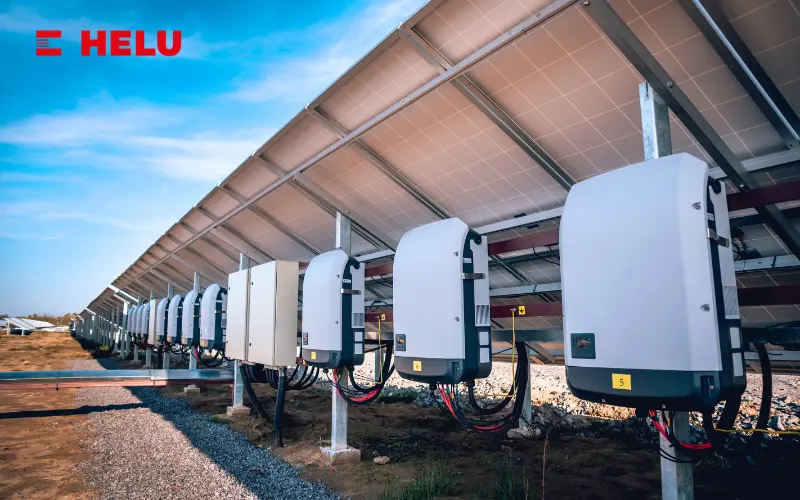
Home battery storage system: Separate components or all-in-one?
A comparison of two storage system installation methods, how to calculate the required battery capacity, and the SigenStor NEO all-in-one solution for households.

Article content:
Your rooftop solar panels produce the most power around noon. But your home needs the most electricity after the sun goes down.
It’s not just individual households; the entire power grid is also under strain during these hours. According to Vietnam Energy Magazine , peak demand is expected to rise from about 27,000 MW in 2015 to over 54,000 MW in 2025, and typically occurs during a few hours in the evening during the hot season.
A solar battery storage system lets you shift your midday surplus into the evening, and keeps the power on when the grid goes down. So which setup should you choose: separate components wired together, or an all-in-one system?
This article is intended for households and is designed to help you understand how the system works, calculate how many kWh of battery capacity you need, and choose the right installation method. If you need information on utility-scale or grid-scale energy storage, see the article on BESS Energy Storage Systems .
1. What is a solar battery storage system?
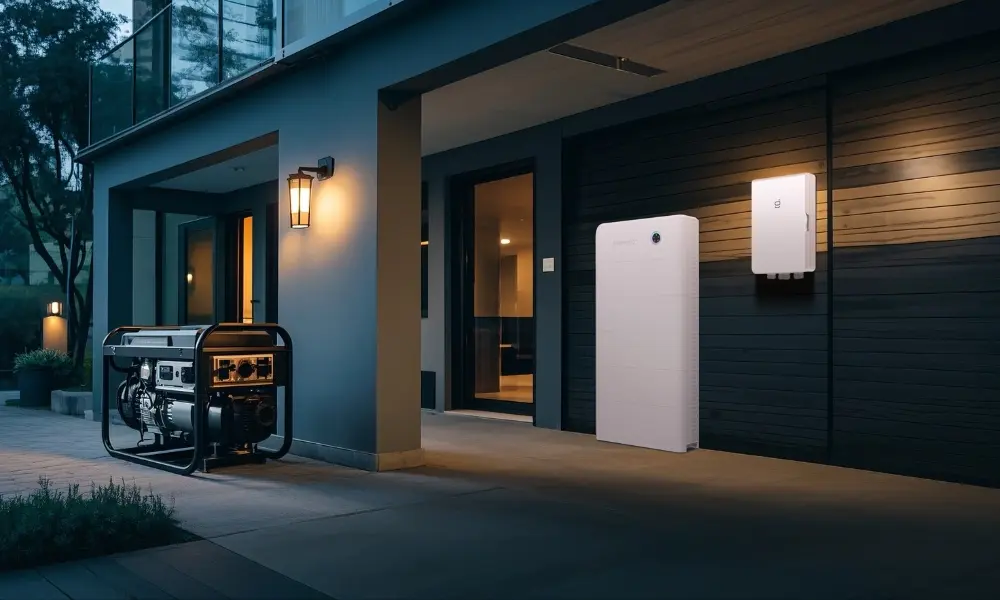
Residential solar power systems with storage
A solar battery storage system stores the electricity your solar panels produce so you can use it when you need it, instead of sending it to the grid or losing it.
Without storage, the extra power from sunny hours is fed into the grid or curtailed. In the evening, when the panels stop producing, you still have to buy power from the grid, right when your home uses the most.
With storage, the surplus goes into a battery and comes back out when you need it: in the evening, on cloudy days, or during a power cut. Solar power, which depends on the weather, becomes a steadier and more controllable source for your home.
1.1 What are the main components of a battery storage system?
A storage system has several parts, but three do most of the work: the solar panels, the inverter and the battery.
- Solar panels (PV):turn sunlight into direct current (DC) electricity.
- Inverter: converts DC into the alternating current (AC) your appliances use. A hybrid inverter also manages power flow between the panels, the battery and the grid.
- Battery: stores the surplus energy. It can be lead-acid or lithium; SigenStor NEO, for example, uses lithium iron phosphate (LiFePO4).
- Battery management system (BMS): monitors battery voltage, current and temperature, and protects the battery from overcharging and deep discharge.
- Energy management system (EMS) and backup switch: decide when to charge, when to discharge and when to disconnect from the grid.
- Cables, connectors and protection devices: DC solar cables, AC cables, MC4 connectors, fuses, circuit breakers, surge protection devices, combiner boxes, earthing cables, the distribution board and a bidirectional meter.
1.2 How does solar with battery storage work?
The system uses solar power for your loads first, stores what is left in the battery, then draws on the battery at night or during a power cut.
- Panels generate power: solar panels turn sunlight into DC electricity. On sunny afternoons, they often produce more than the home needs.
- The inverter converts and manages power: most home appliances run on AC. The hybrid inverter converts DC to AC and directs power between the panels, the battery and the grid.
- Surplus power charges the battery: when production is higher than consumption, the extra energy is stored in the battery as chemical energy.
- The battery powers your home: in the evening or when there is little sun, the system switches to battery power for lights, appliances, security cameras or an EV charger. You buy less power from the grid during peak hours.
- During a grid outage: the inverter switches to battery backup so your home keeps its power
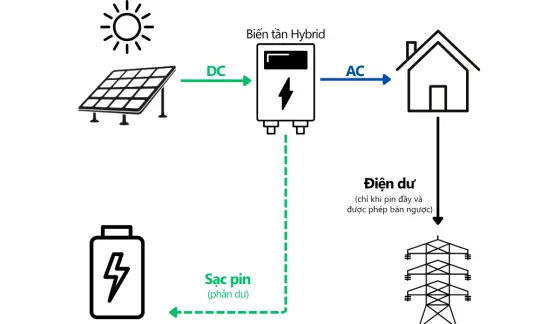
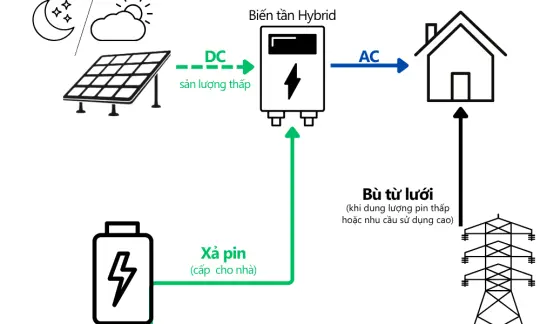
1.3 On-grid, hybrid or off-grid: what is the difference?
The difference comes down to grid connection and battery storage. Only a hybrid system is both connected to the grid and able to keep the power on during an outage.
| Criteria | Grid-connected (on-grid) | Hybrid (with storage) | Off-Grid |
| Connected to the grid | Yes | Yes | No |
| Battery | No | Yes | Yes |
| Power during an outage | No, the system shuts down | Yes | Yes |
| Upfront cost | Lowest | Higher than on-grid | High, plus battery maintenance |
| Best for | Homes with a stable grid | Grid-connected homes that need power at all times | Remote areas with no grid |
View details for each type: grid-tied systems , off-grid systems , and hybrid systems .
2. Portable power station vs. battery storage system
A portable power station can run a few small devices for a short time. A battery storage system is installed permanently, connects to the grid and can power everything in your home.
Both are often called "solar power banks" or "solar storage", but they are very different in scale:
| Criteria | Portable power station | Battery storage systems |
| Typical capacity | About 160 Wh to 3 kWh | From about 5 kWh; modular systems scale to tens of kWh |
| Installation | Stand-alone, carried around | Fixed, wired into the distribution board and rooftop solar |
| Grid connection | No | Yes |
| What it can power | Lights, fans, phones, laptops | The whole home, including air conditioners, pumps and fridges |
| Typical use | Camping, short outages | Lower monthly bills and outage backup |
If you want lower bills and power for the whole house during an outage, read on.
3. How many kWh of storage capacity does a household need?
Battery capacity = the energy you want to draw from the battery (kWh), divided by the battery's depth of discharge (DoD) and the system efficiency. Size it to your real needs rather than picking a ready-made package.
How to calculate the battery capacity you need
- List the loads you want to run on battery power (in the evening or during an outage). Use the wattage on each appliance's label.
- Work out the energy for each load: watts × hours of use ÷ 1,000 = kWh. Add them up.
- Divide by the battery's DoD. DoD is the share of battery capacity you can regularly use. A battery with 100% DoD lets you use its full rated capacity; one with 80% DoD gives you only 80%.
- Divide by the system efficiency. Some energy is lost when charging, discharging and passing through the inverter. Round-trip efficiency tells you how much energy you get back: put 10 kWh in, get 9 kWh out, and the efficiency is 90%. Use the manufacturer's figures; the SigenStor NEO inverter, for example, has a maximum efficiency of 97.8–99.0% ( Sigenergy ).
Example: how much battery capacity does a typical home need?
| Load (assumed) | Power (W) | Battery Life (in hours) | Electricity (kWh) |
| Bedroom air conditioner | 900 | 6 | 5.4 |
| Fridge | 150 | 12 | 1.8 |
| Lights, fans, Wi-Fi, TV | 300 | 5 | 1.5 |
| Total | 8.7 |
These figures are for illustration only. Replace them with the ratings on your own appliances.
- 100% DoD battery: 8.7 ÷ (1 × 0.9) ≈ 9.7 kWh
- 80% DoD battery: 8.7 ÷ (0.8 × 0.9) ≈ 12.1 kWh
Add some headroom for cloudy days or higher demand, then round up to the nearest capacity the system offers.
4. Separate components or all-in-one: which should you choose?
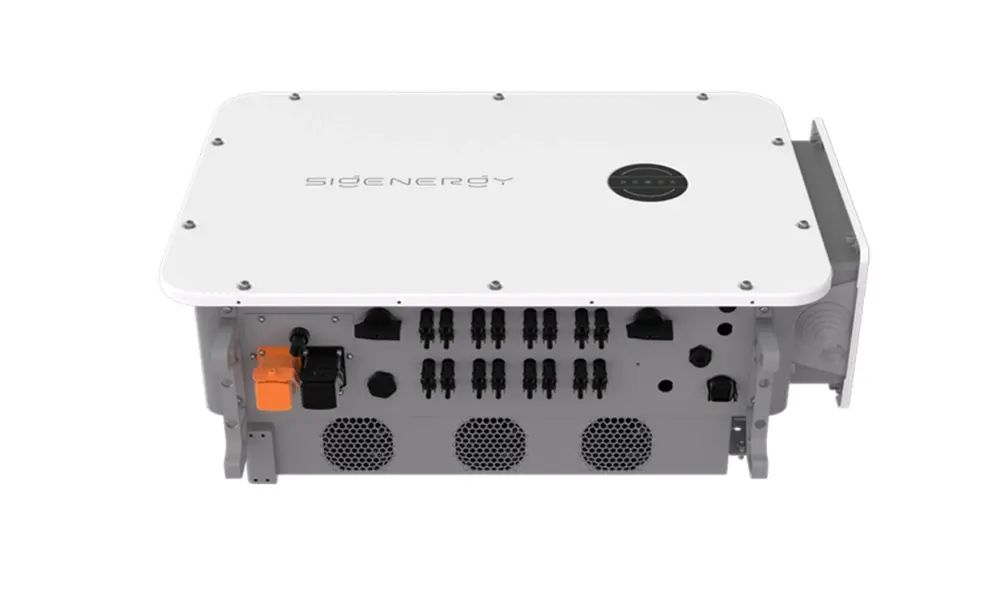
Sigen Hybrid Inverter M1 Version: A grid-tied inverter with storage and a backup port
Separate components give you more choice but take more wiring and setup on site. An all-in-one system is more compact, faster to install and easier to manage, but ties you to one brand.
4.1 What is a component-based system?
A component-based system is a solar power system in which the inverter , storage batteries, and auxiliary equipment are purchased separately and then connected together.
The parts may come from different brands. The installer has to design the wiring, choose the protection devices, check that the inverter and battery can communicate, and configure everything to work together.
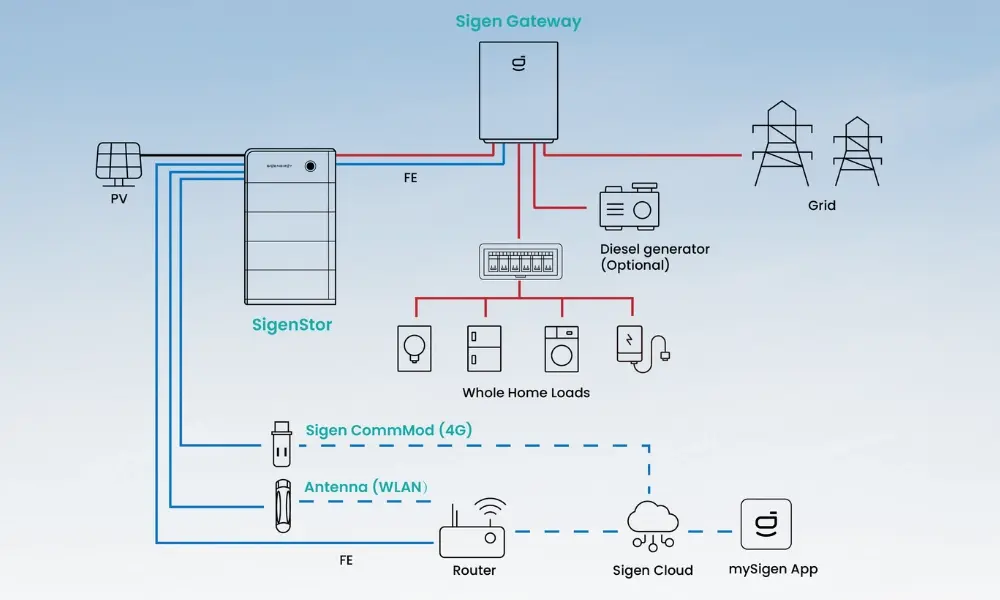
All-in-one storage system
4.2 What is an all-in-one system?
An all-in-one system packs the main parts into one unit or one matched set, designed and tested by a single manufacturer.
It usually includes the battery modules, the BMS, the inverter or power conversion system (PCS), the EMS and a monitoring platform. Unlike a stand-alone hybrid inverter, which still needs a separate battery, protection and monitoring, an all-in-one system is a complete package.
4.3 Component-based vs. all-in-one: what is the difference?
The key difference is who makes sure everything works together: the manufacturer for an all-in-one system, the installer for a component-based one.
| Criteria | Component-based | All-in-one |
| Installation | More devices, more wiring and setup on site | Fewer devices and connections, quicker to install and commission |
| Compatibility | The installer must check every electrical and communication interface | Designed and tested as one system |
| Cost | Flexible part prices, but more design and installation work | Saves installation work, but the hardware is not always cheaper |
| Choice of equipment | Any brand, model or capacity | Limited to one brand's range |
| Expansion | Flexible, if new parts are compatible | By modules, within the brand's limits |
| Repairs | Faulty parts can be swapped one by one, but tracing faults across brands takes longer | One point of contact, clear responsibility |
| Warranty | Several suppliers, each covering one part | One warranty for the whole system |
4.4 When to choose component-based, and when to choose all-in-one?
Choose all-in-one for a new installation where simplicity matters. Choose separate components if you have specific equipment needs.
| You should choose an all-in-one when | You should choose separate components when |
| Are installing solar and storage from scratch | Need a specific battery or inverter brand |
| Have limited space and want a tidy setup | Have special requirements or need specialist equipment |
| Want a fast install and one point of contact | Want to replace individual parts yourself |
| Want to manage everything from one app | Work with an installer who knows a particular setup |
Do you already have a grid-tied inverter?
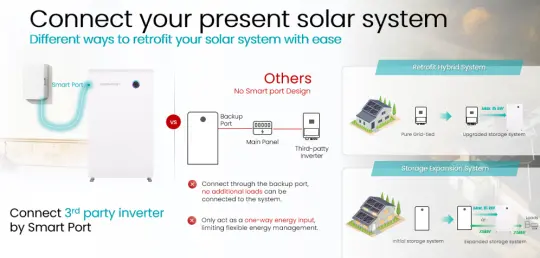
This is a common reason for choosing a component-based system. However, some all-in-one systems, such as the SigenStor NEO, are compatible with existing grid-tied inverters.
5. SigenStor NEO: All-in-one storage for homes
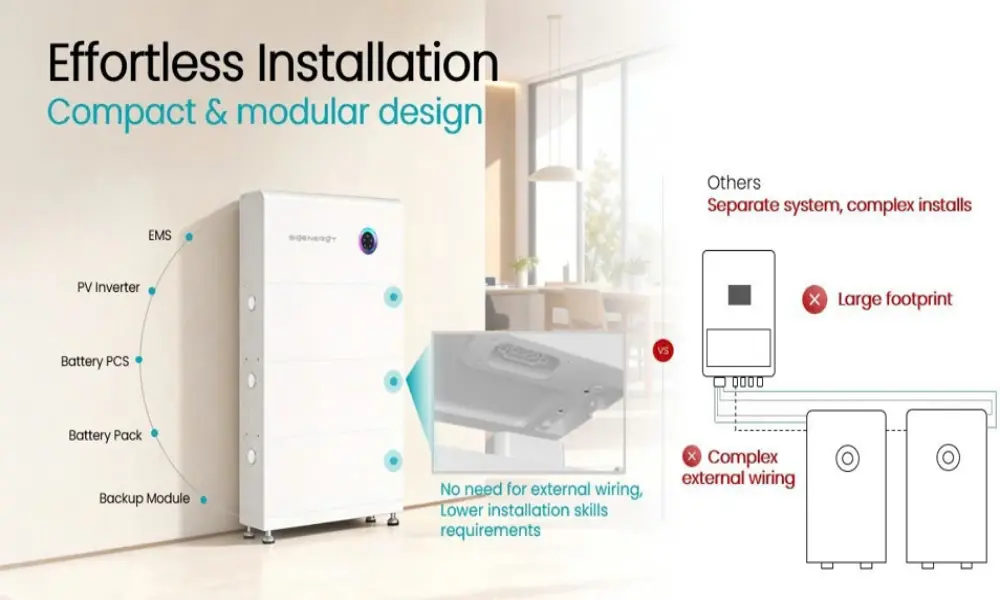
SigenStor NEO - An all-in-one storage solution for the home
SigenStor NEO by Sigenergy is an all-in-one home energy storage system. It combines the EMS, PV inverter, battery PCS, battery pack and backup module in one stackable unit.
This system helps you make the most of your solar power, ensures you always have electricity during power outages, and gives you control over your monthly electricity bills.
5.1 SigenStor NEO specifications
| Specifications | 1 phase | 3-phase |
| Rated power (on-grid and backup) | 2.5–12 kW | 3–15 kW |
| Peak output (10 seconds) | 5–20 kVA | 6–30 kVA |
| MPPT voltage range | 40–565 V | 120–1,000 V |
| Number of MPPTs | 4 | 3 |
| Maximum efficiency | 97.8–97.9% | 98.9–99.0% |
| Max. AC current via Smart Port | 63 A | 63 A |
| Ingress protection | IP66 | IP66 |
| Battery | LiFePO4, 6.02 or 7.52 kWh per module, 1–6 modules | Same |
5.2 What are the main benefits of SigenStor NEO?
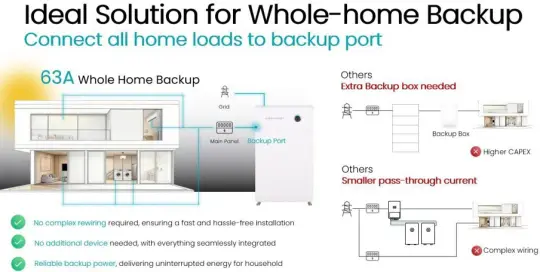
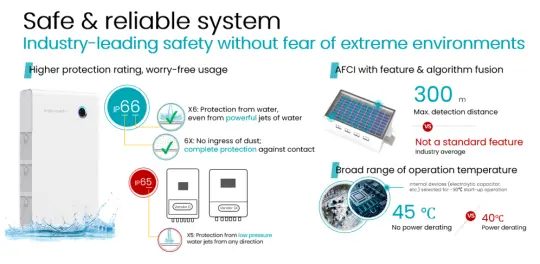
NEO stands out in four areas: whole-home backup, full use of your solar power, flexible battery expansion and multi-layer safety.
- Whole-home backup: up to 63 A of backup current powers the entire home, not just a few priority circuits. Air conditioners and pumps can still start while running on backup.
- More solar, less waste: you can install up to three times the inverter's rated power in solar panels. Surplus power at midday goes into the battery instead of being cut off.
- Expansion capability: each battery pack is managed separately, so you can add new packs alongside old ones without dragging down performance.
- Safety: eight layers of battery protection (temperature and humidity sensors, aerogel insulation, pressure relief valve, built-in fire suppression), plus arc-fault detection (AFCI) and Type II surge protection in the controller.
5.3 Who is SigenStor NEO for?
| If you | NEO gives you |
| Are installing solar with storage for the first time | One complete system, quick to install, few extra parts |
| Already have a grid-tied system | Storage added without replacing your inverter, even if it is another brand |
| Live where outages are common and use a generator | Generator connection via the Smart Port, no extra ATS needed |
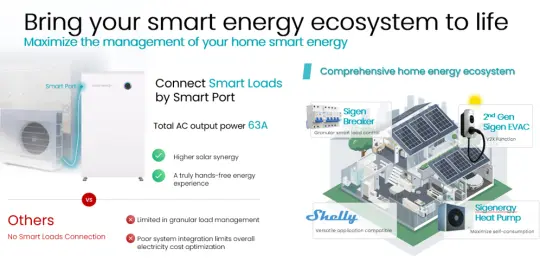
| Have an EV or heat pump | Charger and smart-load control, with solar power used first |
| Live in a townhouse with little space or a multi-facing roof | A compact stacked unit, IP66 for indoor or outdoor use, 3–4 MPPTs |
5.4 Why choose SigenStor NEO?
Compared with a typical inverter-plus-battery setup, NEO does the job of several devices in one system.
- Backup switching and smart-load ports built in: your generator, EV charger and heat pump connect through the Smart Port and are managed together, with no separate devices to buy and wire.
- AI-powered management: the app adjusts charging and discharging to the weather, electricity prices and your usage habits, and shows energy flows in real time.
- One point of contact: one brand, one app and one warranty for the whole system.
Solar panels, inverters, and BESS storage batteries: system equipment from HELU
HELU offers the SigenStor NEO all-in-one storage solution along with standard-compliant solar cables for your system.
Contact HELU Vietnam today for assistance and advice on selecting the right solution.
6. Frequently Asked Questions
No. Solar panels only convert light into direct current; they do not store electricity on their own. To use solar power at night or during a power outage, the system requires additional storage batteries (lead-acid or lithium-ion) and a hybrid inverter to charge and discharge the batteries.
According to Vietnam Energy Magazine , the cost of a typical energy storage system ranges from 150 to 300 USD/kWh (source). Based on this rate, a 5 kWh storage system costs approximately 750–1,500 USD, while a 10 kWh system costs approximately 1,500–3,000 USD. The total cost of a 5 kW or 10 kW system also includes solar panels, inverters, and installation, so quotes must be provided on a project-by-project basis.
Usage time ≈ available battery capacity (kWh) ÷ total active load power (kW). For example, a 12-kWh battery powering a 1.2-kW load will last approximately 10 hours, not accounting for losses through the inverter. If a power outage occurs during the day, the solar panels will continue to charge the battery.
Battery lifespan is measured by the number of charge/discharge cycles until the State of Health (SOH) drops to a certain threshold. For example, the cell manufacturer states that the SigenStor NEO battery achieves 10,000 cycles until the SOH reaches 60%, under test conditions of 25 ± 2 °C and a charge/discharge rate of 0.5C.
Okay. The common approach is to use AC coupling, keeping the existing inverter; this method is easier to upgrade than rewiring the DC side. SigenStor NEO is advertised as being compatible with existing grid-tied inverters, including those from other manufacturers.
This is a grid-connected system that is limited to not feeding power into the grid (load-following) and includes a battery storage system. Instead of being curtailed as in a typical load-following system, excess electricity generated during the day is stored in the battery for use at night.