What is rooftop solar power? Components, types, and technical considerations
Rooftop solar power — also known as rooftop photovoltaic (PV) systems — is becoming an increasingly popular energy solution in Vietnam. According to EVN (Vietnam Electricity), self-produced and self-consumed rooftop solar energy is a growing trend among both households and businesses looking to secure their own power supply and reduce long-term operating costs. However, before making an investment decision, understanding how the system works, what it consists of, and which technical standards must be met will help you avoid costly mistakes down the line.
Article content:
1. Rooftop solar power systems – An energy source with multiple benefits
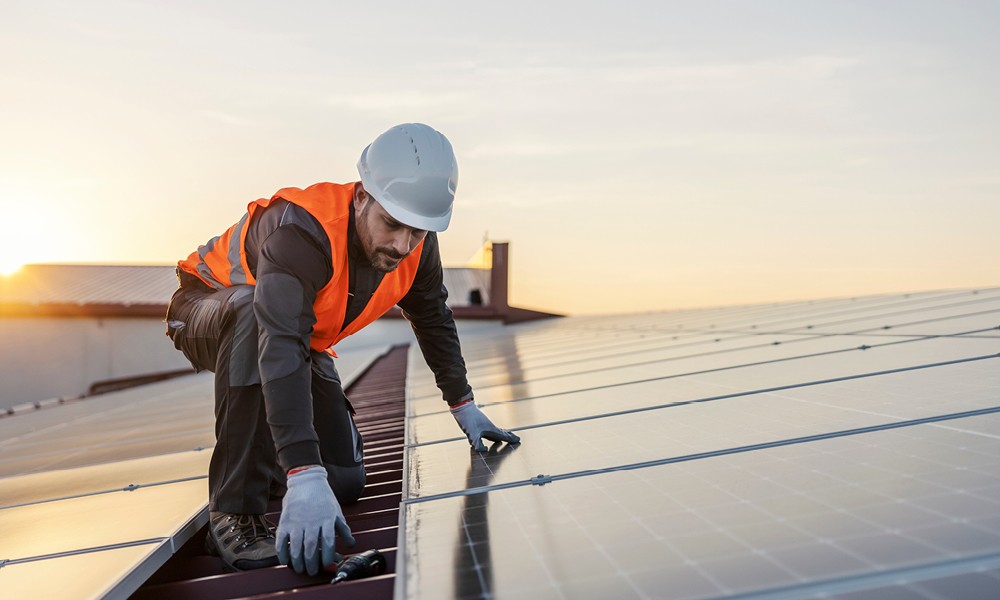
On-site solar power systems, where electricity is generated and consumed on-site, are becoming a trend aimed at ensuring a reliable power supply and reducing long-term operating costs.
1.1 What is rooftop solar power?
Rooftop solar power is a photovoltaic system installed directly on the roof of a house or building. It uses solar panels to convert sunlight into electricity for on-site consumption.
The terms "rooftop solar" and "rooftop PV" refer to the same type of system — "rooftop" simply emphasizes the installation location on the roof surface, distinguishing it from ground-mounted solar, which is typically deployed at large utility-scale farms.
Depending on how the system connects to the national grid, rooftop solar systems fall into three main categories: on-grid, off-grid, and hybrid.
1.2 Benefits of rooftop solar power systems
Rooftop solar does more than just save on electricity bills — it is a distributed power generation model with several structural advantages that traditional grid power cannot offer.
- Power generated at the point of use: The system sits directly on your roof, so electricity is consumed on-site. There is no need for additional investment in transmission lines, and no energy is lost over long distances.
- Easily scalable: Photovoltaic systems are highly modular. If your energy needs grow, you can simply add more panels without replacing the entire system.
- Peaks during daytime demand hours: Solar generates the most power between 9 AM and 3 PM — exactly when electricity demand and prices are at their highest. This reduces pressure on the national grid and delivers the greatest cost savings for users.
- Near-zero operating costs: Solar panels have no moving parts, require no fuel, and need only periodic surface cleaning for maintenance.
- Reduces pressure on national grid infrastructure: Every kWp of rooftop solar installed represents generation, transmission, and distribution capacity that the national grid does not need to invest in — particularly significant given Vietnam's rapidly growing electricity demand.
- Zero emissions during operation: Photovoltaic systems produce no emissions, noise, or waste throughout their operational life. The environmental benefit accumulated over time far outweighs the impact of initial manufacturing.
2. Components of a rooftop solar system
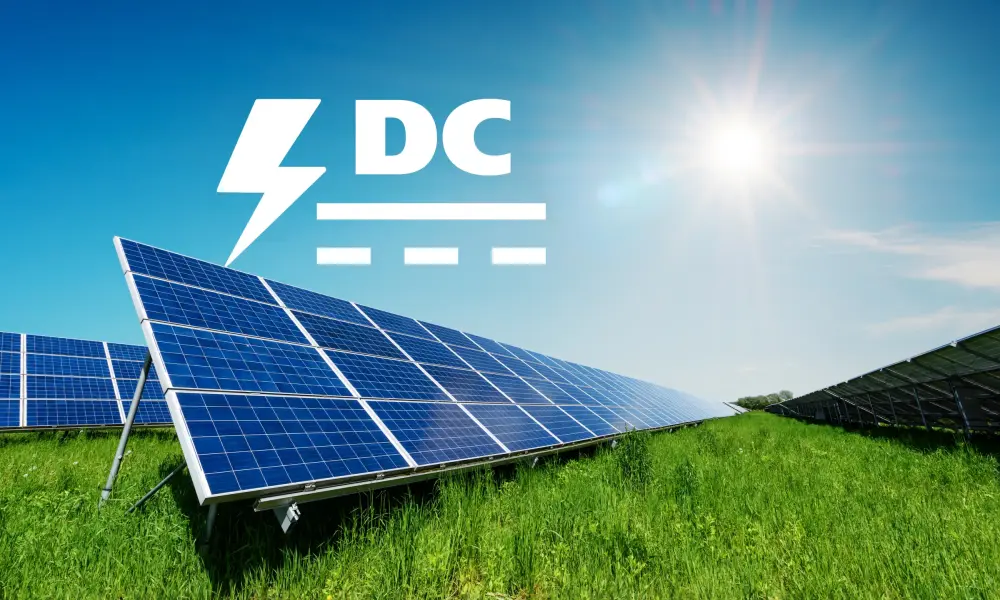
When exposed to sunlight, the photovoltaic cells inside the solar panel excite electrons in the semiconductor material, thereby generating an electric current
A complete rooftop solar system consists of six core components that work in sequence from power source to point of consumption.
2.1 Solar panels
Solar panels — commonly called photovoltaic (PV) modules — are the core component of any rooftop solar system. Each panel is made up of multiple solar cells that convert sunlight into direct current (DC) electricity.
These cells are made from semiconductor materials — most commonly silicon — which generate an electric field when exposed to sunlight. The number and placement of panels depend on actual electricity consumption needs and the available roof area.
The market offers many types of solar panels, each with different characteristics in terms of conversion efficiency, lifespan, appearance, and heat tolerance.
💡What kind of electricity does a solar power system generate? Discover the principles of electricity generation and the conversion process for real-world applications!
2.2 Inverters
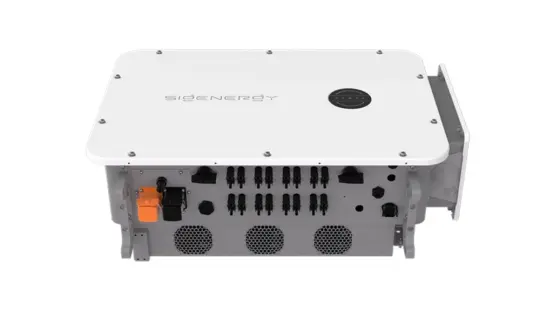
The inverter converts DC electricity from the panels into alternating current (AC) at 220V/50Hz or 380V/50Hz, in line with Vietnam's grid standards. It is the "brain" of the system — determining overall efficiency, grid connectivity, and safety protection features.
Modern inverters integrate Maximum Power Point Tracking (MPPT), which continuously optimizes the amount of electricity extracted under all light conditions, including partial cloud cover.
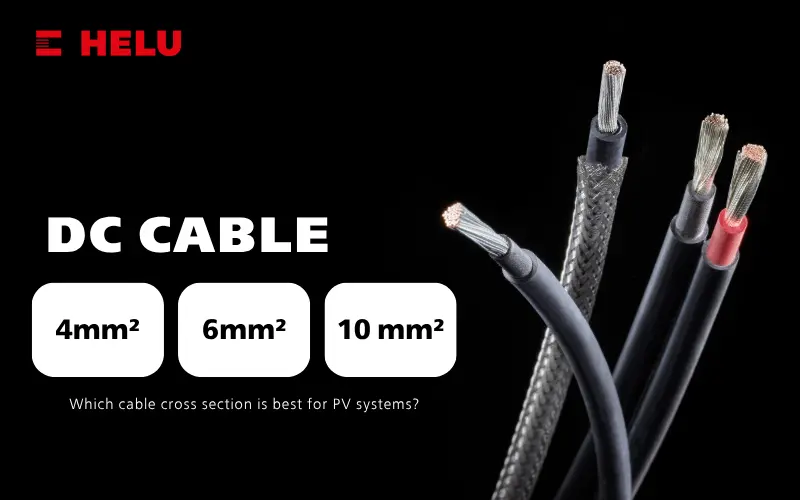
2.3 DC cables and MC4 connectors
DC electricity from the panels travels to the inverter through dedicated DC cables and MC4 connectors. These two components are often underestimated, yet they are critical to the safety and longevity of the entire system.
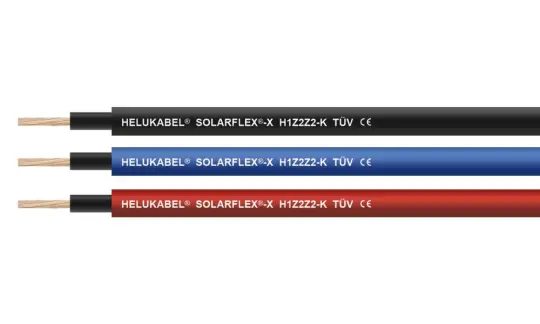
DC cables must comply with EN 50618 (the European standard specifically for photovoltaic system cables), be UV-resistant, and withstand continuous operating temperatures of at least 90°C. Substandard cables will degrade quickly under UV and heat exposure, causing energy losses and creating a fire hazard.
MC4 connectors must meet IEC 62852 — the international standard for PV system connectors, covering requirements for water ingress protection, heat resistance, and mechanical durability. Poor-quality MC4 connectors are prone to overheating at the contact point, leading to voltage drops and localized fires.
💡Do you fully understand the different standards for DC cables? - Discover the scope of application and key features of the TÜV, UL, CSA, IEC, and EN standards
2.4 Mounting structure
Solar panels are secured to the roof via a mounting frame — the structural component that supports and holds the entire panel array in place. To ensure long-term durability, the mounting structure must meet three core criteria: high mechanical strength, good corrosion resistance, and the ability to withstand harsh weather conditions.
Depending on the roof type and installation requirements, several mounting options are available:
- Flush mount: panels installed parallel and close to the roof surface, suitable for pitched roofs
- Tilt mount: allows the panel angle to be adjusted to optimize sunlight capture
- Ballasted mount: uses weighted ballast to secure the structure without penetrating the roof surface, commonly used on flat roofs
2.5 Electrical Panels and Protective Devices
The electrical cabinet incorporates protective devices such as: DC and AC circuit breakers (CBs), surge protection devices (SPDs), bidirectional energy meters (for grid connection and energy settlement with EVN), and a grounding system.
2.6 Battery storage system (optional)
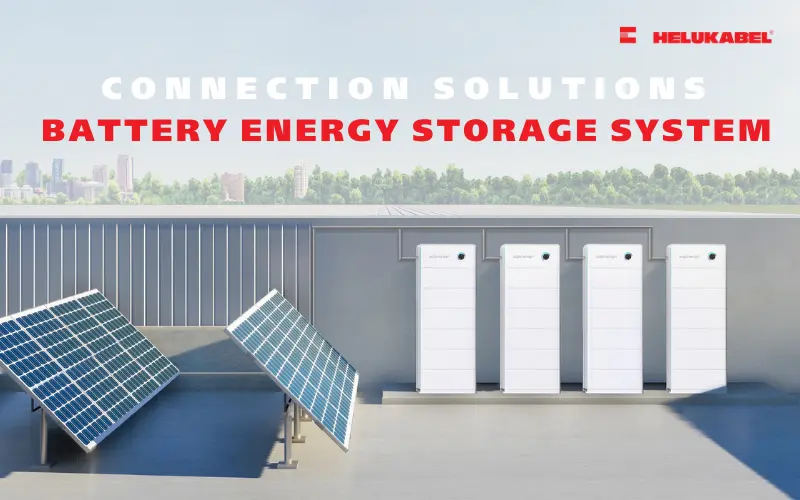
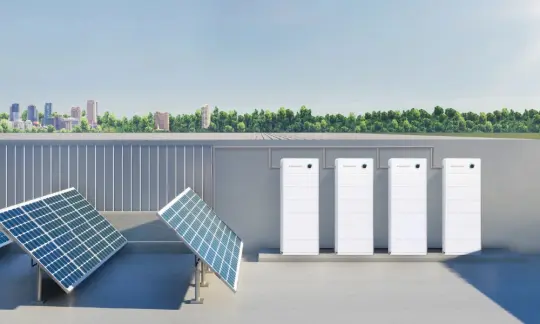
A rooftop solar system can be equipped with a battery storage unit, allowing the system to continue operating during a grid outage and storing surplus electricity — particularly useful for off-grid systems.
In most cases, lithium-ion batteries are the preferred choice for rooftop solar storage, thanks to increasingly competitive pricing.
3. Classification of rooftop solar power systems
3.1 Classification by system capacity
System capacity determines the investment cost, the roof area required, and the most suitable type of user.
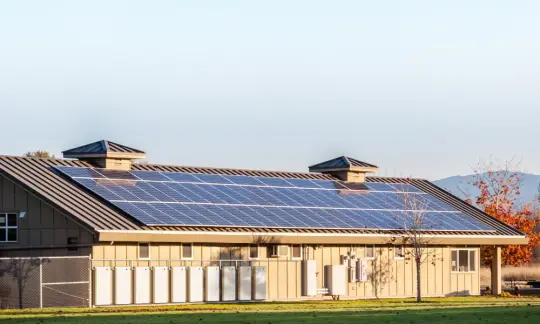
- Small systems (under 10 kWp) are the most common choice for households. A 3–5 kWp system can meet the majority of a typical home's electricity needs — lighting, fans, televisions, and refrigerators.
- Medium systems (10–50 kWp) are suitable for larger homes with high-consumption appliances (multiple air conditioners, water pumps, dryers) or small commercial premises such as offices, shops, and restaurants. At this scale, three-phase connections are often considered to distribute the electrical load more evenly.
- Large systems (above 50 kWp) are deployed at factories, industrial zones, commercial buildings, and large offices. This segment offers the best return on investment, as electricity consumption is high and continuous during business hours — which coincides with peak solar generation. Technical requirements for DC cabling, electrical cabinets, and monitoring systems are also significantly more complex than for smaller installations.
💡Comparing 3 scales of BESS: Residential vs. C&I vs. Utility
3.2 Classification by connection type
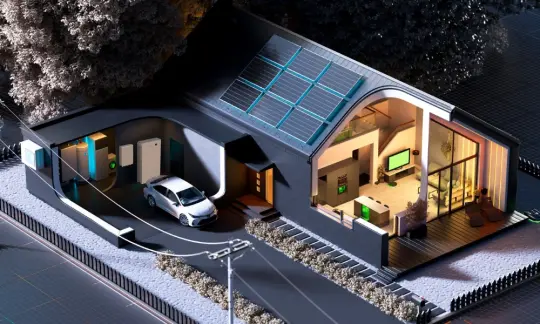
- On-grid systems: connect directly to the national electricity grid. When the solar system generates surplus power, the excess is fed into the grid and offset through EVN's net metering scheme. This is the most common type in Vietnam due to its lower upfront cost and faster payback period. One limitation: when the grid goes down, the system also shuts down completely due to anti-islanding requirements — the inverter must disconnect within 2 seconds of detecting a grid outage.
- Off-grid systems: operate entirely independently of the grid. This setup is suitable for areas without grid access or for users who require complete energy self-sufficiency. Investment costs are higher due to the need for large-capacity battery storage.
- Hybrid systems: combine grid-tied operation with battery storage. During the day, the system operates normally on-grid; when the grid fails, it automatically switches to battery backup within milliseconds. Hybrid systems are increasingly popular in areas prone to rolling blackouts.
4. Technical standards to consider when installing a rooftop solar system
A rooftop solar system does not operate as a single device — it is the continuous interplay of multiple subsystems: panels, DC cables, connectors, inverter, protective cabinet, and earthing system. Each component operates independently but directly affects the entire chain — a weak point in the system can reduce overall performance or create operational hazards.
This section does not cover the installation process. Instead, it focuses on material quality and minimum technical standards that must be met — the factors that determine whether a system will run reliably or gradually deteriorate over time.
4.1 DC cables: Required standards and technical properties
DC cables running from the panels to the inverter must meet the following technical requirements:
- EN 50618 (IEC 62930): The European standard specifically for PV system cables, covering insulation, UV-resistant sheathing, and heat resistance.
- Heat resistance: minimum continuous operating temperature of 90°C (rooftop temperatures in Vietnam can reach 70–80°C in summer).
- UV resistance: the cable sheath must be made from UV-stabilized material to prevent degradation, cracking, and brittleness after years of sun exposure.
- TÜV certification: confirms independent third-party testing by a recognized certification body.
Substandard cables not only cause energy losses but also pose a fire risk, as the insulation breaks down under sustained heat and UV exposure. HELU offers the SOLARFLEX® H1Z2Z2-K DC cable range, which meets EN 50618 and TÜV certification, with a heat resistance rating of up to 120°C — well suited to Vietnam's tropical climate.
4.2 MC4 connectors: IEC 62852 standard
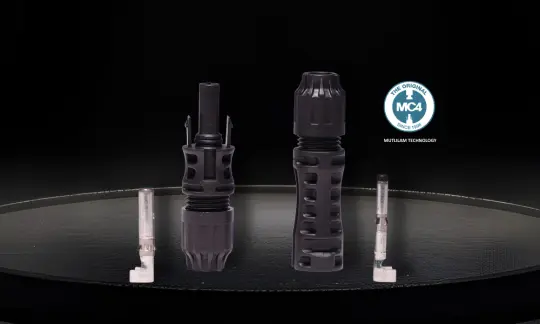
MC4 connectors (Multi-Contact 4mm) are the most widely used connection standard in photovoltaic systems, used to link panel strings together and connect them to the DC cable running to the inverter.
Compliant MC4 connectors must meet IEC 62852 — the international standard specifying electrical durability, water ingress protection (minimum IP67 when connected), heat resistance, and long-term mechanical strength. Non-compliant connectors are prone to water infiltration at the contact point, causing corrosion and increased contact resistance — which leads to localized overheating and fire.
Practical note: Do not mix MC4 connectors from different brands within the same circuit. Although they appear visually similar, dimensional tolerances between brands can result in imperfect contact and increased resistance.
💡To learn more about MC4 connectors, check out the following series of articles:
4.3 Inverter: Safety standards and protection features
The inverter must meet at minimum IEC 62109-1/2 (safety requirements for power conversion equipment in PV systems) and IEC 62116 (anti-islanding). It must also include the following protection features: overvoltage/undervoltage protection (OVP/UVP), short-circuit protection, surge protection (SPD), anti-islanding, overtemperature protection (OTP), and DC residual current monitoring (RCMU).
4.4 Earthing system and lightning protection
A properly installed earthing system is mandatory — not only to protect equipment, but also to ensure the safety of operators and maintenance personnel. The aluminium frames of the panels, the inverter housing, and the electrical cabinet must all be earthed in accordance with TCVN 9358:2012 (Vietnam's national standard for earthing systems). Surge protection devices (SPDs) must be installed on both the DC side (at the inverter input) and the AC side (at the inverter output). This is especially important for outdoor rooftop installations in Vietnam, a country with a high lightning strike frequency.
5. Who should install rooftop solar?
Not everyone is in the right situation to invest in rooftop solar right now. Here is a practical checklist to help you assess suitability.
5.1 Roof conditions
A minimum of approximately 15–20 m² of unobstructed roof space is needed for a 3 kWp system — sufficient to noticeably reduce electricity bills for a small household. According to EVN, 1 kWp of rooftop solar generates an average of 3.5–4.5 kWh per day. A 5 kWp system can produce over 150 kWh per month, equivalent to the average monthly consumption of a household in Hanoi (according to EVN).
Other factors to assess for feasibility and safety include: panel orientation (affects output), roof pitch (affects sun capture), available roof area, roof type, and whether the installation site is shaded by trees or neighbouring buildings.
5.2 Electricity consumption
Households consuming 200 kWh or more per month (regularly receiving bills in the higher tariff tiers) will achieve a faster payback. Lower consumption means a longer payback period and a noticeably weaker return on investment.
5.3 Long-term usage plan
Solar systems are designed for a 20–25 year lifespan. If you plan to sell the property within 3–5 years, the payback period is typically insufficient to generate a strong return.
5.4 Rooftop solar may not be the right fit (at the moment) if
- The roof is rented or you do not have the right to make structural modifications
- The roof is frequently shaded by large trees or adjacent high-rise buildings
- The upfront investment budget is limited and no financing options are available
6. Frequently Asked Questions (FAQs)
For systems with a capacity below 1 MWp (1000 kWp) — which covers all households and the vast majority of businesses — no electricity activity licence is required. Under Decree 58/2025/NĐ-CP: "Rooftop solar systems are exempt from electricity activity licences." However, if you install a system to sell electricity to other organizations or individuals (rather than simply self-consuming and selling surplus back to EVN), businesses are required to add business line codes 3511 (electricity generation) and 3512 (electricity transmission and distribution) to their business registration.
Yes — if you want an on-grid system. You must register with your local electricity company (under EVN) to have a bidirectional meter installed and sign a power purchase agreement. This process is handled by EVNHANOI, EVNHCMC, EVNCPC, EVNSPC, or EVNNPC depending on your region. For self-consumption models where no surplus electricity is sold back to the grid, the process is simpler — contact your local electricity company directly for specific guidance.
On average, 1 kWp requires approximately 6–8 m² of roof space (depending on the panel type). As a guide:
- 3 kWp system: approximately 18–24 m²
- 5 kWp system: approximately 30–40 m²
- 10 kWp system: approximately 60–80 m²
Note: These are indicative figures only. For accurate calculations, work with a qualified installer who can assess the specific conditions of your site. In addition to floor area, you need to account for spacing between panel rows to avoid mutual shading, as well as the location of the inverter (typically installed indoors or in a cool, well-ventilated area away from direct sunlight).
Based on real-world data from EVN, one household that installed a 6 kWp system with battery storage reduced their electricity bill by more than VND 1.5 million per month, especially during the hot season. Many households report saving up to 80% on their monthly electricity costs after installing rooftop solar.
The actual savings depend on system capacity, electricity consumption habits, and geographic location. Areas in Central and Southern Vietnam receive higher solar irradiation and therefore generate more electricity in practice than northern regions.
Yes — and this is more significant than most people realize. Every poor-quality connection point in the DC circuit — whether an imperfectly mated MC4 connector, an undersized DC cable, or a cable whose sheath has degraded under UV exposure — causes energy losses that accumulate year after year.
Non-compliant DC cables and MC4 connectors also pose a serious risk of overheating and fire — a particularly dangerous hazard for a system installed on a rooftop. This is why choosing cables that comply with EN 50618 and MC4 connectors that meet IEC 62852 is not just a matter of performance — it is a matter of long-term safety.